

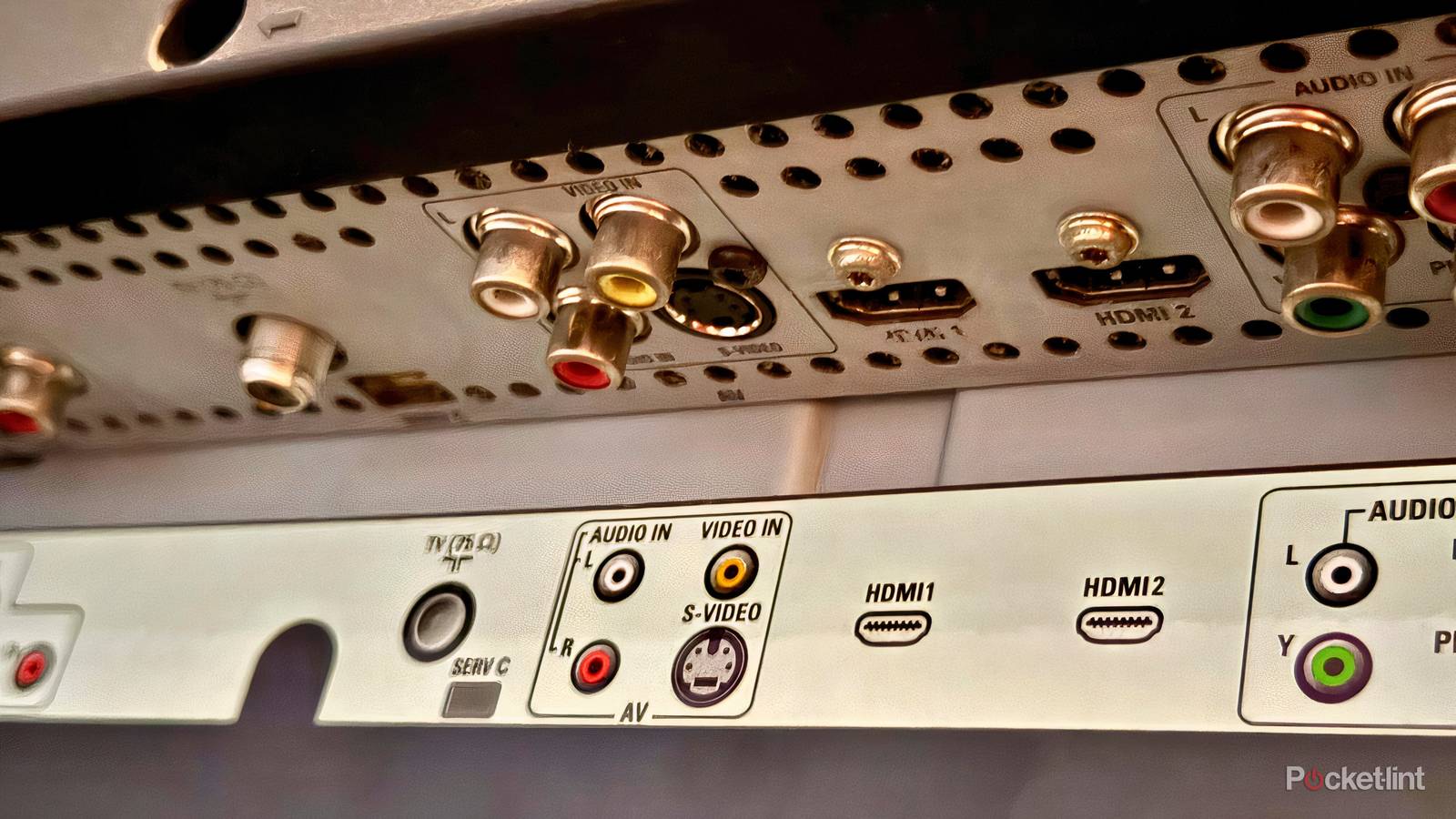


Technological advancements within the consumer electronics space are rapid, whether we’re talking about mobile devices, PCs, or even home theater setups. Television sets in particular might not have as hasty a refresh cycle as some other product categories, but they nonetheless benefit from year-over-year enhancements and generational improvements. Over time, these advancements add up, resulting in more substantial changes over time.
Taking a look at an old-school CRT tube television from the early 2000s and comparing it to a state-of-the-art OLED flat screen panel from today demonstrates the overall progress that has been made within the TV space. In a relatively short period of time, we’ve gone from clunky square boxes with scan lines, to crisp, impossibly thin units with high dynamic range (HDR), speedy refresh rates, and more.

Personally, I grew up watching movies and TV shows on a classic 27-inch tube television, eventually upgrading to a 42-inch 720p early flatscreen in the late 2000s, and ultimately switching to a 60-inch 4K UHD panel in more recent years. Naturally, the various peripherals that I’ve connected to these different TV models have ebbed and flowed as time has progressed, based on the corresponding en vogue technologies of the time.
In my case, the CRT TV I had back in the day was connected to various affordable plug-and-play consoles that I look back on fondly, including the Jakks Pacific Ms. Pac-Man And Friends model that, in retrospect, I wish I had never gotten rid of (one Amazon listing has a unit currently listed at $189).
Over time, my various TVs played host to several different supplementary products, ranging from a 5-in-one DVD player, an optical cable-based surround sound system, several home video game consoles, a satellite TV receiver, a fiber optic cable receiver, an eARC soundbar, an Apple TV set-top-box, a Blu-ray player, and more. Some of these devices have since fallen by the wayside either due to obsolescence or replacement, while others have endured for many years on end.
Here are three accessories in particular that you’ll never catch me stowing away in a closet, no matter how far technology advances, and no matter how many hoops and hurdles I have to endure in order to keep them connected to newer television sets.
My VHS Player
Rewinding a VCR tape is peak nostalgia

Even as my home theater setup evolved to embrace optical discs like DVDs and Blu-rays in the 2000s, I never once considered pulling the cord on my late-era standalone VHS player. I have a solidly large collection of VCR tapes in my multimedia library, and I want to be able to play them back with original equipment on-demand. There’s something incredibly nostalgic about shoving a tape into a player and hitting the rewind button, and the audiovisual flaws of the format are charming to say the least. Every time I set the channel on my TV to match the switch on the back of my VHS player, I’m reminded of the days of Blockbuster, ownership over physical media, and family movie nights.
My GameCube

Nintendo’s legendary purple lunchbox
Over the years, quite a few home consoles have called my living room TV stand their home. While I hold every generational model from Atari, Nintendo, Sega, Sony, and Microsoft with high regard, there’s only one retro console that continues to stay plugged into my television at all times: the GameCube. While not a massive hardware seller in its day, the quirky cube-shaped system with a handlebar has since grown a massive cult following, and it’s not hard to see why. The GameCube’s unique mini DVD-esque game format is charming, the titles themselves are downright legendary, and the system has aged like fine wine from a technological standpoint. With a digital AV cable in tow, The Legend of Zelda: The Wind Waker looks as good today as it did in 2002.
My Chromecast (first-generation)
Plug-and-play simplicity at its finest

It’s true that just about every modern flatscreen television is a smart TV, meaning that it ships with a dedicated operating system, a downloadable app ecosystem, and wireless internet connectivity. The problem, however, is that most of these software experiences are dull and uninspired at best and downright clunky and privacy-invasive at worst.
To solve this problem, I’ve long relied on either an Apple TV or a Google Chromecast with Google TV for a smoother home entertainment setup, but I’ve also kept my handy first-generation Chromecast at the disposal, primarily due to its simplicity. The original Chromecast is compact, it’s simple to use as it relies entirely on smart devices for interfacing, and it enables Google Cast support without the need to connect my actual smart TV to the internet (I leave my TV disconnected to reduce the risk of having my data sold).
