


Everybody is looking to make the most out of their living space. You want to maximize your home’s potential and make it the best place for you and your family. Adding smart home technology to your home is a simple and effective way to do that. Some people might not want to rely on smart home devices to control their home. But those who do know, there are multiple ways to achieve the home that they desire.
You don’t have to stick with one smart home ecosystem. There’s no right way to run a smart home. Whatever works best for you and fits your preferences is the right option. Some big-ticket items can boost your smart home’s appeal, such as a smart TV, smart refrigerator, automated lighting, and a smart home security system. But there are plenty of other devices just as useful that maybe don’t come to the top of your mind right away. These under-the-radar gadgets can truly make your home a smart one.

I turned my old tablet into a smart home dashboard, and it’s perfect
I use my 1st-gen iPad Pro as a smart home dashboard
A motion sensor can set up so many automations
When used properly, this can be a game-changing addition
Motion sensors are, by and large, not a very big addition to a home, in terms of their stature. But they can be incredibly useful and don’t typically cost much. You can use motion sensors for all sorts of reasons, even as little as just picking up motion in your home (makes sense, right?)
Adding something like the Aqara Motion and Light Sensor P2 can send a notification to your phone that it detects motion. You can leave it at that and be happy to know that something has passed it, which makes the notice a bit mysterious, but still useful. But you can also use the motion sensor to trigger other smart gadgets into action.
This is where motion sensors, both cheap and premium, can become more useful, as they can be integrated into automations. If motion is detected by one, it can trigger another smart device, like a light or a camera, to turn on. I’ve used motion sensors like the Govee Outdoor Motion Sensor in my backyard that pick up on motion and then turn on some Govee outdoor lights. It’s an easy way to illuminate your deck or porch and eliminates the need to flick a light switch any time someone goes outside.
Motion sensors are also good for beefing up security around your home. By triggering something like a light or an alarm, this can warn trespassers that you are keeping an eye on them. You don’t have to go the route of purchasing a more expensive security camera if you just want to use the motion sensor / light combination as a warning.
A leak detector can save you a lot of headaches
It can also prevent you from spending a lot of money

Adding a leak detector to your home is a no-brainer. Something like the SimpliSafe Water Sensor can alert you that water is near it and that a leak may have occurred.
Putting something like this under a sink or near a hot water heater is a smart investment that won’t cost you much. Leak detectors make an audible alarm sound when water is sensed, giving you a notice right away that something might be wrong. But many of them also connect to security systems or your phone and will email you or send a push notification that the alarm is going off.
The best place for a leak detector is flat on a surface and usually in an area where not only water might be present, but also a place that you probably aren’t going to be walking much. You may not keep one in the bathroom next to a toilet, but having one in the cabinet under the sink makes sense.
When choosing a smart leak detector, you want one that is easy to set up and one that detects when water is present immediately. Some more advanced ones can sense any kind of moisture while others go off when they are in standing water. But knowing about a problem when it starts can help save your home in the long run.
Smart washers can save your clothes and towels
If you need a new one anyway, consider a smart one

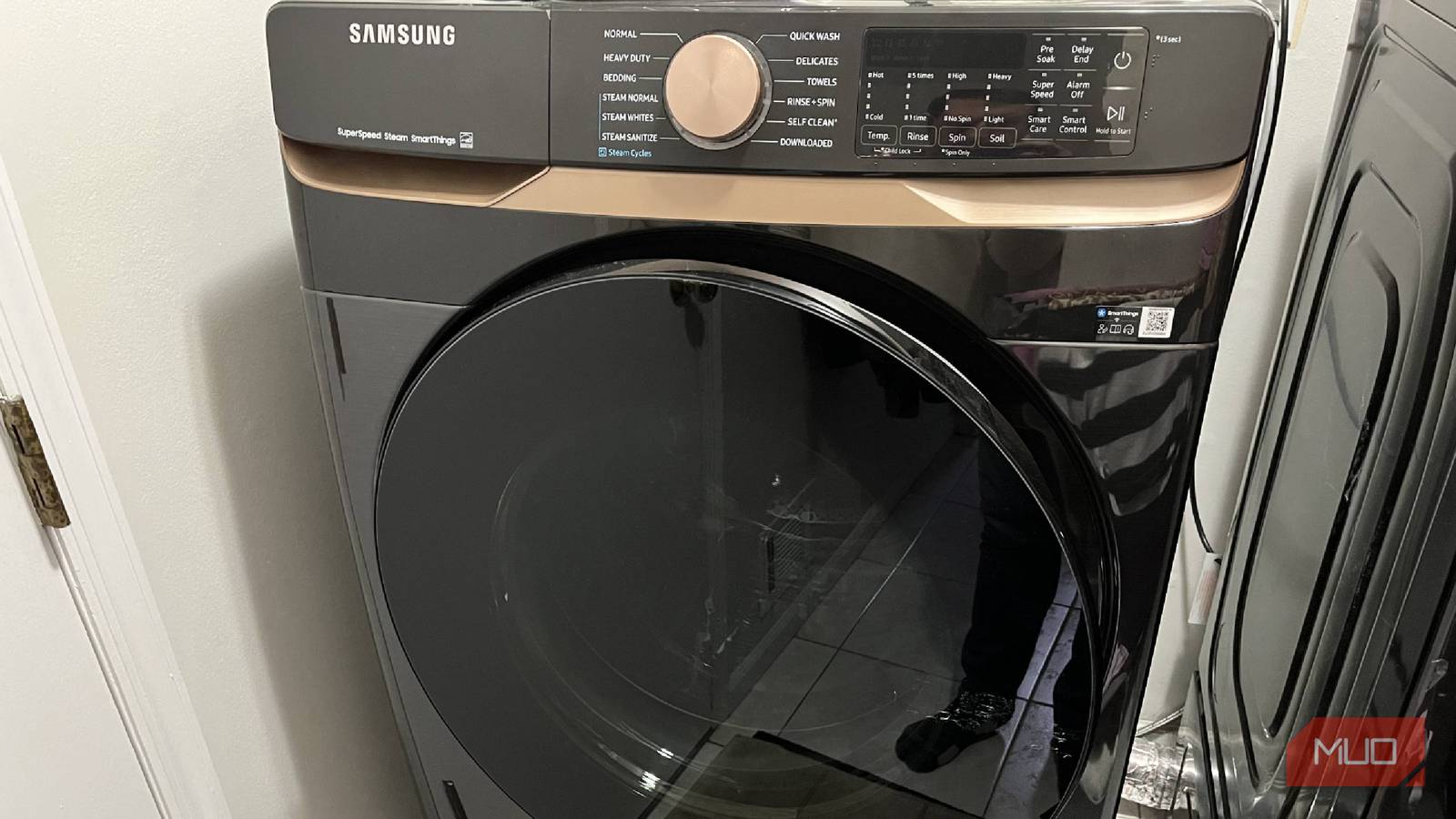
I recently had to replace my washer and dryer. The people we had purchased our house from had left us their previous ones, which had been about 10 years old at the time we moved in. We got three more years out of them before the dryer was taking forever to actually finish a load and the washing machine was a top-load, making it hard for my wife to reach deep into it.
We upgraded to a Samsung smart washer and dryer after looking at different options. I was keen to find one that worked with our smart home ecosystem, which is an Amazon Alexa-based one. The Samsung SmartThings integration in the Alexa app made it make sense.
Not only were we looking for a washer and dryer that were energy-efficient and were front-loading options for easier changing, but we also wanted one that would alert us when it was done. The models we got do all of that well, especially letting us know when they’re done by the hilariously long audible chime/alert (if you know, you know.)
There’s no right way to run a smart home. Whatever works best for you and fits your preferences is the right option.
I wanted to avoid having the horrible realization hours after you put in a load of laundry that it’s still in the washing machine, leading to mildew and bacteria. Plus, having towels that smell funky is not ideal for anyone. A smart washer and dryer can send you push notifications to different devices to alert you when the cycle has finished running. This might be the reminder you need to change them in a timely manner.
Obviously, a washer or dryer is an expensive purchase, so this is not one that you may want to rush out and make right away. But, if you need to replace your old one anyway, it might be worth it for you to upgrade.
A smart meat thermometer means you don’t have to lose heat on the grill
Keep an eye on your dinner from afar

This one is a bit niche, but it’s really nice to have in the grilling months. If you happen to live somewhere where you can grill year round, it’s especially helpful. Seeing the temperature of your food while it’s in the oven or on the grill can be a challenge.
You need to open the grill or oven, which lets heat out and extends the cooking time. Then you need to either cut into it or stick a handheld meat thermometer in to measure the temperature. But something like the ThermoWorks RFX Wireless Probe kit can give you an internal reading on your meat while it’s cooking.
This connects via Bluetooth or to the cloud, so you can check on it with your phone, tablet, or even your smart home hub. There is a dedicated app or it can connect directly to a device, letting you monitor your food. The RFX Gateway acts as a bridge for the signal, so you can be 1,500 feet away and still know what the temperature is.
The RFX Gateway can be used with numerous probes and keep track of all of them at once.
It’s ideal for anyone who wants to keep an eye on their grilling from afar. This works great for pellet grills and smokers as well.
Smart home gadgets can come in all shapes and sizes
You can get more out of your smart home than just smart lights. There are a lot of useful machines and devices out there that you can put to good use in your home. Some that you might not think of for your smart home can come in handy. Adding some under-the-radar smart home gadgets is never a bad idea and can bring your smart home together.
