

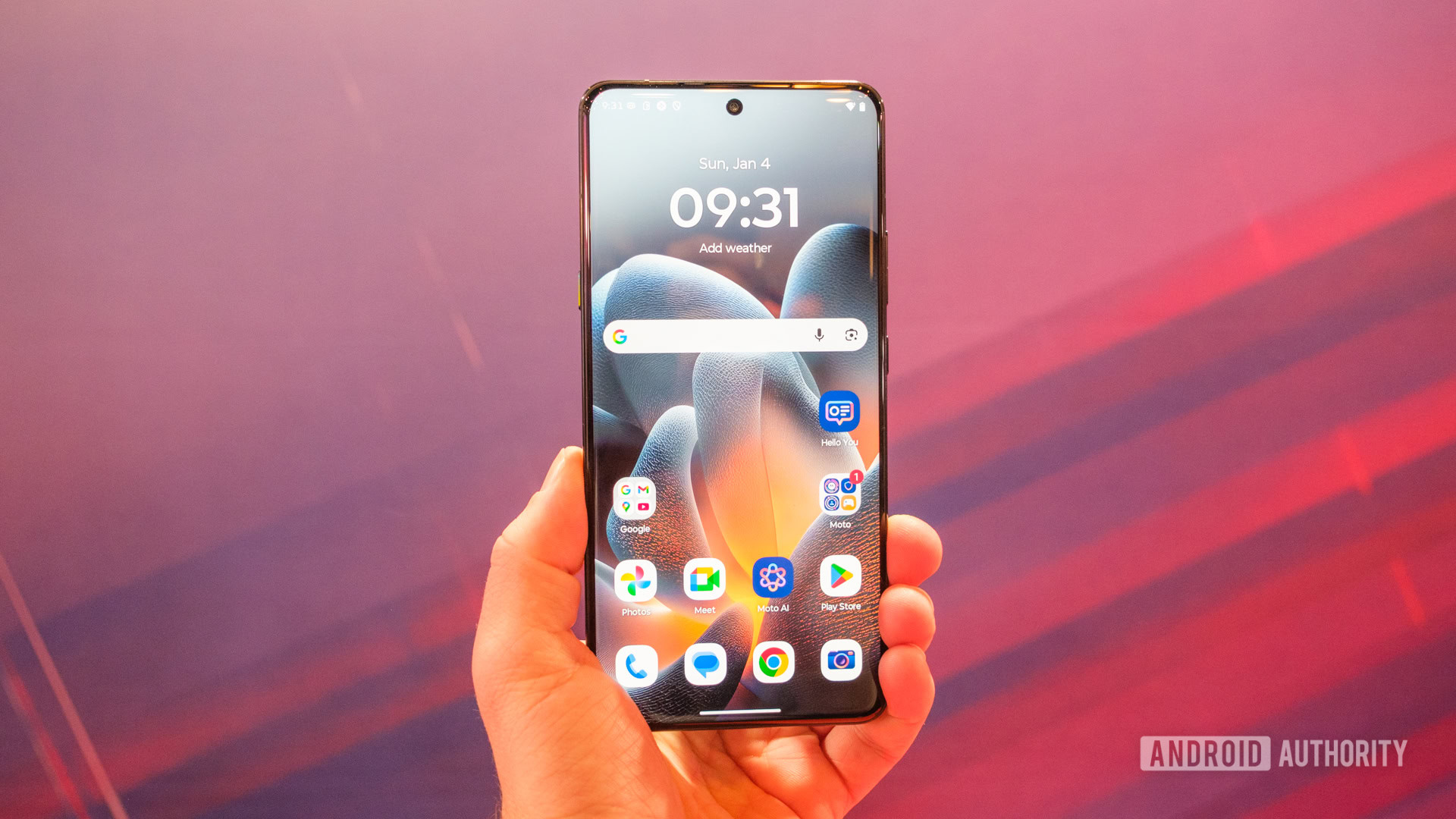


Ryan Haines / Android Authority
Motorola has been giving out mixed signals about Android update policies recently. Over the past few weeks, the company has showcased both extremes of its software support philosophy, launching a phone that won’t receive any Android updates at all while also talking up a new flagship with a seven-year update promise. With those two very different approaches landing so close together, we’ve been vocal on the subject, but we’re more interested in what you think. We’ve been running polls on the starkly different commitments, and you haven’t been shy in your responses.
The new Moto G17 is the budget phone that the company just launched with zero Android updates promised, and my colleague Joe Maring didn’t hold back in his scathing response to the news. He argued that this wasn’t just another disappointing update policy, but a line Motorola (or any OEM, for that matter) simply shouldn’t cross — especially when the phone doesn’t even ship with the latest version of Android. Joe included a poll in his article to garner your views, and you can see the results below.
The results were pretty decisive. Nearly two-thirds of respondents (64%) said Motorola had lost them as a customer over the update decision, while another 13% said they didn’t like it but would keep buying Moto phones anyway. A smaller group, 16%, felt it was acceptable if it was just a one-off. Only 7% said they didn’t care or had another take, which we’ll get to.
We should consider these results in the context of where the poll was on our site. Readers who were equally as frustrated as Joe by the idea of a zero-update policy are probably most likely to open the article, while others may have been persuaded by his arguments. Motorola will certainly hope that’s the case, because it can’t afford to lose more than half its customers over the matter.
Don’t want to miss the best from Android Authority?


The comments section of Joe’s piece echoed his frustration in part, but with plenty of nuance. Many readers said Motorola’s update policies had already pushed them away years ago, often toward Pixel or Samsung phones with longer and more predictable support. Others shared firsthand experiences that reinforced the distrust. However, not everyone saw zero Android updates as a deal-breaker. Some readers argued that major OS upgrades matter much less than security patches, performance, or hardware features like SD card slots and headphone jacks. As reader taffarelbergamin wrote, “Honestly, if it came with five years of security updates, I’d have no issues with no major Android updates.”
This is a fair point. We’re obviously big Android fans, as most of you will be if you’re reading this. But many people don’t care about getting the latest cutting-edge features, or even know that new Android versions are released regularly. This is especially true among the budget-phone buyers the Moto G17 is targeted at. These shoppers just want to know the phone will be safe, and while the two-year security update promise with the G17 is also lacking, at least it’s something.
Nonetheless, those poll results weren’t surprising, especially in light of the other Motorola headline-grabbing Android update move of late. A couple of weeks before the Moto G17 controversy surfaced, we asked readers about the upcoming Motorola Signature flagship — specifically, we wanted your view on its promise of seven years of Android updates. Rather than cutting support to the bone, Motorola is going further than it ever has before, potentially putting itself on equal footing with Google and Samsung in terms of flagship support periods. The results of that poll are below.
As the chart shows, nearly three in ten readers (29%) said they loved Motorola’s seven-year update promise. That excitement was tempered by a larger group, though, with 57% calling it a good start but saying the policy needs to expand to more Motorola phones to really matter. There’s probably a large overlap between that group and the similarly sized one that felt frustrated with the zero-update approach to the Moto G17. Given that we ran this poll first, we expected our readers to take issue with the disparity between the budget and flagship update commitments.
Clearly, a seven-year update policy for one as-yet-unreleased flagship isn’t going to be enough to placate everyone, especially if you then go on to release a more affordable device that shows longer support policies aren’t a general direction for the whole brand — quite the opposite, in that case. However, to play devil’s advocate for a second, we don’t know what trade-offs were made with regard to the G17. Motorola must have anticipated some pushback, but Google doesn’t license its updates for free, and everyone would take a software or hardware upgrade if it didn’t cost more. Going back to that zero-update poll, if we had asked our readers, “Would you prefer to pay $50 more for this budget phone if it came with two or three years of software updates?” the results might have been different. That said, it’s hard to argue that this doesn’t look like Motorola only caring about the premium buyers.
Thank you for being part of our community. Read our Comment Policy before posting.
