


Executive Summary Takeaways
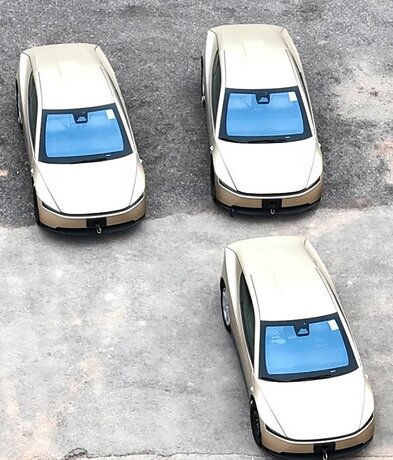
• Tesla’s Dec 2025 CPUC filing showed 798 drivers + 1,655 vehicles registered for supervised robotaxi in the Bay Area—massively larger than the ~330+ spotted by community trackers.
• Trackers capture only ~70% of fleets (Waymo Austin benchmark is 144 counted versus ~200 claimed). No one doubts Waymo when they say have 200 in Austin. so Tesla’s true active fleets in Austin and SF Bay Area is likely 1,000+ and growing fast.
• Removing safety drivers requires just 50,000 aggregate autonomous test miles under DMV permit (fleet total, representative of full Bay Area ODD)—supervised miles are a strong addendum.
• Grok voice control for FSD (“slow down here,” change destination, parking prefs) is firmware-confirmed and coming—huge UX/safety leap.
• China local AI data center is live. Europe approvals expected starting March. Delays on 10×-parameter + full-reasoning models show Tesla prioritizing safety over rushed releases.
The current potential fleet is the 1655 vehicles registered in California and about 200 available for Austin and possibly more in the employee ride programs and a few hundred cybercabs in the factory and driving around in testing.
Fleet Reality vs Spotting
Robotaxi Tracker and similar crowdsourced efforts rely on unique license plates—mostly submitted by riders or passers-by. Waymo’s distinctive LiDAR makes spotting easier, yet they still only hit ~70% of the claimed Austin fleet. Tesla vehicles look like regular Model Ys with modest Robotaxi badging, so undercounting is worse in the sprawling Bay Area. If trackers show 330 Tesla robotaxis today, the real deployed number is conservatively 470+ just from the Dec 2025 registration baseline. Tesla may split the fleet with an Tesla employee ride program and testing operations.
Tesla has every incentive to run the full registered fleet for paid supervised rides, employee/internal testing, and data collection. If they registered the license plates of 1655 cars then those cars have been pulled and are either in use or sitting in parking lots ready to be used or in testing. They would also use all of the named drivers whose paperwork was filed.
In Austin, employee/driverless internal rides already run without monitors. Bay Area rides lean heavily internal while regulators review. The entire 1,655-vehicle pool is almost certainly active or staged for rapid scaling.
Clear Path to Unsupervised Operation
To remove safety drivers and launch true paid driverless robotaxi:
• Log 50,000 autonomous miles (fleet total, not per vehicle) under the existing DMV permit, with the Automated Driving System fully engaged.
• Miles must cover the proposed Operational Design Domain (full Bay Area with hills, fog, dense urban, freeways, all conditions).
• Submit Safety Case showing no unreasonable risk—near-zero interventions and crash rates better than human baseline would crush historical Waymo/Cruise/Zoox submissions.
• Addendum of millions of supervised TCP miles strengthens the package.
• Then 50k more for Deployment Permit + 30 days operations → CPUC Tier 3 approval (3–9 months typical). No higher standard for proposing the entire Bay Area upfront. Regulators can phase rollout, but representative data is what matters. Tesla’s scale advantage is massive. Waymo used tens of millions of miles under old rules. Tesla can hit the new 50k threshold quickly and have all AV-mode logging.
FSD Software Momentum Despite Delays
Firmware teardowns confirm Grok voice will let riders talk naturally to FSD: “slow down here,” “back into that spot,” “scenic route,” etc. There is already verbal change destination -active in robotaxi. FSD owners need the Wifi data subscription for full voice commands.
This turns robotaxi into a true conversational experience and adds a safety layer passengers love.
The 10×-parameter model and full reasoning (drop-off then self-park) slipped from August and December 2025 targets but reasoning is chunking into 14.x releases—noticeable gains already in 14.2.X. Tesla is not rushing. They’d rather delay than risk incidents that trigger lawsuits and media firestorms 100× worse than competitors face.
Billions already invested and tens and soon hundreds of millions tied up in Cybercab inventory make every month without the best model expensive. Safety-first is the right call. Tesla safety standards are higher than CPUC and DMV.
2026 Bull Case Catalysts
• Europe Supervised FSD approval starting Netherlands ~March 20.
• China has Local AI training center operational. Full supervised FSD likely Q2–Q3 (bigger revenue impact than U.S.). Unsupervised robotaxi further out but enabled by same data.
• xAI Grok integration are vehicle-optimized Grok-4.2/5.X (distilled versions fit HW4) for voice, customer support inference, and even distributed fleet compute potential.
• Fleet doubling each month promised by Musk and Tesla. January 2026 Tesla claimed 500+ vehicles were already in Austin/Bay Area.
Brian Wang is a Futurist Thought Leader and a popular Science blogger with 1 million readers per month. His blog Nextbigfuture.com is ranked #1 Science News Blog. It covers many disruptive technology and trends including Space, Robotics, Artificial Intelligence, Medicine, Anti-aging Biotechnology, and Nanotechnology.
Known for identifying cutting edge technologies, he is currently a Co-Founder of a startup and fundraiser for high potential early-stage companies. He is the Head of Research for Allocations for deep technology investments and an Angel Investor at Space Angels.
A frequent speaker at corporations, he has been a TEDx speaker, a Singularity University speaker and guest at numerous interviews for radio and podcasts. He is open to public speaking and advising engagements.
