

Close Menu

    Subscribe to Updates

    Get the latest Tech news from SynapseFlow

    What's Hot

    Tesla Will Soon Unleash Scaled Robotaxi

    March 30, 2026

    H2O Audio Tri Run review: solid budget bone-conduction buds

    March 30, 2026

    How to create Shared Booking Page in MS Bookings

    March 30, 2026
    Facebook X (Twitter) Instagram
    • Homepage
    • About Us
    • Contact Us
    • Privacy Policy
    Facebook X (Twitter) Instagram YouTube
    synapseflow.co.uksynapseflow.co.uk
    • AI News & Updates
    • Cybersecurity
    • Future Tech
    • Reviews
    • Software & Apps
    • Tech Gadgets
    synapseflow.co.uksynapseflow.co.uk
    Home»Future Tech»NISAR’s View of Mount Rainier
    NISAR’s View of Mount Rainier
    Future Tech

    NISAR’s View of Mount Rainier

    The Tech GuyBy The Tech GuyMarch 30, 2026No Comments2 Mins Read0 Views
    Share
    Facebook Twitter LinkedIn Pinterest Email
    Advertisement


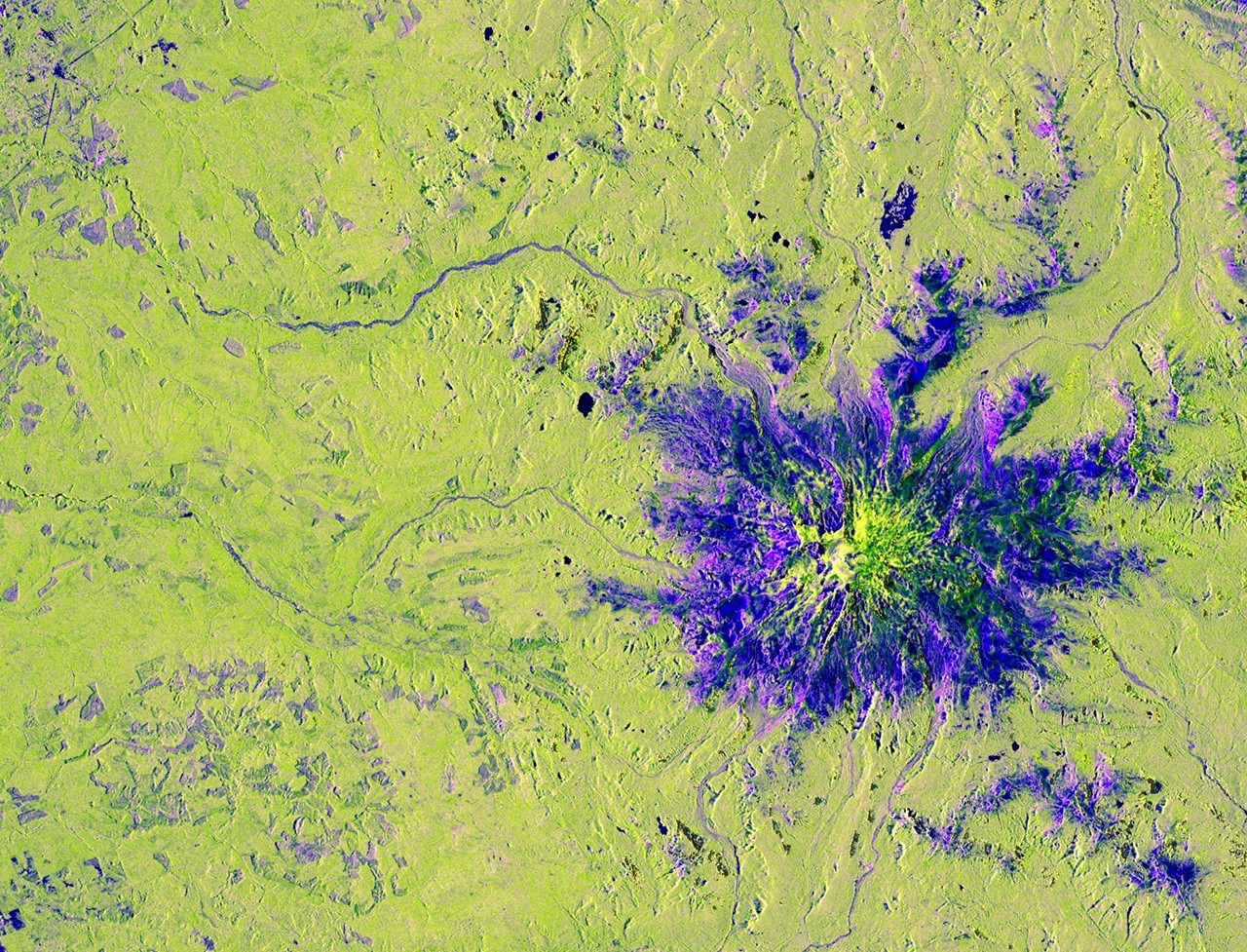
    This image captured by U.S.-Indian Earth satellite NISAR on Nov. 10, 2025, shows Washington’s Mount Rainier. The image is cropped from a much larger swath spanning the Pacific Northwest on a cloudy day; NISAR’s L-band SAR instrument is able to peer through the clouds at the surface below.

    Advertisement

    In Pacific Northwest imagery from the NASA-ISRO Synthetic Aperture Radar mission, some areas are dotted in magenta due to radar signals strongly reflecting off flat surfaces like roads and buildings, combined with the orientation of those surfaces relative to the satellite’s ground track. The yellow can be produced by a range of different factors, including land cover, moisture, and surface geometry. Yellow-green in the imagery generally indicates vegetation, such as the forests and wetlands covering the region.

    Relatively smooth surfaces, including water and — as is most likely the case in this image — vegetation-free clearings on the mountaintop, appear dark blue. Near the foot of the mountain are patches of purple squares cut into the lighter green vegetation. Their precise right angles show that they’re clearly man-made; they’re likely the effect of forests being thinned or possibly vegetation growing back after having been thinned in the past.

    A joint mission developed by NASA and the Indian Space Research Organisation (ISRO), NISAR launched in July 2025 from Satish Dhawan Space Centre on India’s southeastern coast. Managed by Caltech, JPL leads the U.S. component of the project and provided the satellite’s L-band SAR and antenna reflector. ISRO provided NISAR’s spacecraft bus and its S-band SAR..)

    The NISAR satellite is the first to carry two SAR instruments at different wavelengths and will monitor Earth’s land and ice surfaces twice every 12 days, collecting data using the spacecraft’s giant drum-shaped reflector, which measures 39 feet (12 meters) wide — the largest radar antenna reflector NASA has ever sent into space. 

    To learn more about NISAR, visit:

    https://science.nasa.gov/mission/nisar/

    Advertisement
    Share. Facebook Twitter Pinterest LinkedIn Tumblr Email
    The Tech Guy
    • Website

    Related Posts

    Tesla Will Soon Unleash Scaled Robotaxi

    March 30, 2026

    Law Seeks to Ban Public Officials From Making Polymarket Bets on Upcoming Bloodshed, Because Apparently We Live in a Complete Dystopia

    March 30, 2026

    Pulsar Fusion Ignites Plasma in Nuclear Rocket Test

    March 30, 2026

    NASA Selects Intuitive Machines to Deliver Artemis Science, Tech to Moon

    March 29, 2026

    NASA Unveils Its $20 Billion Moon Base Plan—and a Nuclear Spacecraft for Mars

    March 29, 2026

    Seminole Nation Becomes First Indigenous Group to Ban Planet-Cooking Data Centers From Its Land

    March 29, 2026
    Leave A Reply Cancel Reply

    Advertisement
    Top Posts

    The iPad Air brand makes no sense – it needs a rethink

    October 12, 202516 Views

    ChatGPT Group Chats are here … but not for everyone (yet)

    November 14, 20258 Views

    Facebook updates its algorithm to give users more control over which videos they see

    October 8, 20258 Views
    Stay In Touch
    • Facebook
    • YouTube
    • TikTok
    • WhatsApp
    • Twitter
    • Instagram
    Advertisement
    About Us
    About Us

    SynapseFlow brings you the latest updates in Technology, AI, and Gadgets from innovations and reviews to future trends. Stay smart, stay updated with the tech world every day!

    Our Picks

    Tesla Will Soon Unleash Scaled Robotaxi

    March 30, 2026

    H2O Audio Tri Run review: solid budget bone-conduction buds

    March 30, 2026

    How to create Shared Booking Page in MS Bookings

    March 30, 2026
    categories
    • AI News & Updates
    • Cybersecurity
    • Future Tech
    • Reviews
    • Software & Apps
    • Tech Gadgets
    Facebook X (Twitter) Instagram Pinterest YouTube Dribbble
    • Homepage
    • About Us
    • Contact Us
    • Privacy Policy
    © 2026 SynapseFlow All Rights Reserved.

    Type above and press Enter to search. Press Esc to cancel.

    Ad Blocker Enabled!
    Ad Blocker Enabled!
    Our website is made possible by displaying online advertisements to our visitors. Please support us by disabling your Ad Blocker.