

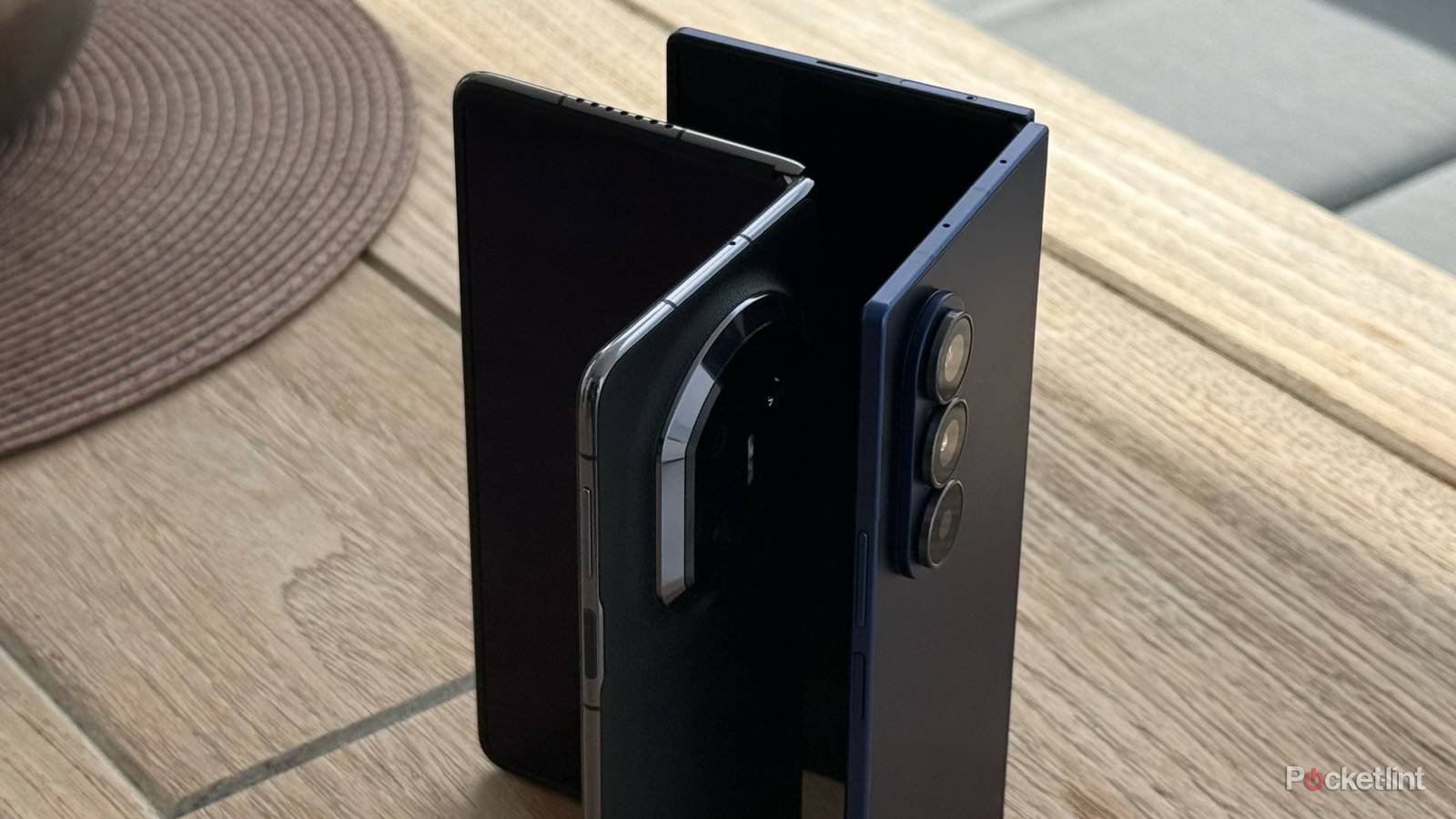

It seems like foldable phones are the future. That might sound like a contradiction with my headline, but it’s a question of timelines. The prospects in the long term are actually great. Tech giants like Samsung, Motorola, and Huawei have invested huge amounts in their efforts, and given that they’ve been churning out new models for years at this point, foldables clearly aren’t a fad. Whatever problems might be present, they’re likely to be further reduced or eliminated as new tech comes along — especially with Apple’s iPhone Fold/Ultra set to add extra pressure.
It’s the current state of foldables that’s debatable. They can be the right choice for some people, but more often than not, you’re better off buying a standard candybar smartphone. Some reasons may be less obvious than others, so here’s what you need to know if you’re on the fence about buying one.
The price-to-performance ratio can be way off
How much is folding worth to you?

Foldables are usually exorbitantly expensive, there’s no way around it. If you want Samsung’s Galaxy Z Fold7, that starts at $2,000 for a 256GB model, and only gets pricier from there. You can buy a pretty powerful laptop for that much, or even a PEV, either of which is likely to be more life-changing unless your job involves carrying a phone and tablet everywhere you go. Heck, if multitasking isn’t that essential, you could buy a 256GB Galaxy S26 Ultra and still save $700.
Even flip foldables usually command some sort of premium. Motorola’s Razr Ultra flip phone is $1,300 before any discounts, and the Z Flip7 comes in at $1,100. To get below the $1,000 mark, there’s usually no choice but to wait for sales, or else find a good deal on an older model. That second option risks sacrificing important advancements, such as better dust and water resistance — something I’ll touch on in the next section.
All this wouldn’t be such a big deal if foldables didn’t make spec sacrifices. Frequently the best processors and cameras are reserved for high-end candybar phones, since keeping weight, thickness, and prices under control is a constant worry in the foldable market. The situation does seem to be improving, particularly with Chinese devices switching over to more efficient silicon-carbon batteries, but you may regret going foldable if your $2,000 purchase doesn’t perform much better than the $1,000 product you’re upgrading from.
Durability remains an issue
Long ways to go yet

The earliest foldables were a gamble. The original Galaxy Fold was actually delayed at the last minute to fix screen and hinge issues, and once the overhaul was ready, it nevertheless lacked an IP rating for dust and water resistance. The product was delicate enough that Samsung provided a long assortment of care tips, warning against things like accidentally peeling off the main screen’s protective layer.
The current situation is better in many respects. The Pixel 10 Pro Fold, for instance, has an IP68 rating, putting it on par with conventional flagships. And hinges in general are far more durable, so there’s little worry about one breaking before you’re ready to switch to a new device.
Regardless, foldables aren’t the best choice for anyone accident-prone or a fan of hiking and camping trips. One issue is the folding screen itself — to bend, it has to stay soft, and that means it’s not protected by materials like Gorilla Glass. It can end up with small nicks, and some people detest the necessary creasing, which can become more pronounced over time.
On top of that, there’s a conventional external screen to worry about, and two sets of cameras. You can slap on a case and a pair of screen protectors — but for some people that might be a dealkiller, given that even the slimmest foldables can be harder to pocket if they’re book-style designs.
Folding can become a hassle
One, twice, a million times

One of the recurring obstacles to the adoption of AR and VR is friction — not the literal kind, but rather the issues that make a product less convenient to pick up. While some of my favorite gaming memories involved playing Pavlov on my Quest 2, I eventually drifted away, simply because stars had to align to make play possible: full power, plenty of floor space, and a willingness to strap on a bulky headset. Often, it was simpler to play a flatscreen game on my PC.
Similar friction comes into play with foldables. In the case of book-style devices, the inside screen might initially be fun to toy with — but since many apps will run just fine on the external display, there’s a chance you’ll end up using that most of the time for speed. Tablet mode might end up being reserved for long downtime, or those rare cases where you need to get serious work done, but don’t have a computer nearby.
Conversely, the problem with flip foldables is that the external screen is only usable for basic tasks. To get much meaningful done, you have to flip the phone open, and doing that several times a day, every day can become annoying. In fact some people treat flip phones as a form of “digital detox,” a way of discouraging themselves from mindlessly scrolling through social media.
For others, of course, these hassles won’t matter or much at all. But before buying a foldable, it’s important to scrutinize your use cases — if you can already do most of the things you want on a conventional phone screen, you should probably save your money.
The cost of an accident or defect can be huge
More to love, more to fix

To use another analogy, one of the biggest mistakes people make when buying an electric scooter or e-bike is having no plan if something goes wrong. Sure, your kid might love getting a scooter for their birthday — but if you (or they) can’t afford to pay for ongoing repairs and maintenance, it’s going to end up tossed in the trash prematurely. Likewise, if you’re relying on a PEV as a car replacement, you’d better have access to a second one, or at least public transit.
Really, when shopping for any smartphone, you should always have enough money set aside for a total replacement, even if it’s a downgrade.
When you’re on any kind of budget, a foldable can be a dangerous choice. On top of durability issues, there are more parts to break, and the cost of fixing the main display can be frighteningly high. Without Pixel Care+ — which is only available in the US and Japan — fixing the internal screen on a Pixel 10 Pro Fold can cost as much or more than buying a base Pixel 10. It’s cheaper to swap out the screen on a flip phone like the Z Flip7, but you’re still looking at several hundred dollars.
Really, when shopping for any smartphone, you should always have enough money set aside for a total replacement, even if it’s a downgrade. It just so happens that when you’re spending upwards of $1,100, maybe $2,000 or more, there’s not going to be as much money set aside as if you’d caved and bought an iPhone 17.
