

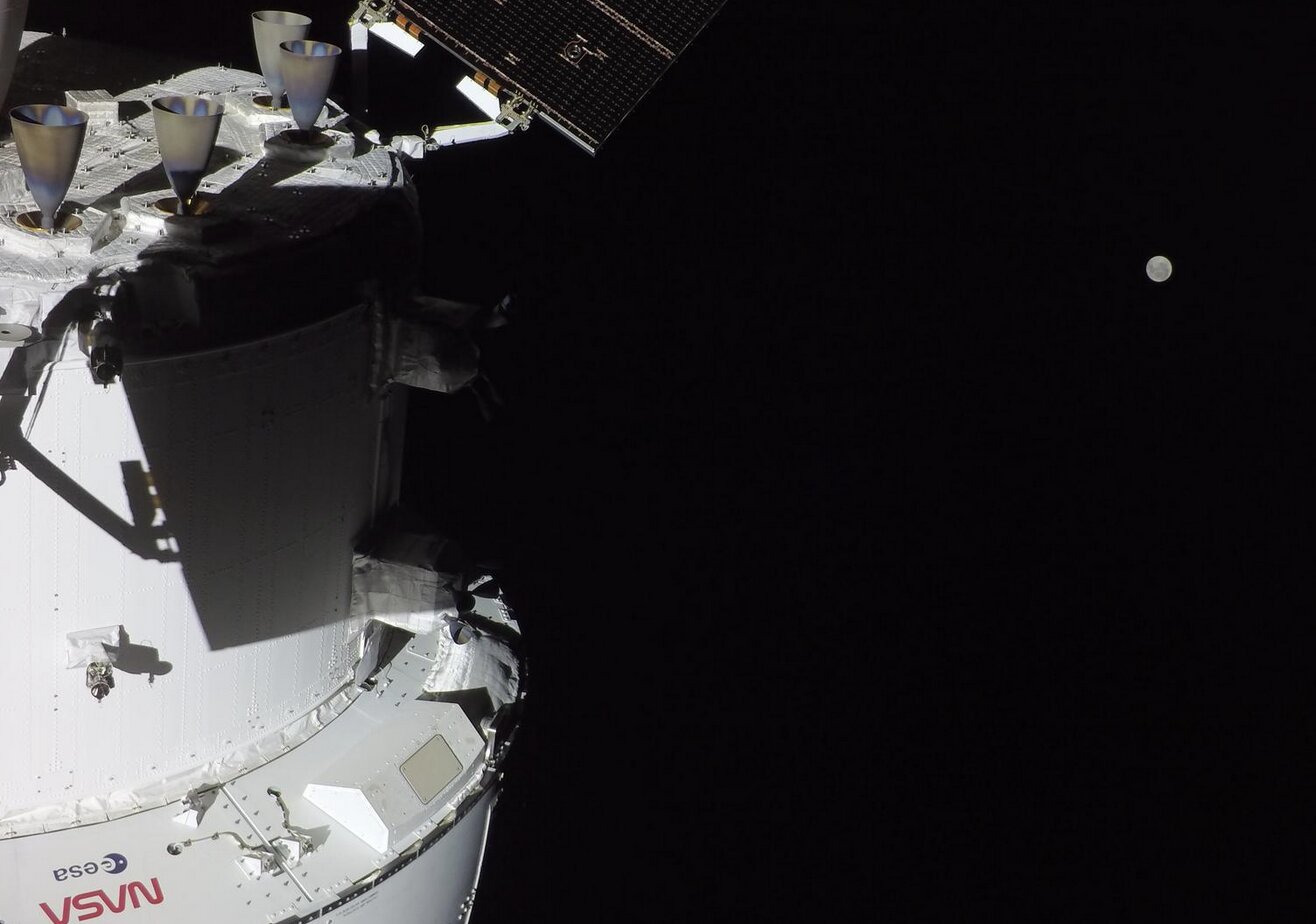

Orion is more than two-thirds of the way to the Moon, traveling at high speed and breaking the Apollo 13 distance record (about 248,655 miles from Earth). It will enter the Moon’s sphere of influence early on April 6.
A lunar flyby will happen Monday, April 6, 2026 at about 2:45–9:40 p.m. EDT . Orion will swing within about 4,000 miles (6,400 km) of the Moon’s far side—the closest humans have been in over 50 years—allowing the crew to take high-resolution photos, make observations, and experience views never seen directly by humans before.
Splashdown is currently targeted for around April 10–11, 2026.
Mission control teams in Houston and the Artemis II crew completed an outbound correction burn to refine the Orion spacecraft’s trajectory to the Moon. The burn began at 11:03 p.m. EDT and lasted 17.5 seconds.
NASA astronauts Reid Wiseman, Victor Glover, and Christina Koch, along with CSA (Canadian Space Agency) astronaut Jeremy Hansen, continue on a precise path to flyby the Moon on Monday, April 6.
Early in their workday, the crew completed a key test objective of the mission: the Orion Crew Survival System (OCSS) suit.
All four crew members conducted a full sequence of tests, including putting on and pressurizing the suit, performing leak checks, simulating seat entry, and assessing mobility and their ability to eat and drink.
Key lunar flyby times, milestones (all times Eastern subject to change based on real-time operations):
1 p.m.: NASA+ coverage of lunar flyby begins.
1:56 p.m.: The crew will surpass the record for humans’ farthest distance from Earth, previously set by Apollo 13 (248,655 miles) in 1970.
2:10 p.m.: Crew remarks on breaking Apollo 13 distance record (audio only)
2:15 p.m.: Crew configures Orion’s cabin for flyby operations
2:45 p.m.: Lunar flyby begins
6:44 p.m.: Predicted loss of communications as crew heads behind the Moon (approximately 40 minutes)
7:02 p.m. Orion closest approach to the Moon
7:07 p.m.: Orion reaches maximum distance from Earth (252,757 miles)
7:25 p.m.: Predicted acquisition of communications as crew reemerges from behind the Moon
8:35 p.m.: Orion enters solar eclipse
9:20 p.m.: Lunar flyby concludes
9:32 p.m.: Solar eclipse concludes

Brian Wang is a Futurist Thought Leader and a popular Science blogger with 1 million readers per month. His blog Nextbigfuture.com is ranked #1 Science News Blog. It covers many disruptive technology and trends including Space, Robotics, Artificial Intelligence, Medicine, Anti-aging Biotechnology, and Nanotechnology.
Known for identifying cutting edge technologies, he is currently a Co-Founder of a startup and fundraiser for high potential early-stage companies. He is the Head of Research for Allocations for deep technology investments and an Angel Investor at Space Angels.
A frequent speaker at corporations, he has been a TEDx speaker, a Singularity University speaker and guest at numerous interviews for radio and podcasts. He is open to public speaking and advising engagements.
