


HDMI cables are used to connect devices to your TV so you can hear and see things. It took a while, but over the past two decades or so, HDMI has become the dominant format for this, and the likes of composite and component cables have gone by the wayside. Those old formats still have a place when it comes to retro hardware such as game consoles and VCRs, so keep them around for that. For the most part, HDMI cables are all you need.
What you might not realize is that HDMI cables do a lot more than provide a picture. I know most people don’t think about the extra things that are offered, and most people don’t even need these extra features, but they’re worth knowing about. You’ll quickly learn that your HDMI cable can do quite a bit more than run from your PS5 to your TV. Will it change the way you use your HDMI cables? I’m not sure about that, but I think you’ll find it interesting, at the very least. Many of these things have been around for a long time, and nobody used them.
HDMI cables can have Ethernet
It’s not popular, but it exists

I didn’t even realize I owned an HDMI cable with Ethernet until I was reorganizing my game room. In small print on the cable, I saw the word Ethernet. These don’t automatically give your device a connection to the internet, as it still needs to be paired with something that’s connected to the internet in the first place. It’s nice if you have a receiver since you could have that plugged in with an Ethernet cable, and then your Ethernet-powered HDMI cable could then pass that connection on to other devices.
These cables never really caught on in terms of mainstream appeal, and a lot of that might come down to advertising. I didn’t know I even had the option of doing this, and I owned a cable that could do it. With Wi-Fi being as good as it is nowadays, I don’t think there’s a need for functionality like this anymore. I know I wouldn’t use it, but that’s mainly because I wouldn’t want to have to replace all my current HDMI cables for a negligible performance gain. Aside from home theater setups, it seems like it’d be tough to set up in any meaningful way. Considering that it never broke through to the mainstream, I don’t think it’s anything you’ll have to think about going forward.
Superior audio if it’s in the right port
Your TV’s HDMI ports matter a lot

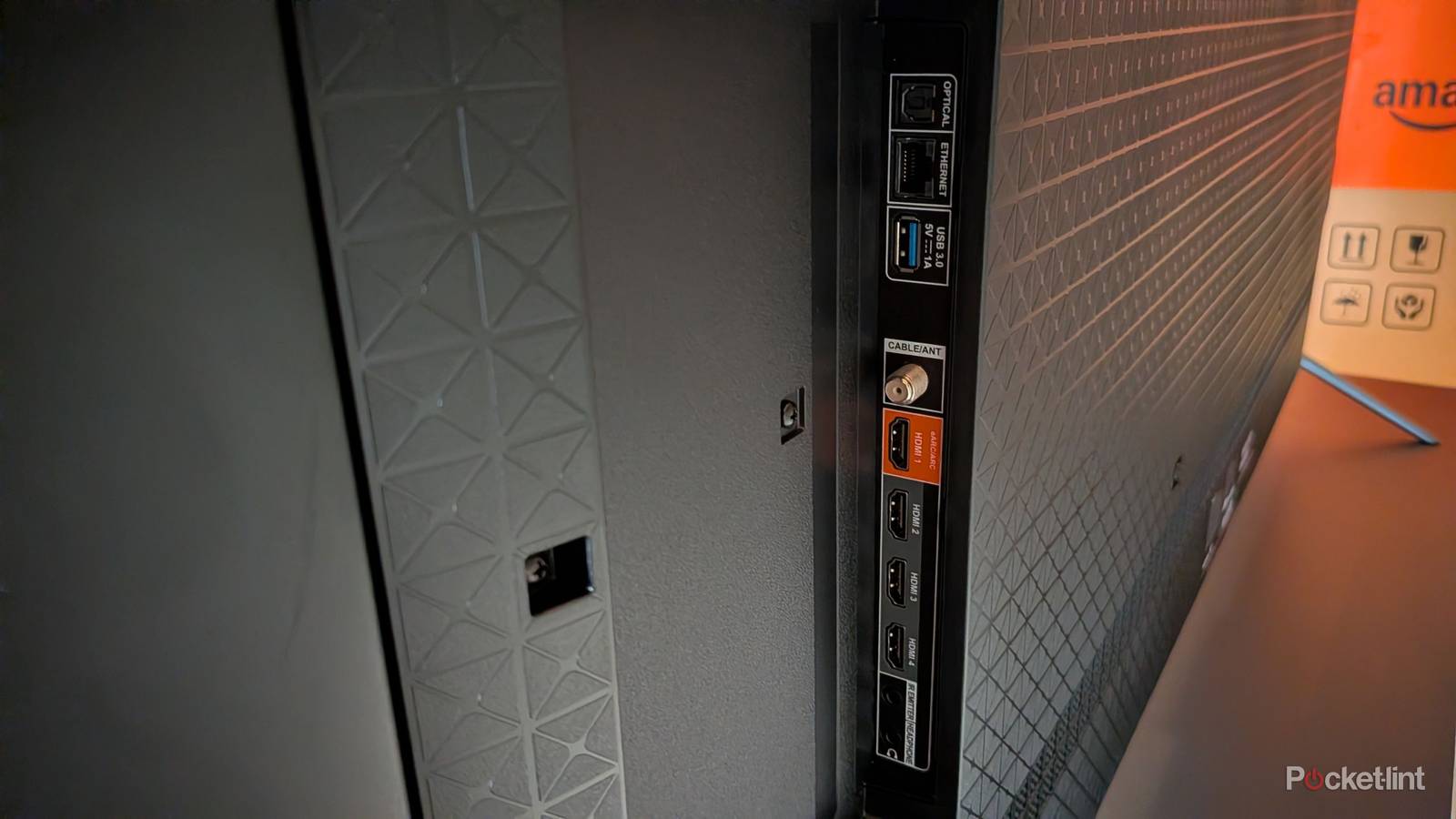
An HDMI 2.1 cable not only gives you the best picture quality you can get, but it also gives you the best audio. However, this all hinges on your using the correct port on your TV. Depending on your TV’s age, you should have an ARC or eARC HDMI port on it. This is the port you need to be using for your sound system, whether that’s a simple soundbar or a home theater receiver.
This port gives you the most audio bandwidth you can get, and it means you’ll get the best quality sound that your TV can offer through it. Your audio still works no matter the port you’re using, but the ARC or eARC port provides the optimal experience. In case you’re unaware, both of these ports give excellent sound quality, but the eARC is the newer standard between the two. If you’re using these ports, pair them with the newest cable you have available, which would be an HDMI 2.1 cable at the time of this writing. Since you already have a third-party sound solution, you might as well make sure you get the most out of it by plugging it into the correct port.
HDMI-CEC is a game-changer
Control it all with one remote

I have so many devices plugged into my TV now, and that means I need several remotes to control everything. I eventually grabbed a universal remote, but before that, I relied on HDMI-CEC to control my receiver, my Apple TV 4K, and my TV. What this meant was that my Apple TV 4K was able to navigate everything, and it controlled the volume on my receiver. Even aside from that, it’s nice for everything to turn on with one press of the power button instead of three separate hits on three remotes. This is a very convenient feature that I really wish everybody would use. The downside is that the Apple TV 4K remote doesn’t have many buttons as it is, so there are better remotes suited for the job.
The only thing you need to do to use this feature is navigate to the settings of all the devices you plan to control and turn it on. This just takes a few steps, and there are no additional steps after the fact. If everything is properly enabled, it means you can just use your remote to control all your devices. I can’t really explain how it’s happening, but I just know everything works without an issue. Even if you just have two devices, I would say with certainty that having to use a single remote is much better than using two.
HDMI can provide power, but it’s not so common
Some older devices can get by

My old Google Chromecast was powered directly by my TV’s HDMI port. I didn’t have to plug it into the USB port or have an external wall outlet to power it. This was many years ago, and now I realize that the Chromecast was a rarity in that regard. My weakest streaming device, a 2025 Roku Streaming Stick, still needs to be plugged into a USB port to run, but at least it can use my TV’s power instead of the wall now. It’s rather difficult to find something that gets powered directly from an HDMI port now, but if you look at some older devices, they’re out there. I still have my old Chromecast, but it’s so old that I don’t see any reason to use it, even if it’s powered over HDMI.
I know most people don’t think about the extra things that are offered, and most people don’t even need these extra features, but they’re worth knowing about.
It’s a bit of a non-issue these days, much like the Ethernet HDMI cables, because your TV typically has some USB ports included that can help take the stress off the HDMI port. Yes, it’d be cool for my TV to power my Roku stick so I could use the USB port for something else, but I can’t say it’s a big deal. In most cases, my USB port is just sitting idly by on my TV waiting for something to do.
