


The solar system as we know it today began to form roughly 4.6 billion years ago, with the Sun and its planets emerging from the collapse of a massive cloud of interstellar gas.
Our star system’s early years remain shrouded in mystery. But by studying a huge cache of meteorites that have fallen to Earth over the years, scientists are finding intriguing clues about how the planets formed and evolved over the interceding billions of years.
Now, as detailed in a paper published in the journal Earth and Planetary Science Letters, scientists say they’ve found evidence of an ancient world, possibly as large as the Moon or even Mars, that orbited a young Sun billions of years ago. The discovery suggests the existence of an entirely separate evolutionary path for a strikingly different class of planets that differ from the ones we share the solar system with today.
“It’s incredible to think there was once a world this large,” said coauthor and University of Colorado, Boulder, assistant research professor Aaron Bell in a statement. “We only know it existed because a few fragments of it happened to land on Earth. These meteorites preserved evidence of a completely different pathway through which early planets developed.”
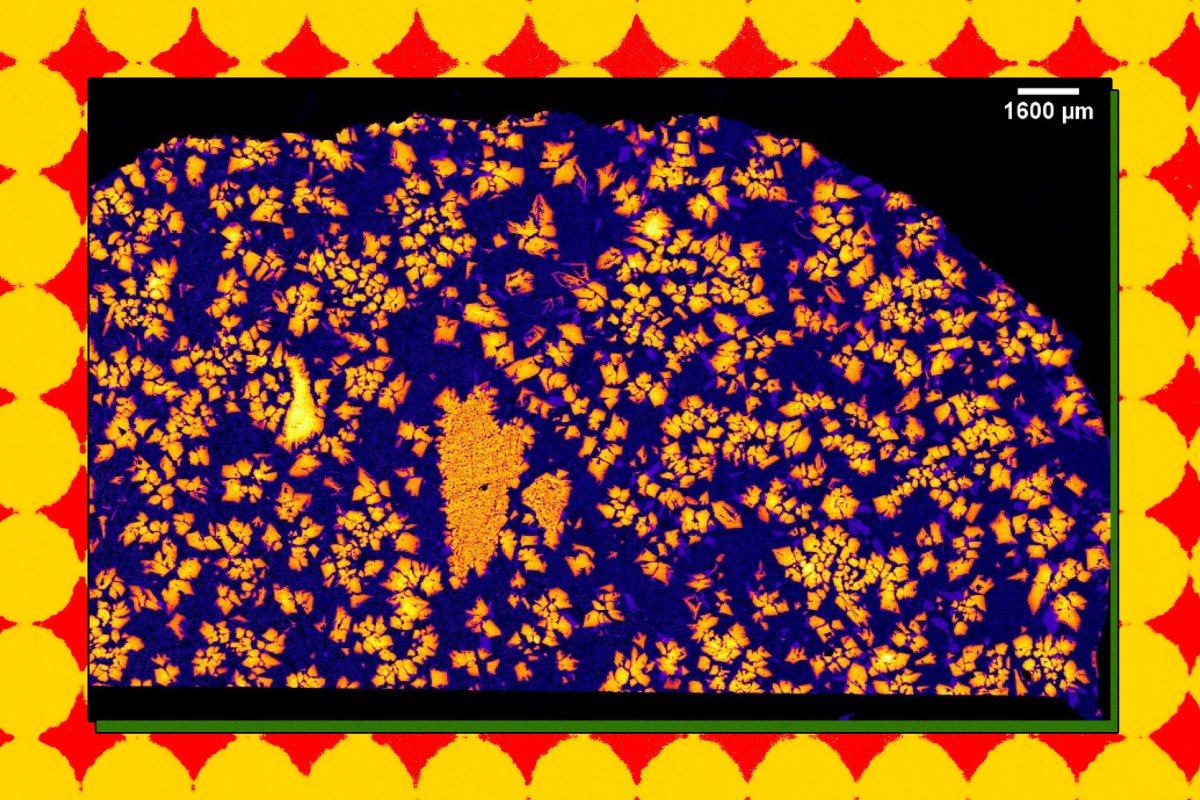
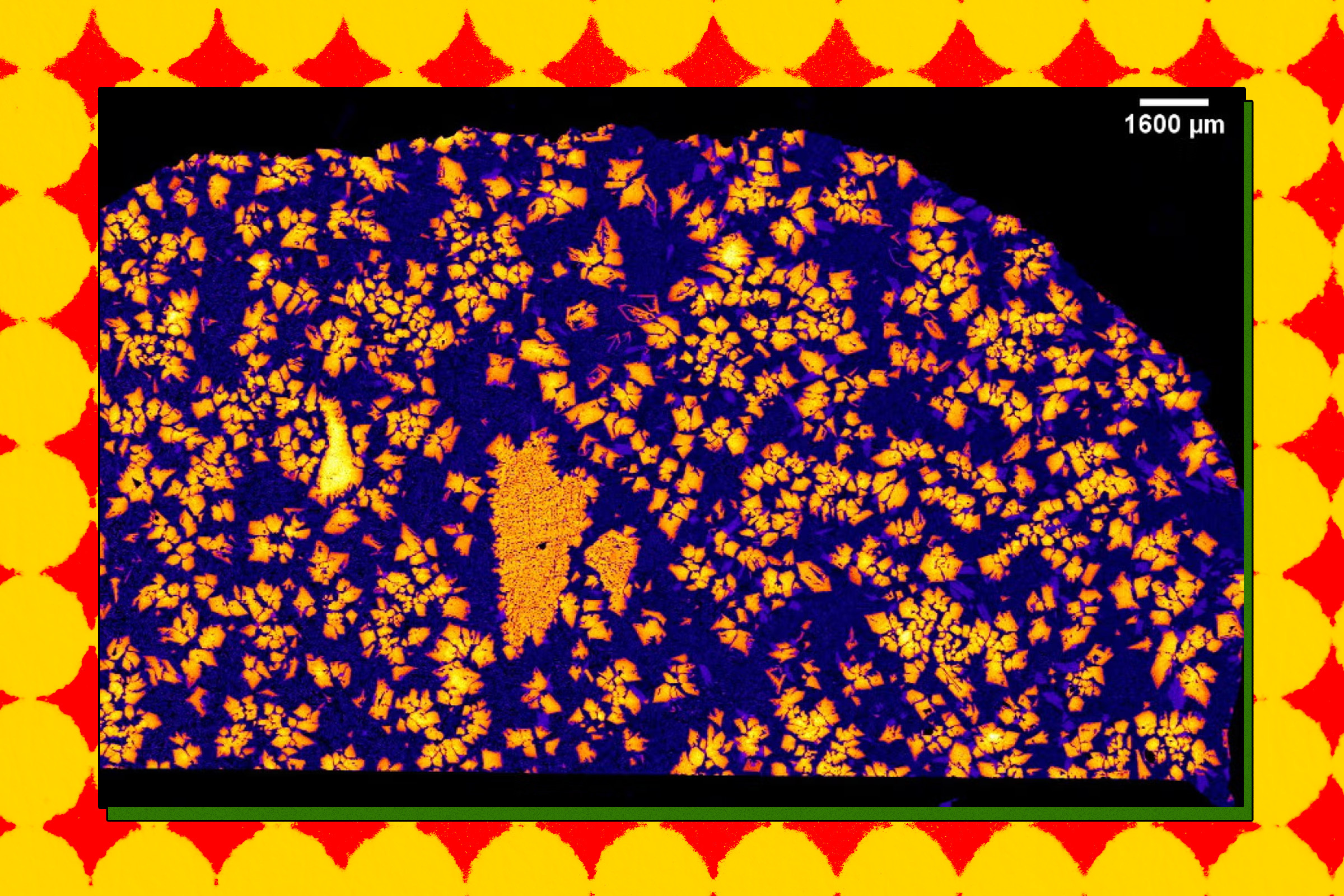
Bell and his colleagues analyzed a roughly one-pound meteorite, dubbed Northwest Africa (NWA) 12774, which was discovered in the Sahara Desert in 2019.
The rock is an angrite, one of the rarest types of meteorites, which scientists believe formed just millions of years after the solar system began. It contains only traces of silicon dioxide, or silica, an extremely abundant ingredient of the rocky planets orbiting the Sun today.
Bell’s team found that it featured a mineral crystal called clinopyroxene, which is rich in aluminum, leading them to believe it must’ve formed under enormous pressure and potentially been buried hundreds of miles underground. However, these crystals preserved their sharp edges, a characteristic that would’ve been lost at such depths, suggesting it both formed in a very large body, but also relatively close to the surface.
According to their calculations, the parent body of NWA 12774 may have had a diameter of anywhere between 1,118 and 2,050 miles. For comparison, the Moon’s diameter is about 2,100 miles, and Mars’ is around 4,200.
“The materials that formed the angrite parent body are fundamentally different from the ingredients of Earth and Mars,” said Bell in the statement. “It points to a distinct and separate evolutionary path in planetary formation in the early history of our solar system.”
Plenty of questions remain. For one, we don’t know how such a parent body met its final demise, flinging its shards across the solar system, only to be embedded in the Sahara Desert. The scientists suggest the early planet may have broken into pieces, each of which eventually accreted enough material to later turn into the fully-grown planets we know today.
In short, it’s a fascinating glimpse into the earliest days of the solar system, and we’re only beginning to understand how the planets formed over billions of years. The research also suggests there may plenty of other alien parent bodies out there that have yet to be uncovered.
“There are many meteorites sitting in drawers that haven’t been thoroughly studied, so there were likely more of these protoplanets we don’t know about,” Bell concluded.
More on planetary formation: Scientists Spot What Appears to Be a Ring-Shaped “Planet Factory” Deep Out in Space
