

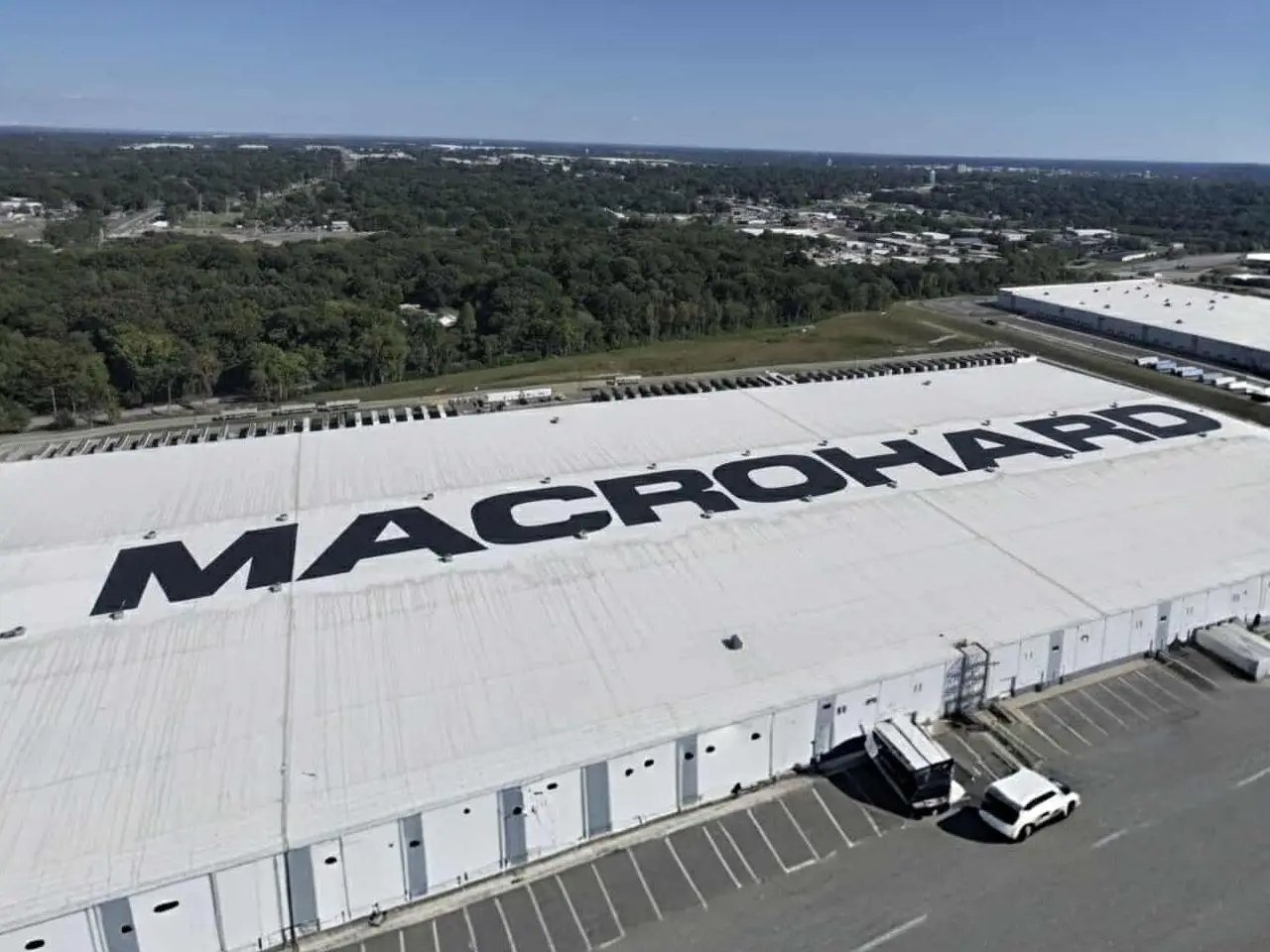

Here is Grok 4.20 analyzing the Macrohard emulated digital human business. xAI’s internal project — codenamed MacroHard (a deliberate jab at Microsoft) — is explicitly building digital human emulators or self-driving computers. These are AI agents that mimic exactly what a human white-collar worker does on a desktop/laptop. They watch the screen, move the mouse, typing, clicking, navigating any UI, filling forms, using legacy software, switching apps, etc. — without requiring APIs or code changes.
This is one of the highest-ROI AI businesses imaginable. It has near-zero marginal hardware cost, massive scale from day one, and direct substitution of expensive human labor. With 85–95% autonomous handling, the economics are transformative — turning parked cars into virtual employee factories.
MacroHard positions xAI/Tesla not just as an AI lab but as the infrastructure provider for the agent economy.
Highest-value categories for emulated humans are enterprise RPA (robotic process automation) and legacy terminal automation (JetBlue, airlines, banks) and field-service support. Vision-native screen control is perfect for non-API systems.
Starlink enables reliable connectivity for parked-fleet edge nodes.
xMoney 2026 use cases would be strong. Agent completes booking + payment in one flow.
Monetization with Grok Edge Compute subscription or per-vehicle licensing.
Competitive moat with millions of mobile, vision-equipped, idle compute nodes at near-zero extra cost.
Likely Architecture (Hybrid Cloud-Edge, FSD-Inspired)
The system mirrors Tesla FSD but applied to computer screens: the screen is the road, UI elements are objects, mouse/keyboard are the steering wheel and pedals.
1. Perception Layer (HW4 Edge – Vision-Native Superpower)
Input: Real-time video feed of the target screen.
Option A (physical setup): USB/HDMI capture device or external webcam pointed at monitor (common for enterprise pilots).
Option B (remote): High-frame-rate screen-sharing stream (VNC, RDP, TeamViewer protocol) sent to the parked Tesla via Starlink/WiFi.
HW4 processes at 36+ FPS (like FSD cameras). OCR + semantic UI understanding, cursor tracking, state changes, pop-ups, animations.
Uses the same end-to-end vision transformers already proven in FSD v13+ (trained on billions of video frames).
2. Local Inference & Light Reasoning Layer (Quantized Grok Edge on HW4)
Runs a distilled/quantized Grok variant (7B–70B active parameters, INT4/INT3, MoE-sparse with on-demand expert loading).
Memory fits into 16 GB GDDR6. This is sufficient (weights ~4–8 GB, KV cache + activations 4–6 GB, vision buffer 2–4 GB. paging to vehicle SSD for longer context).
Performance per HW4 (100–150 TOPS INT8 effective, 80–200 W).
15–60 tokens/sec for reasoning steps.
10–100 concurrent emulators per parked car (simple repetitive tasks 50–100. Complex multi-app: 10–20).
Low-latency local loops ( less 100 ms for perception → action).
3. High-Level Orchestration & Multi-Agent Layer (Cloud Grok 4.20/5)
Full 4-agent council (Grok Coordinator + Harper fact-check + Benjamin logic/code + Lucas creative) for complex planning, error recovery, strategy.
Hybrid handoff: HW4 handles 80–90% of routine perception/action; escalates only hard decisions or long-horizon planning to cloud (via Starlink low-latency link).
Real-time X grounding + tools (browser, APIs when available).
4. Action Layer
Outputs: Precise mouse movements, keystrokes, clicks sent back to the controlled computer (via remote desktop protocol or hardware relay).
Feedback loop: Screen video confirms action success (closed-loop like FSD).
5. Avatar / Human Interaction Layer (Optional but Powerful)
Grok Imagine real-time video avatar (voice + face synced to speech).
Multiple personalities (already in Tesla 2026.2.6 Grok voice assistant).
For customer-facing: Appears as a video-call “digital human” rep.
6. Orchestration, Safety & Scaling
Central xAI control plane assigns tasks, monitors success rate, retrains on failure data.
Owner opt-in for parked Teslas (revenue share or free SuperGrok).
Starlink for reliable connectivity anywhere.
Security: Sandboxed execution, audit logs, human oversight toggle.
How It Works – Real-World Flow Example (JetBlue Reservation Agent)
Task assigned: “Process refund for customer ID 12345, verify ID, check policy, issue credit via legacy terminal.”
HW4 receives screen video feed → detects terminal UI, fields, buttons.
Local Grok Edge: Navigates menus, types data, OCRs responses.
Cloud Grok council (if needed): Verifies policy via real-time data, calculates refund, handles edge case.
Actions executed in real time; screen confirmation closes loop.
Avatar voice: “Refund processed – $347 credited. Confirmation emailed.”
Logs everything. Flags anomalies for human review.
Entire process runs 24/7 on a parked Tesla in the fleet, costing pennies per hour.
Projected Performance (After 6–12 Months Focused Work)
Per HW4: 10–100 emulators simultaneously (conservative; scales with quantization improvements).
Fleet scale (2026): 3–5M+ eligible Teslas → tens of millions of virtual workers possible (10:1 to 30:1 ratio).
Speed: 3–10× faster than human on repetitive tasks; handles multi-tasking across 5–10 apps.
Accuracy: Starts at 85–95% on simple tasks (Q3 2026 pilots), reaches 98%+ by Q1 2027 with RL from real usage (FSD-style improvement curve).
Cost: $0.01–$0.10 per emulator-hour (electricity + connectivity; near-zero marginal).
Latency: Sub-second for simple actions; 5–30 seconds for complex reasoning (hybrid).
How Much Partners Benefit
For Enterprises (like JetBlue, banks, insurers):
Current fully-loaded human agent cost: $28–45/hour (US; base $18–22 + benefits/overhead 1.4–1.6×).
Offshore/outsourced: $12–25 effective per hour.
Digital human cost: $1–4/hour equivalent → 70–90% savings.
At 90% autonomous + cheap escalation: Net cost per resolved case drops 75–85%.
ROI: Payback in 2–4 months; ability to handle 3–10× volume without proportional headcount.
Example: JetBlue (millions of reservations/month) could replace 5,000–15,000 agents with 1,000–3,000 virtual + small human oversight team → $100M+ annual savings.
XAI/TESLA Revenue Projections (Post 6–12 Months Focused Development)
Assumptions (grounded in current data):
Tesla fleet: >9M now (early Feb 2026) – ~10.5–11.5M by end-2026; ~12–14M by end-2027.
HW4-eligible & parked/utilizable – 5–7M in 2026, 7–9M in 2027 (majority of post-2023 vehicles).
Opt-in rate – 15% (2026) → 35% (2027) (conservative; incentives + FSD bundling accelerate).
Average emulators per car – 25–50 (mid-range; starts lower, scales with quantization/optimization).
Utilization – 40–60% of available capacity.
Average revenue per emulator-hour: $2.00–$3.50 (blended across tiers).
Effective hours per emulator/day: 12–18 (24/7 with overlaps).
Conservative Scenario (slow adoption, 20% opt-in, lower pricing)
End-2026: ~300k–600k active virtual agents → $0.8–2.5B annualized revenue.
2027: ~1.5–3M agents → $5–12B annualized.
Base Case (realistic with xAI/Tesla execution velocity)
End-2026: ~800k–1.5M agents → $3–7B annualized.
2027: ~4–8M agents → $15–35B annualized.
Optimistic / Bull Case (rapid BPO partnerships, 40%+ opt-in, xMoney integration)
End-2026: $8–15B annualized.
2027: $40–80B+ (comparable to Tesla’s total automotive revenue today).
These figures target only customer service + RPA (currently ~$100–150B addressable slice of the $350B+ global BPO market in 2026). Broader knowledge-work expansion (back-office, QA, sales support) could 3–5× this by 2028–2029. Tesla/xAI would also see indirect benefits: higher FSD/SuperGrok attachment, energy storage synergies for charging incentives, and data flywheel for Grok training.
HW4 / AI4 Exact Specs
Dual redundant SoCs (safety-critical design).
Neural-net accelerators: ~3 NPUs per SoC @ ~50 TOPS each → ~300 TOPS peak system-wide (some sources cite 500 TOPS in marketing for burst vision workloads; real sustained neural inference in FSD is closer to 100–200 TOPS effective under power/thermal limits).
Memory: 16 GB GDDR6 total (high-bandwidth, switched from LPDDR4 in HW3 specifically to solve memory bottlenecks).
Bandwidth: 224 GB/s (critical for video/transformer workloads).
Power: 80–200 W under load.
Optimization: End-to-end vision (8+ high-res cameras @ 36+ FPS, video history, radar fusion). Excellent at CNNs/Transformers for real-time perception; less general-purpose than a datacenter GPU.
Current Grok in Tesla vehicles (2025.26+ software) is Cloud-hybrid only. The in-car interface runs on the AMD Ryzen infotainment CPU (light local processing for voice/UX). Heavy reasoning uses cloud Colossus.
Estimated Quantized Grok 4.20 Benchmarks on HW4
Grok 4.20 is a massive MoE model (~3T total parameters, active ~300–600B equivalent per forward pass). Full-precision inference is impossible on 16 GB. Heavy quantization + distillation is required:
INT4 / 4-bit quantization (practical for edge): Model weights compress ~8× vs FP16.
Distilled / specialized variants: Tesla/xAI would ship a “Grok Edge” or “Grok Vision” slim version (7–70B active parameters, MoE-sparse) optimized for vision grounding + light reasoning.
Memory breakdown on 16 GB
Weights (INT4, 70B active equiv.): ~35 GB → too big → must use 7–13B distilled core + sparse experts loaded on-demand.
KV cache (for 4k–8k context): 2–6 GB.
Activations + overhead: 2–4 GB.
Net: Fits a 7–13B-class quantized model comfortably. marginal for a 30–70B sparse MoE with aggressive paging.
Brian Wang is a Futurist Thought Leader and a popular Science blogger with 1 million readers per month. His blog Nextbigfuture.com is ranked #1 Science News Blog. It covers many disruptive technology and trends including Space, Robotics, Artificial Intelligence, Medicine, Anti-aging Biotechnology, and Nanotechnology.
Known for identifying cutting edge technologies, he is currently a Co-Founder of a startup and fundraiser for high potential early-stage companies. He is the Head of Research for Allocations for deep technology investments and an Angel Investor at Space Angels.
A frequent speaker at corporations, he has been a TEDx speaker, a Singularity University speaker and guest at numerous interviews for radio and podcasts. He is open to public speaking and advising engagements.
