

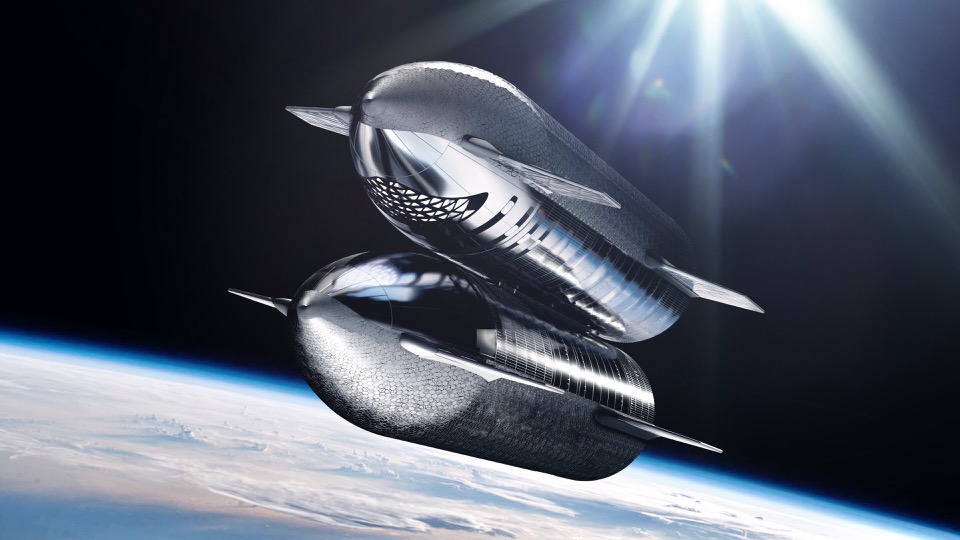

SpaceX did NOT publicly share specifics of the simplified and faster return to the moon plan. They described that they have made proposals and NASA is looking at it.
SpaceX revealed they have made 600 raptor engines. This means enough for 15 full boosters and 30+ Starships. They have had a few booster recoveries and a few reuses.
They must be building over 1 raptor engine per day and heading to 2 raptor engines per day.
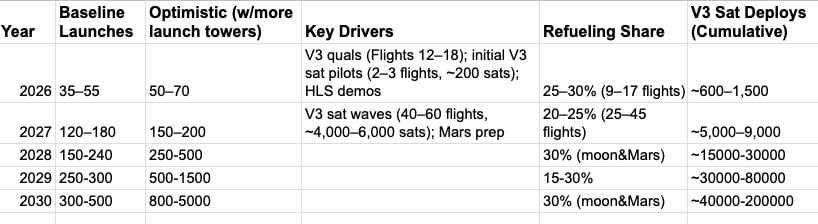
Getting to 30+ Starship launches in 2026. They need to get to 2 raptor engines per day and 15 full boosters and some amount of reuse. At least average one reuse per booster for 30 launches. Average two reuses per booster for 45 launches. Three reuses per booster for 60 launches.
In 2027, likely going go building 4-5 raptor engines per day. Need to have 6-7 booster reuses to get to about 200 Starship launches in 2027.
There needs to be more launch facilities as well.
Need to hold about 30 boosters and Starships or only have 20 and have 10-12 reuses per year.
My guess of a SpaceX simplified plan. Launch rate and launch cadence needs to increase faster, need to do multiple tests in the same missions, need to reduce the number of launches and refueling launches needed to fulfill Artemis 3 mission.
Two launch towers, could have two refueling demos running in parallel. By end-2026, SpaceX aims for three operational pads (two in Texas, one in Florida), scaling to five by 2028 with SLC-37 online. This enables ~300+ Starship flights/year globally, prioritizing Starlink V3 (gigabit speeds, lower 350 km orbits) and Artemis (lunar landings, Mars prep).
Weekly launch cadence is key or twice weekly launch cadence.
Can they stand up a third or fourth launch tower faster?
Can the first uncrewed demo be done in LEO ? Partial refuel to NRHO, building data without full-stack risks. This mirrors Commercial Crew’s approach, where Falcon 9/Dragon iterated safely via uncrewed Cargo Resupply Missions.
Certify subsystems (docking with Orion mockups) in ground/vacuum tests at NASA’s Johnson Space Center, reducing flight dependencies.
Use low-energy transfers (ballistic lunar trajectories) to cut delta-V by 10–20%, reducing propellant by ~2–4 tankers. Trim the fuel needed from 1200 tons to ~800 tonnes.
HLS already shed ~10 tonnes by removing Earth-reentry hardware. Further tweaks (lighter solar arrays and shorter HLS) could reduce weight and save 5–10% propellant. V3 Starship’s higher ISP Raptors (targeted 2026) boost efficiency by 15%.
Pre-position a partially filled depot via fewer, larger tanker loads (100-tonne transfers per flight). Multi-port docking for simultaneous refuels, cutting operational time.
The uncrewed Artemis HLS test can tolerate lower margins (no crew abort test on one or two). Modifications for 20–50% fewer tankers via aggressive trajectories or partial fills.
Combining Uncrewed Tests with Refueling Tests. Core optimization in the plan, reducing total launches by 20–30%.
Use uncrewed HLS as the “receiving” vehicle in refueling demos, combining landing/ascent quals with transfer.
LEO demo: Tanker → HLS transfer → simulated NRHO burn.
Tankers for demos double as Artemis 3 prep, amortizing ~5–10 launches across tests.
CLPS missions (Falcon-launched lunar payloads) provide surface data to inform HLS without Starship flights.
Can Falcon 9 and Falcon Heavy do some testing of lunar components?
Could falcon 9 or Heavy deliver some Artemis related pieces to the moon?
If Falcon 9/Heavy had refueling they could deliver some fuel to the moon and lunar landing pad. This would let the Artemis and the lunar surface test take less fuel to the moon. Lighten up the main mission and main uncrewed tests.
Drops effective launches from 30–45 to ~20–25 for full certification, as one flight validates multiple milestones.
Brian Wang is a Futurist Thought Leader and a popular Science blogger with 1 million readers per month. His blog Nextbigfuture.com is ranked #1 Science News Blog. It covers many disruptive technology and trends including Space, Robotics, Artificial Intelligence, Medicine, Anti-aging Biotechnology, and Nanotechnology.
Known for identifying cutting edge technologies, he is currently a Co-Founder of a startup and fundraiser for high potential early-stage companies. He is the Head of Research for Allocations for deep technology investments and an Angel Investor at Space Angels.
A frequent speaker at corporations, he has been a TEDx speaker, a Singularity University speaker and guest at numerous interviews for radio and podcasts. He is open to public speaking and advising engagements.
