


Why you can trust TechRadar
We spend hours testing every product or service we review, so you can be sure you’re buying the best. Find out more about how we test.
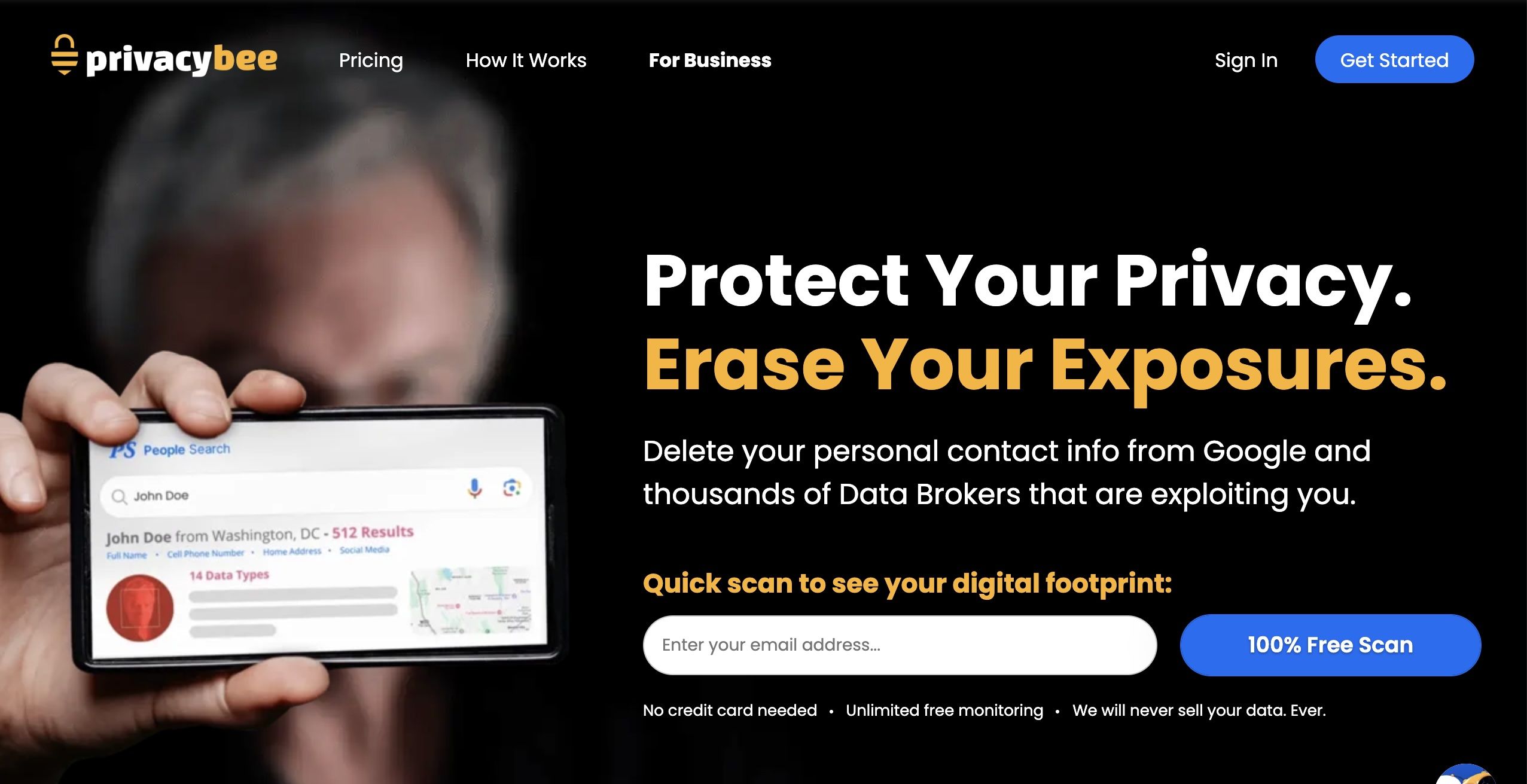
Privacy Bee remains one of the strongest “set-and-forget” data removal platforms in 2026, ideal for users who want more than basic broker opt-outs and are willing to pay a premium for automation, family coverage, and extra tools like tracker blocking and breach alerts. It’s still one of the pricier options, but its depth of features and strong independent ratings keep it among the top data removal services available today.
Data brokers, people-search sites, and marketing databases continue to harvest personal information from public records, social media, loyalty programs, and even obscure online forms. They package and resell this data to advertisers, lead generators, and, at times, questionable third parties. While mostly legal, this ecosystem raises serious concerns about stalking, doxxing, phishing, and identity theft – driving continued demand for automated data removal services that handle the tedious opt-out process and monitor for reappearances.
Privacy Bee positions itself as a full privacy suite rather than a simple removal tool. It combines broker opt-outs with risk assessments, marketing list suppression, dark web exposure checks, and a browser extension that manages “trust” in real time. That broader scope, plus family protection and business-focused options, helps justify its higher pricing compared to rivals like DeleteMe, Kanary, and Mozilla Monitor Plus, which focus more narrowly on broker lists.
Let’s take a look at Privacy Bee.
Privacy Bee: Plans and pricing

Privacy Bee has evolved from a single flat annual price into a more flexible three-tier structure: Essentials, Pro, and Signature, with options for monthly billing, multi-year discounts, and multi-person coverage.
The Essentials package targets people-search sites only; Pro adds broader broker coverage across hundreds of additional sources; and Signature adds priority support and more hands-on remediation for urgent or high-risk cases.
When you’re looking at the pricing, you can choose to pay every month for the more basic options. But if you want to get the best deal, it’s better to go for the yearly plans. This way, the monthly price drops significantly, especially if you sign up for several years at once or add others to your plan, like partners or family members.
At the time of this writing, the Essential version is $96 per year, the Pro version is $216, and the Signature version is $804. Discounts are often available online.
Privacy Bee: Features

Privacy Bee centers on what it calls “Proactive data privacy”: you declare which companies you trust and which you do not, and the platform then centralizes and enforces those preferences. Its coverage spans hundreds of data brokers and people-search sites, over 400 for core removal, and well past 1,000, when you include broader marketing, industry lists, and smaller aggregators – putting it at the high end of the market in terms of total sites targeted.
The service automatically sends opt-out and deletion requests, tracks responses, and periodically re-scans to catch re-exposure, turning what could be hundreds of manual forms and emails into a largely hands-off process.
Privacy Bee does a lot more than just the basics. It also gives you some really useful extra tools to help keep your data safe. For example, it can scan the internet to see if your information has been leaked or shared without your permission. It also checks public social media posts and suspicious search results to give you a score for how private your data is. Then, it tells you what you can do to make it safer. It also helps stop junk mail and spam emails by removing your name from lists companies use to send you unwanted messages. This is something that many other services don’t do.
There’s also a tool you can add to your browser, primarily for Firefox, that lets you see whether a website is trustworthy. You can block trackers from sites you don’t trust and change your settings as you browse the internet. It’s like having a control panel for your privacy that you can use in real-time. This means you have more control over who sees your data and what happens to it when you’re online. It’s a pretty powerful tool for keeping your information private and secure.
Privacy Bee is a great tool for families. It has a central dashboard where you can add family members and manage their privacy settings. You can also decide if they get their own login or if you handle everything for them. This is really helpful for kids and older relatives who might not be good at keeping their digital info safe.
The dashboard is a great way to keep an eye on everything and make sure your family’s privacy is protected. You can add or remove family members easily and change their settings as needed. It’s also good for keeping kids safe online, as you can control what they can and can’t do. For businesses, Privacy Bee’s features can help prevent attacks like spear-phishing, which can be highly damaging.
It can also help stop employee doxxing, which is when someone’s personal info is shared online without their consent. Overall, Privacy Bee is a useful tool for both families and businesses. It helps keep people’s digital info safe and reduces the risk of online attacks.
On the other hand, Privacy Bee also offers features for businesses to reduce risks such as spear-phishing, employee doxxing, and social engineering. These features are usually sold separately from the plans for regular people.
Privacy Bee: Setup
Getting started with Privacy Bee is relatively pain-free and typically takes a single session. You begin by creating an account, selecting a plan, and entering core identifiers, such as your name, physical addresses, email addresses, phone numbers, and, in some cases, additional aliases, to provide the system with enough information to locate your records.
During onboarding, Privacy Bee guides you through its “trust” model, prompting you to mark specific companies and categories as trusted or untrusted so that future opt-outs match your preferences.
Once your profile is configured, the platform launches an initial scan across its broker list and related sources, populating your dashboard with exposure findings and a baseline risk view. From there, it automatically sends opt-out requests, first to high-priority people-search and data-broker sites, then gradually to broader sources, a process that can take days to weeks, as third parties respond at their own pace.
Adding family members or additional identities follows the same flow: you enter their details, decide whether to grant a personal login, and the system integrates them into ongoing scans and removal workflows.
Privacy Bee: Ease of use
The Privacy Bee website is easy to use, even if you’re not tech-savvy. It shows you important information in a simple way, using cards to display how many sites have been checked, how many removals are pending, and where new problems were found. You don’t need to understand complicated legal or technical terms to use it. If you want more control, you can use the “Manage Your Trust” tools to look at individual companies and categories, change your trust settings, and see how those changes will affect what happens in the future. This way, you can easily manage your privacy and make sure your information is protected.
There are some downsides to consider, though. For one, Privacy Bee is primarily a web-based service accessed through browser extensions. Unfortunately, these aren’t available in every browser. On another down note, Privacy Bee doesn’t have a full-featured mobile app that’s as good as its desktop version. So, if you need to manage your privacy on the go, you might find it a bit limited. On the other hand, if you’re someone who mostly uses a desktop and wants a service that’s easy to use and doesn’t require much effort, Privacy Bee’s interface is a good mix of simple and transparent.
Privacy Bee: Security and privacy

Given its mission, Privacy Bee is under pressure to demonstrate strong handling of the sensitive information customers must provide. The company never sells customer data, emphasizing that any internal analytics or marketing tools it uses are limited and that its business model is strictly subscription-based, not data-driven. It has published a privacy policy, and FAQs go into detail about this stance, explaining that it aims to reduce the overall data it must retain and to minimize sharing with third parties beyond what is necessary to process opt-outs.
On the security side, Privacy Bee employs protections such as encrypted data transmission and hardened infrastructure, and it invests heavily in monitoring breaches and vulnerabilities for users. While it is not an identity theft insurance provider, Privacy Bee still operates in the same risk space as services like IDX Complete and Aura. One trade-off is that, like many data removal tools, Privacy Bee is still primarily focused on U.S. users and U.S.-based brokers; European and other international coverage remains limited, which matters if you split time or maintain records across regions.
Privacy Bee: Support
Privacy Bee backs its service with a mix of documentation, educational content, and direct support. Its help center and FAQ sections cover core topics such as how removal requests work, what data is stored, what happens after an opt-out is submitted, and how to interpret your dashboard results, which helps reduce anxiety for first-time users.
The company also publishes a privacy-focused blog that explains trends in data brokerage, breach news, and best practices for staying safe online, helping customers understand the broader context of their subscription rather than treating it as a black box.
For direct assistance, you can typically reach Privacy Bee through online forms or ticketed support, with higher-tier plans like Signature offering more responsive, priority handling for sensitive or urgent issues.
Privacy Bee: The competition
The market for removing personal data has gotten increasingly crowded in recent years. Today, Privacy Bee has to compete with other well-known services like DeleteMe, Kanary, Optery, Mozilla Monitor Plus, and some newer options from security suites and privacy-focused browsers.
DeleteMe is still a popular choice for people who want a simple way to remove their data from brokers without spending a lot of money. It’s usually cheaper than Privacy Bee, but it doesn’t cover as many sites and doesn’t have as many controls or tools for families. Kanary and Optery, on the other hand, are great for users who want really detailed reports and different levels of coverage.
Meanwhile, Optery’s top plan can be more expensive than Privacy Bee, but it also offers very detailed documentation and custom removals. Kanary strikes a good balance between covering many brokers and offering both paid and free options, though the free option is limited.
Overall, users have many choices now, and each service has its own strengths and weaknesses. It’s worth doing some research to find the best fit for your needs and budget.
When it comes to protecting your personal info online, there are many options. Mozilla Monitor Plus is one of them, and it’s really closely tied to Mozilla’s other products, like Firefox and their VPN. It’s also pretty affordable and includes breach monitoring, which is a big plus.
Some other security platforms, like Aura and IDX Complete, offer similar services, but they might not cover as many areas as specialized tools.
Privacy Bee: Verdict
This service stands out as a premium, full-featured data removal solution that goes beyond basic broker opt-outs with robust privacy management, monitoring tools, and family-focused protections. Though its higher cost and limited platform compatibility may deter some users, the combination of broad coverage, automation, and a strong reputation makes it a solid choice for individuals or households seeking thorough and worry-free privacy control.
For those prioritizing depth, reliability, and convenience over budget pricing, this platform remains a top contender in the data removal space.
