

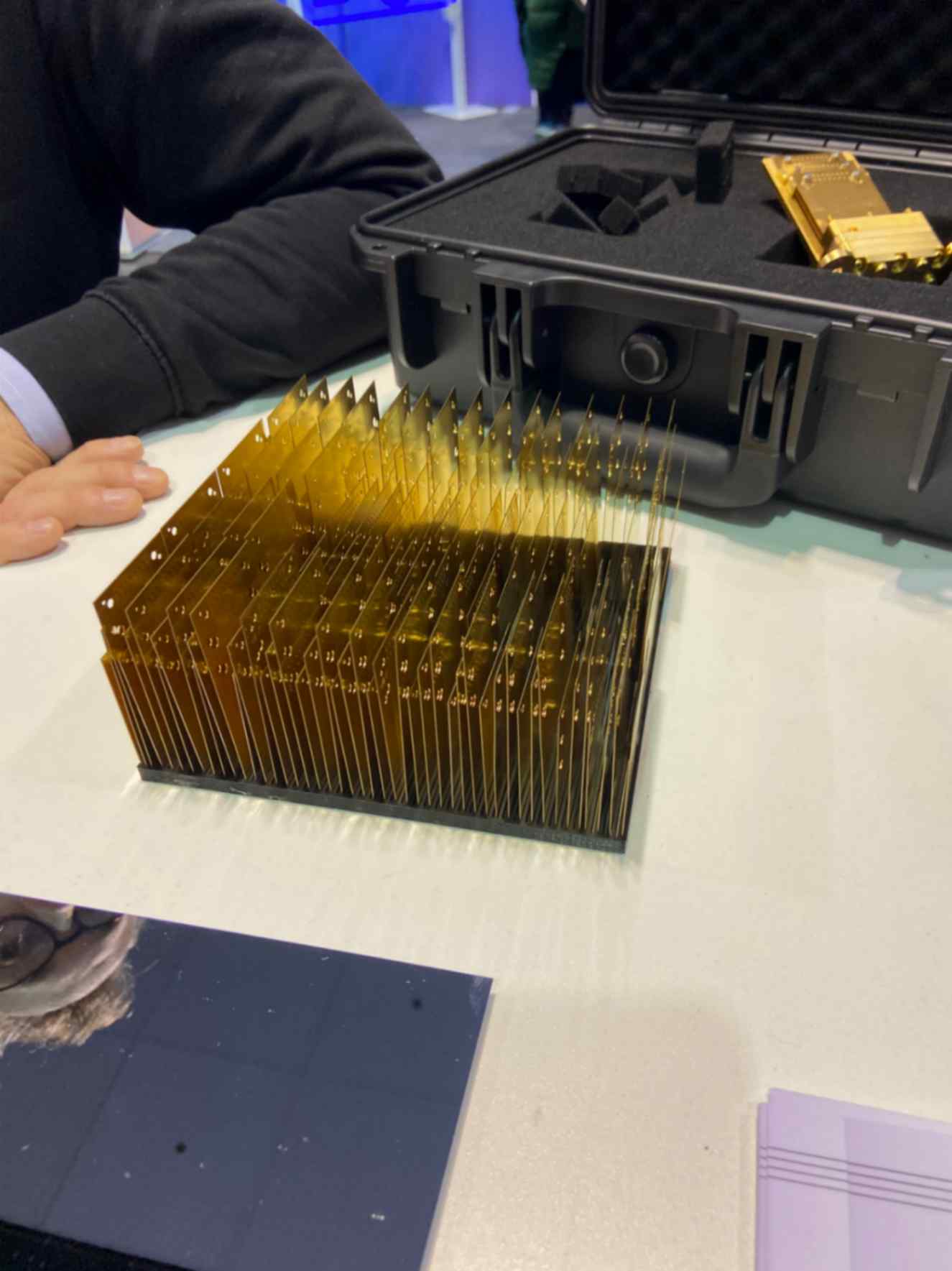

Quantware has solved the fanout problem for superconducting quantum computers. They are making breakthroughs that can scale quantum computers to millons of qubits by 2029.
They are at the Q2B silicon valley conference today at the Santa Clara convention center.
QuantWare announces VIO-40K, a new scaling architecture for quantum chips which solves the bottlenecks of scaling quantum computing, enabling 10,000 qubit quantum chips, 100x more qubits than current industry state-of-the-art from Google and IBM. It will be available in 2028.
* VIO-40K architecture supports 40,000 input–output lines and consists entirely of chiplet modules connected to each other via ultra-high-fidelity chip-to-chip connections.
* QuantWare’s architecture provides exponentially more compute per dollar and per watt compared to systems built out of many smaller QPUs connected over low-fidelity network connections – and it’s available to the entire industry so any organization working with superconducting qubits can now make more powerful QPUs.
* In addition, QuantWare will open KiloFab in Delft, Netherlands in 2026 – an industrial-scale fab to manufacture VIO-40K chips at large. QuantWare is already the world’s largest commercial provider of quantum hardware by volume in the world today, Kilofab will increase its production capacity by 20x.
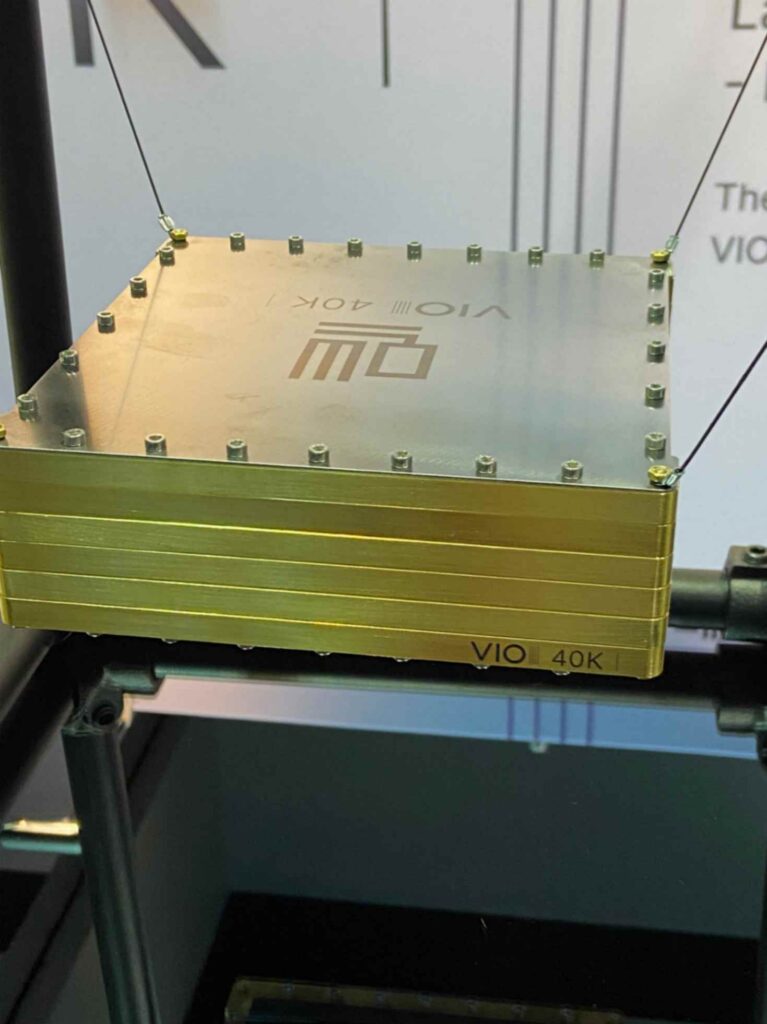
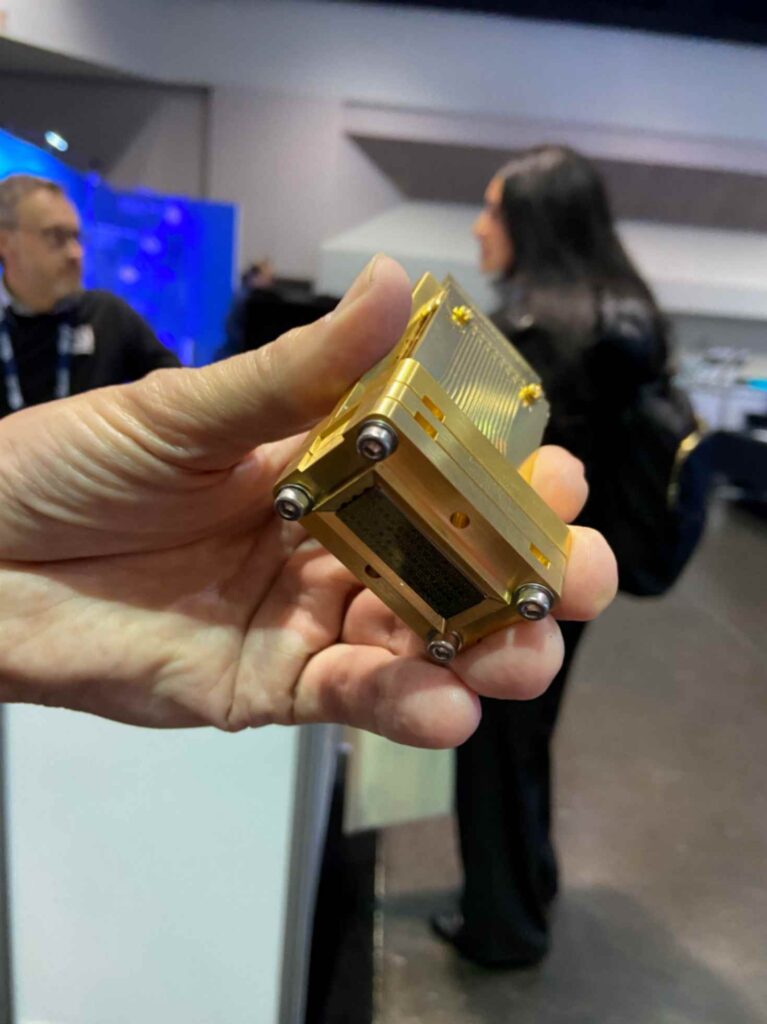
Here is the roadmap to 2028. In 2029, an array of 10X10 (100 units) will enable 1 million qubits with fast operations.
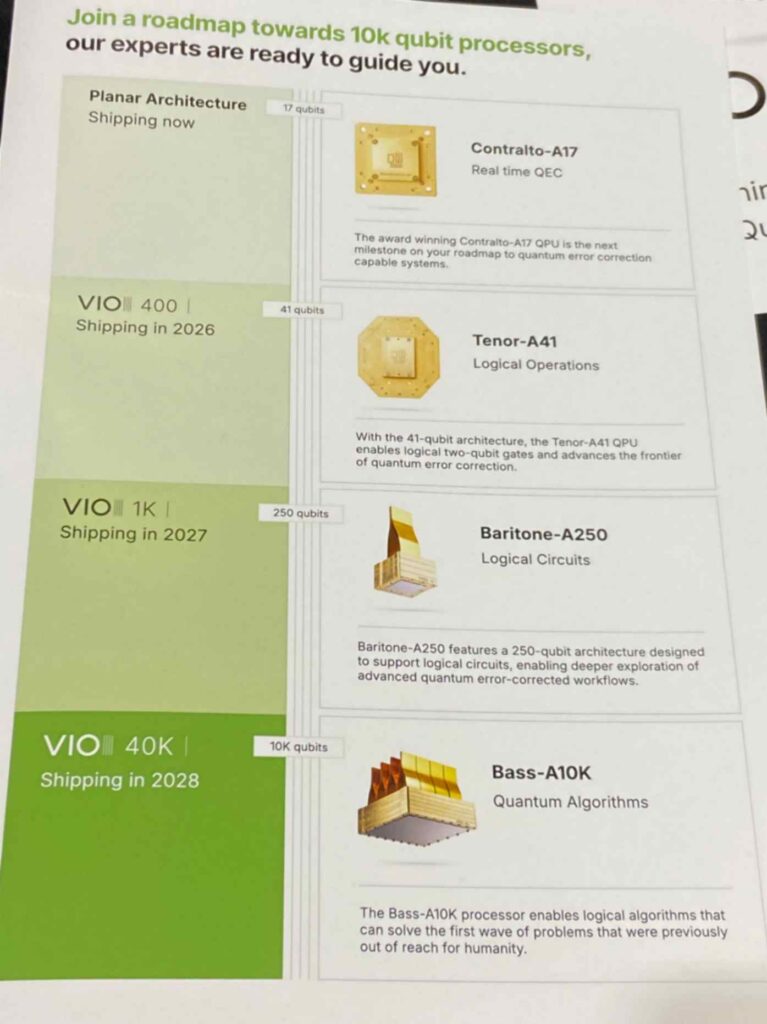
The system will work with ANY superconducting quantum computing system. They will be able to increase the density and scale them from hundreds of qubits to millions.
The array of chips is at the base of the networked units and the vertical components of input and output lines connected to further networking at the top of the units.
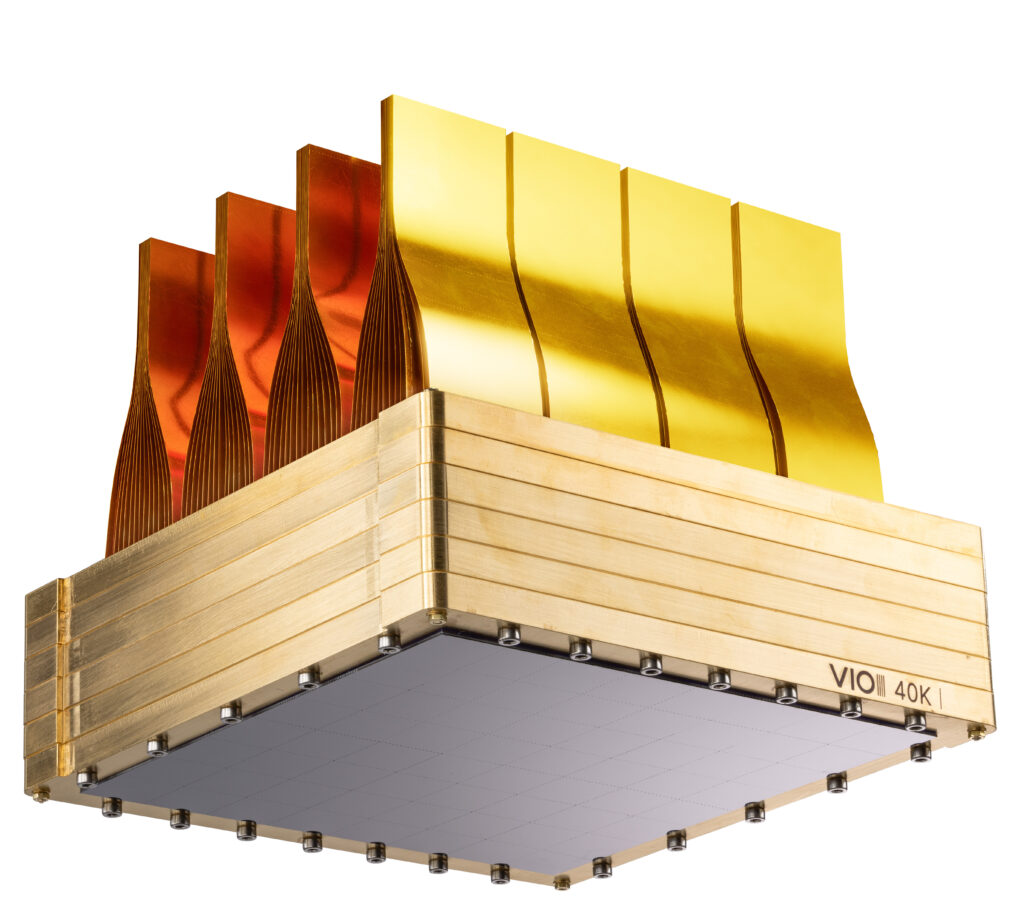
For almost a decade, the quantum industry has been stuck at maximum QPU sizes of about 100 qubits. Google’s quantum chips went from 53 to 105 qubits in six years, and IBM recently unveiled a 120-qubit QPU that will be the leading device size in 2028, according to its latest roadmap. This is due to scaling bottlenecks in the QPU hardware itself. This has forced the industry on a path to larger systems by networking many small processors, leading to prohibitively high total cost of ownership.
QuantWare’s VIO 3D scaling architecture solves the QPU scaling bottlenecks, unlocking very large QPUs for the first time. VIO-40K supports 40,000 input–output lines and consists entirely of chiplet modules connected to each other via ultra-high-fidelity chip-to-chip connections. This in return provides exponentially more compute per dollar and per watt compared to systems built out of many smaller QPUs connected over low-fidelity network connections.
QuantWare’s VIO is available to the entire industry, making it the scaling standard. VIO is capable of scaling up every qubit design, so any organization working with superconducting qubits can now make much more powerful QPUs.
QuantWare continues to expand its ecosystem around VIO-40K via the Quantum Open Architecture (QOA). QuantWare announced that NVIDIA NVQLink, the open platform to build logical QPUs, is part of the VIO-40K compatible ecosystem. NVIDIA NVQLink combined with VIO, integrates hyperscaled quantum compute with a low-latency, high-throughput connection to classical AI supercomputing and provides a developer interface to these resources via the NVIDIA CUDA-Q platform. When combined, VIO and NVQLink enable the leaps in scale that the quantum computing industry requires.
QuantWare also announced it is building Kilofab, an industrial-scale QPU fab scheduled to open in 2026 to manufacture VIO-40K processors at scale. Kilofab will be the world’s first dedicated fab for QOA devices, and one of the world’s largest quantum fabs. QuantWare is the largest commercial provider of quantum hardware by volume in the world today, and Kilofab will increase its production capacity by 20 times. Kilofab will be located at the company’s headquarters in Delft, The Netherlands.
“For years, people have heard about quantum computing’s potential to transform fields from chemistry to materials to energy, but the industry has been stuck at 100-qubit QPUs forcing the field to theorize about interesting but far-off technologies,” said Matt Rijlaarsdam, CEO of QuantWare. “QuantWare’s VIO finally removes this scaling barrier, paving the way for economically relevant quantum computers. With VIO-40K, we’re giving the entire ecosystem access to the most powerful, hyper-scaled quantum processor architecture ever.”
VIO-40K reservations are available today through direct request, with the first devices shipping to customers in 2028.
About QuantWare
QuantWare is building the world’s most powerful quantum processors, and is today the highest-volume supplier of quantum processing units (QPUs) worldwide, with customers in more than 20 countries. Its unique VIO 3D scaling architecture is the only technology that unlocks MegaQubit-scale, ultra-high-speed quantum processors, delivering exponentially more performance per Watt per dollar invested. VIO paves the way for the hyper-scale quantum computers that will solve humanity’s greatest challenges. The company was founded in 2021 by quantum computing experts Matt Rijlaarsdam and Alessandro Bruno as a spin-out from QuTech, a globally-leading quantum computing research institute, part of TU Delft in the Netherlands.
Brian Wang is a Futurist Thought Leader and a popular Science blogger with 1 million readers per month. His blog Nextbigfuture.com is ranked #1 Science News Blog. It covers many disruptive technology and trends including Space, Robotics, Artificial Intelligence, Medicine, Anti-aging Biotechnology, and Nanotechnology.
Known for identifying cutting edge technologies, he is currently a Co-Founder of a startup and fundraiser for high potential early-stage companies. He is the Head of Research for Allocations for deep technology investments and an Angel Investor at Space Angels.
A frequent speaker at corporations, he has been a TEDx speaker, a Singularity University speaker and guest at numerous interviews for radio and podcasts. He is open to public speaking and advising engagements.
