

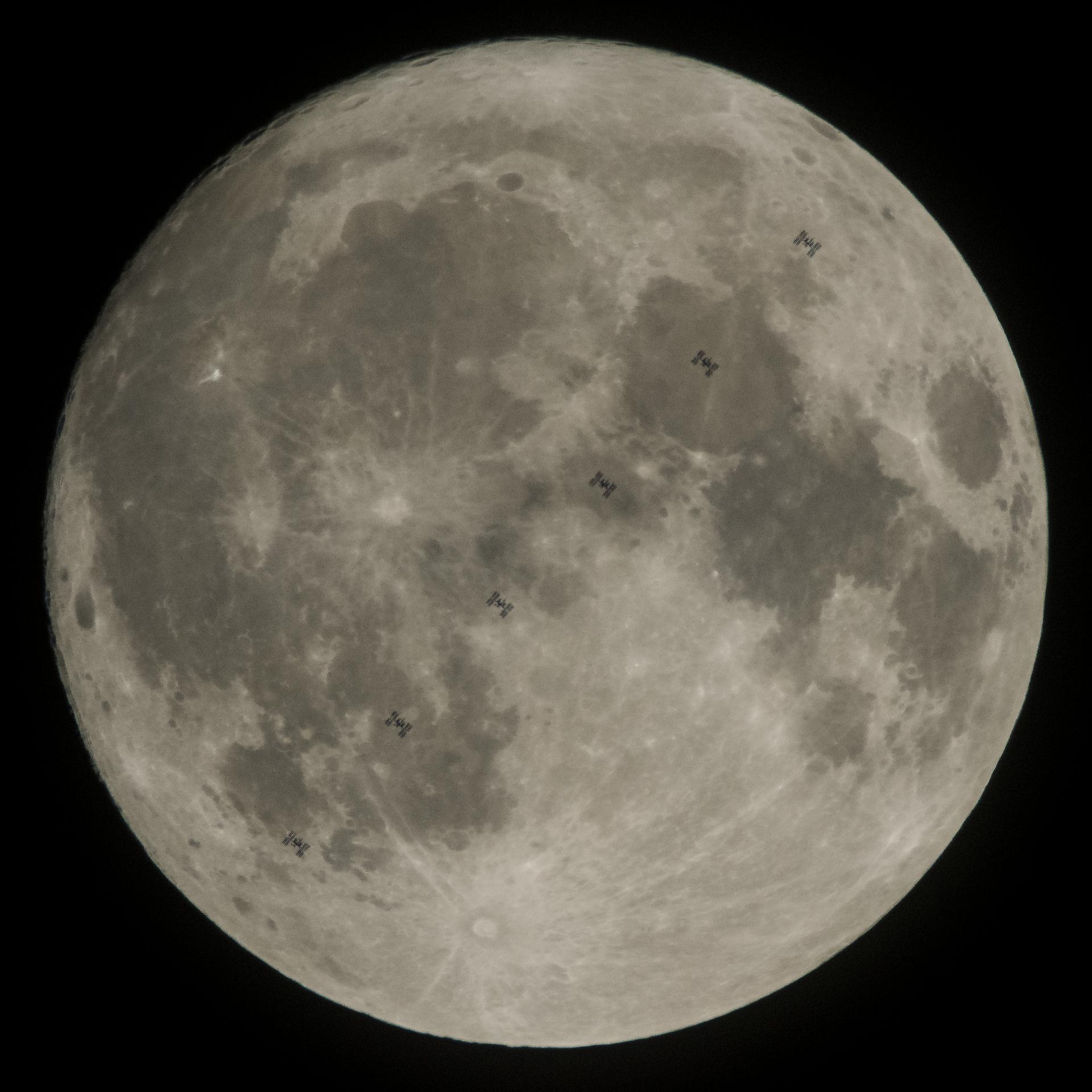

Have you ever heard the saying, “You have to learn how to walk before you can run?” The same can be true in human space exploration. To push capabilities further and ensure safe, successful missions, NASA must test ideas and solve challenges ahead of time. While Earth-based research and engineering helps NASA progress through various challenges, it can’t fully replicate the space environment. That’s where the International Space Station comes in — an out-of-this-world laboratory where astronauts help prepare for missions to the Moon, Mars, and beyond.
Since 2000, NASA and its partners have used the orbiting laboratory to conduct groundbreaking research and collaborate to advance human exploration to the depths of our solar system. Research aboard the space station helped lay the foundation for the Orion spacecraft’s life support and safety systems, which will carry four astronauts around the Moon during the Artemis II mission. These systems include radiation sensing equipment, carbon dioxide removal systems, a water-based portable fire extinguisher, emergency fire masks, the toilet, a heat exchanger, and a backup emergency navigation system.
Artemis II also includes a set of science objectives, many rooted in research and methods pioneered aboard the space station. One example is Spaceflight Standard Measures, an experiment that tracks psychological and physiological data points. This research will branch off to collect astronaut information beyond low Earth orbit, deepening our understanding of how the body adapts to living and working far from Earth.
Organ-chip experiments use small devices containing cells to model how tissues and organs respond to space stressors and therapeutic treatments. These devices and their related hardware have been used in several experiments aboard the space station and will continue their legacy in the lunar environment to study the effects of deep space stressors on human health using cells from Artemis II astronauts. Organ-chip research could be used to develop improved prevention and personalized medical treatments for people on Earth and in space.
Methods proven through Crew Earth Observations aboard space station are informing Crew Lunar Observations in support of Artemis II science and handheld imaging of the Moon. The crew will analyze and photograph geologic features on the lunar far side, providing critical information for Artemis III surface exploration. Frameworks from Earth observations, including target planning, visualization software, and scripts, have been adapted for lunar observations, shaping operations and preparing for future exploration missions.
Small, cost-effective satellites called CubeSats are deployed from space station and other spacecraft to test new technologies and conduct scientific research in low Earth orbit. Building on this success, NASA is partnering with international agencies to deploy CubeSats aboard Artemis II for technology demonstrations and studies in high Earth orbit.
The space station remains a critical testbed for optimizing communications, robotics, and other technologies for missions to the Moon and Mars. Researchers also study the effects of spaceflight on people, develop tools to monitor crew health, and enhance plant growth to support astronaut safety and wellbeing.
As humans prepare to venture beyond Earth’s orbit for the first time in more than 50 years, we celebrate the space station and other NASA programs that walked so Artemis could run.
