

Close Menu

    Subscribe to Updates

    Get the latest Tech news from SynapseFlow

    What's Hot

    Dolphin Emulator hits a breakthrough with TriForce arcade support

    February 16, 2026

    Waymo Losses About $5 Billion

    February 16, 2026

    Sony’s PlayStation 6 might be further away than you hoped

    February 16, 2026
    Facebook X (Twitter) Instagram
    • Homepage
    • About Us
    • Contact Us
    • Privacy Policy
    Facebook X (Twitter) Instagram YouTube
    synapseflow.co.uksynapseflow.co.uk
    • AI News & Updates
    • Cybersecurity
    • Future Tech
    • Reviews
    • Software & Apps
    • Tech Gadgets
    synapseflow.co.uksynapseflow.co.uk
    Home»Future Tech»Stonebreen’s Beating Heart – NASA Science
    Stonebreen’s Beating Heart – NASA Science
    Future Tech

    Stonebreen’s Beating Heart – NASA Science

    The Tech GuyBy The Tech GuyFebruary 16, 2026No Comments3 Mins Read0 Views
    Share
    Facebook Twitter LinkedIn Pinterest Email
    Advertisement


    Edgeøya, an island in the southeastern part of the Svalbard archipelago, is defined by stark Arctic expanses and rugged terrain. Still, even here—halfway between mainland Norway and the North Pole—life persists, from mosses to polar bears. The southern lobe of Stonebreen, a glacier that flows from the Edgeøyjøkulen ice cap into the Barents Sea, gives the landscape a different kind of life. Its ice pulses like a heart.

    Advertisement

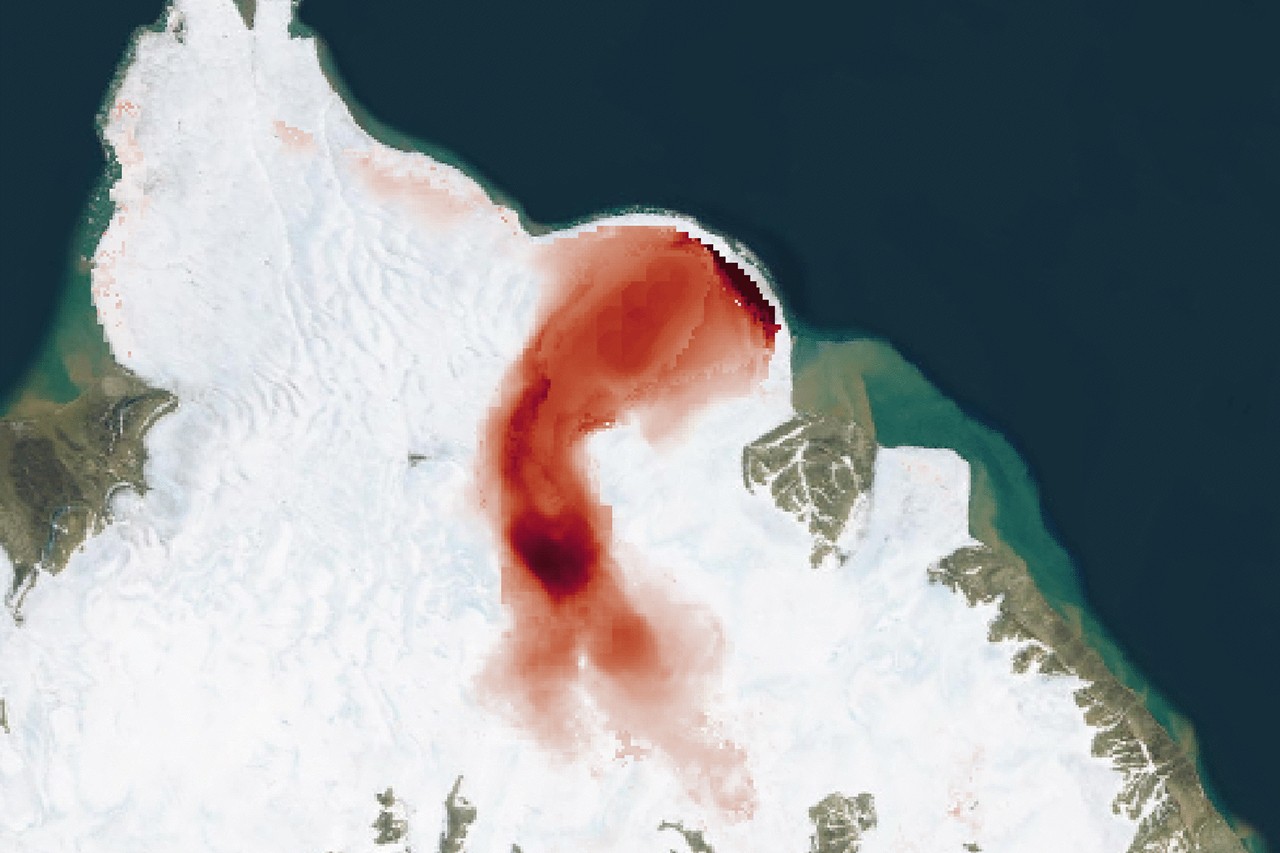
    The apparent heartbeat comes from the ice speeding up and slowing down with the seasons. This animation, based on satellite data collected between 2014 and 2022, shows how fast the glacier’s surface ice moves on average during each month. In winter and spring, the ice flows relatively slowly (pink); by late summer, it races toward the sea at speeds exceeding 1,200 meters per year in places (dark red). In summer 2020, speeds reached as high as 2,590 meters per year (23 feet per day).

    In general, summer speedups are caused by meltwater that percolates from the surface down to the base of the glacier, where the ice sits on rock, explained Chad Greene, a glaciologist at NASA’s Jet Propulsion Laboratory (JPL). “When the base of a glacier becomes inundated with meltwater, water pressure at the base increases and allows the glacier to slide more easily,” he said.

    Data for the animation are from the ITS_LIVE project, developed at JPL, which uses an algorithm to detect glacier speed based on surface features visible in optical and radar satellite images. In 2025, Greene and JPL colleague Alex Gardner used ITS_LIVE data to analyze the seasonal variability of hundreds of thousands of glaciers across the planet, including Stonebreen.

    Stonebreen is a surging glacier, a type that cycles between stretches of relatively slow movement and sudden bursts of speed when ice can flow several times faster than usual. These surges can last anywhere from months to years. Globally, only about 1 percent of glaciers are surge-type, though in Svalbard, they are relatively widespread.

    Before 2023, Stonebreen spent several years surging at high speeds after melting along its front likely destabilized the glacier, according to Gardner. Even during this surging period, the ice followed a seasonal rhythm—speeding up in summer and slowing through the winter—all while continuing its faster overall flow toward the Barents Sea.

    Since 2023, however, the glacier has all but slowed to a halt, with only a short stretch in the summer when meltwater causes Stonebreen to glide across the ground. It has entered a phase of quiet, or “quiescence,” which is a normal part of the cycle for surge-type glaciers.  

    These seasonal heartbeat-like pulses and longer-term variations in ice flow at Stonebreen and other glaciers worldwide can be explored using the ITS_LIVE app.

    Maps courtesy of Chad Greene and Alex Gardner, NASA/JPL, using data from the NASA MEaSUREs project ITS_LIVE. Story by Kathryn Hansen.

    An animation of part of an island in the Svalbard archipelago shows ice-covered terrain centered on a glacier that flows toward the dark blue Barents Sea at the top. Shades of red along the glacier appear to pulse from light to dark, indicating seasonal changes in the glacier’s speed—slower in winter and spring and faster in summer.

    • Greene, C. A. and Gardner, A. S. (2025) Seasonal dynamics of Earth’s glaciers and ice sheets. Science, 390, 6776.
    • NASA Earth Observatory (2025, December 3) Satellites Detect Seasonal Pulses in Earth’s Glaciers. Accessed February 12, 2026.
    • NASA’s Jet Propulsion Laboratory (2026) ITS_LIVE. Accessed February 12, 2026.
    • Noël, B., et al. (2020) Low elevation of Svalbard glaciers drives high mass loss variability. Nature Communications, 11(4597).
    • Strozzi, T., et al. (2017) Frontal destabilization of Stonebreen, Edgeøya, Svalbard. The Cryosphere, 11(1) 553–566.

    Advertisement
    Share. Facebook Twitter Pinterest LinkedIn Tumblr Email
    The Tech Guy
    • Website

    Related Posts

    Waymo Losses About $5 Billion

    February 16, 2026

    US Government Deploys Elon Musk’s Grok as Nutrition Bot, Where It Immediately Gives Advice for Rectal Use of Vegetables

    February 16, 2026

    XAI Grok 4.20 Releasing Next Week

    February 16, 2026

    Sunlight Extracts Oxygen From Regolith Using Solar Chemistry

    February 15, 2026

    This Week’s Awesome Tech Stories From Around the Web (Through February 14)

    February 15, 2026

    New AI Video Generator Is So Impressive That It’s Scaring Hollywood

    February 15, 2026
    Leave A Reply Cancel Reply

    Advertisement
    Top Posts

    The iPad Air brand makes no sense – it needs a rethink

    October 12, 202516 Views

    ChatGPT Group Chats are here … but not for everyone (yet)

    November 14, 20258 Views

    Facebook updates its algorithm to give users more control over which videos they see

    October 8, 20258 Views
    Stay In Touch
    • Facebook
    • YouTube
    • TikTok
    • WhatsApp
    • Twitter
    • Instagram
    Advertisement
    About Us
    About Us

    SynapseFlow brings you the latest updates in Technology, AI, and Gadgets from innovations and reviews to future trends. Stay smart, stay updated with the tech world every day!

    Our Picks

    Dolphin Emulator hits a breakthrough with TriForce arcade support

    February 16, 2026

    Waymo Losses About $5 Billion

    February 16, 2026

    Sony’s PlayStation 6 might be further away than you hoped

    February 16, 2026
    categories
    • AI News & Updates
    • Cybersecurity
    • Future Tech
    • Reviews
    • Software & Apps
    • Tech Gadgets
    Facebook X (Twitter) Instagram Pinterest YouTube Dribbble
    • Homepage
    • About Us
    • Contact Us
    • Privacy Policy
    © 2026 SynapseFlow All Rights Reserved.

    Type above and press Enter to search. Press Esc to cancel.

    Ad Blocker Enabled!
    Ad Blocker Enabled!
    Our website is made possible by displaying online advertisements to our visitors. Please support us by disabling your Ad Blocker.