

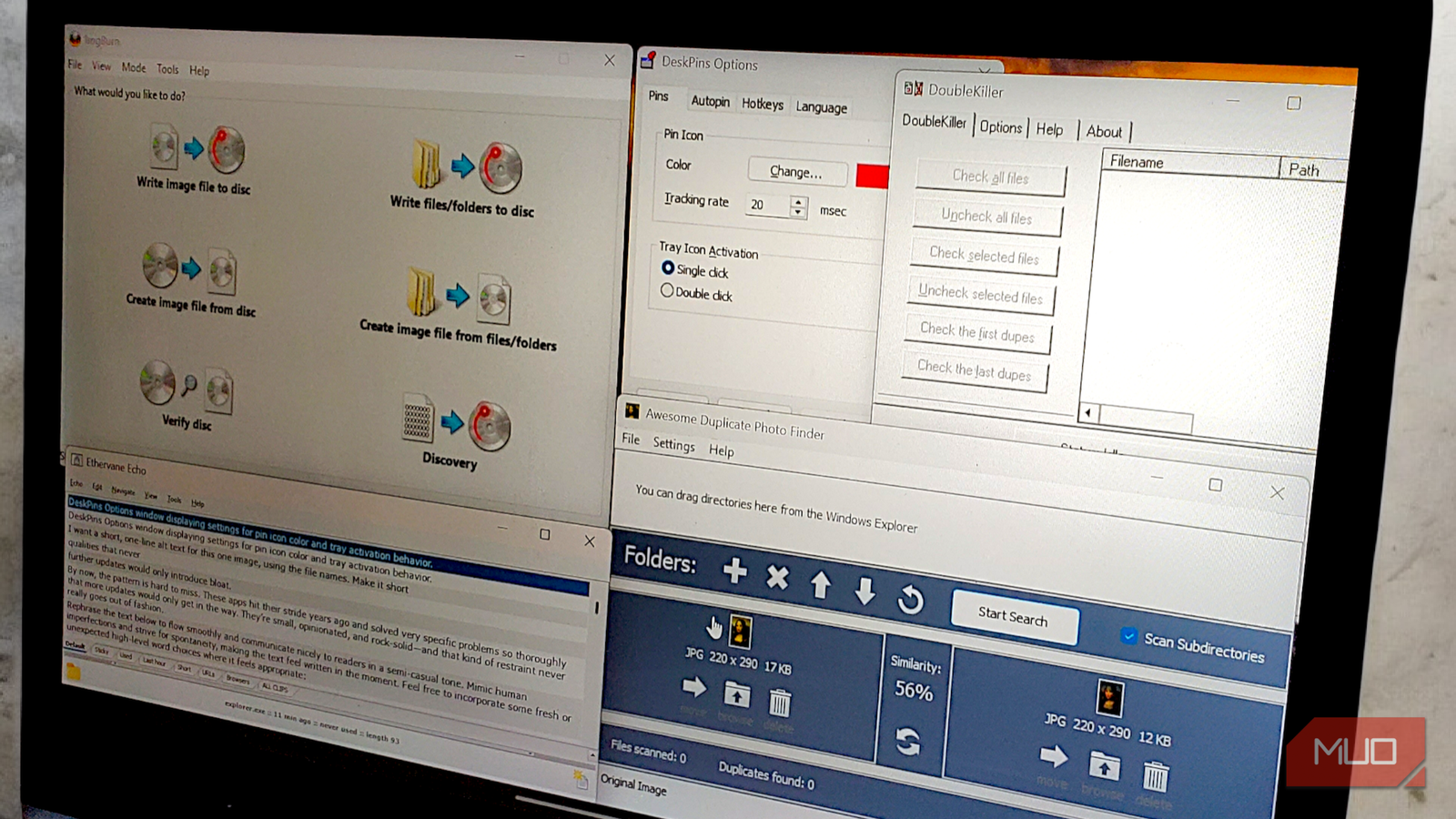

Multitasking gets blamed for almost everything modern work has broken. Burnout, brain fog, and that constant feeling of being busy while finishing nothing that actually matters. But multitasking itself is not the real problem. The real problem is forced multitasking, baked into most operating systems by design, then framed as a personal failure when it inevitably wears you down.
Most systems do not just allow multitasking; they demand it. They interrupt, redirect, and fragment your attention all day long, then act surprised when you end the day exhausted and behind. Linux approaches this differently. Not by promising productivity miracles, but by staying quiet, predictable, and out of your way. That single shift changes how multitasking feels at a fundamental level.
Modern multitasking is mostly accidental
Why most operating systems force reaction instead of choice

On many platforms, multitasking is not a choice. It is something that happens to you. You are writing, thinking, or reading when a notification slides in from the corner of the screen, pulling your eyes away before you even register it happening.
That single interruption forces a context switch you did not agree to. You stop mid-thought, glance at something irrelevant, then spend the next minute reconstructing what you were doing. Multiply that by dozens of pings a day, and your work becomes a sequence of recoveries instead of progress.
Because this behavior is normalized, the blame shifts to you. You feel scattered. You assume you lack discipline. The design problem disappears behind a story about personal focus. A prime example is when a chat notification appears while you are drafting a paragraph, even though you never asked to be interrupted.
To combat this, many of us are now turning old hardware into dedicated distraction-free writing machines by using lightweight Linux builds that strip away these “engagement-heavy defaults.”
Linux assumes focus is possible
How quieter system behavior changes how work feels

Linux starts from a different assumption. It does not treat interruption as the default state. Notifications exist, but they do not insist on being seen immediately. If something arrives while you are working, it can wait.
This changes how focus feels, because you are no longer bracing for disruption as a default state. You stay immersed in the task in front of you until you choose to leave it, rather than being dragged away mid-thought by whatever happens to arrive next. When a message comes in while you are working, it can sit quietly out of sight, waiting its turn, and when you do switch tasks, it feels like a conscious decision instead of a reflexive reaction.
Predictability and separation reduce mental fatigue
Why stable systems make task switching cheaper

A major reason multitasking feels exhausting is unpredictability. When interfaces change or behave inconsistently, your brain stays in a low-level state of vigilance, constantly checking that things still work the way you expect.
Linux prioritizes stability. Window behavior follows clear rules. Shortcuts stay where you learned them. Once you understand how something works, it keeps working that way.
Linux also encourages you to separate tasks into distinct spaces, turning task-switching into something physical rather than purely mental. Writing can live in one workspace while communication lives in another, so when you move between tasks, the entire visual environment moves with you. That shift in context reduces mental overlap because you are not trying to hold multiple modes of thinking inside the same screen at the same time.
This spatial approach to work is a core reason Linux is often cited as a superior system for heavy content creation. It lets you build what feels like a quiet cockpit, where tools stay exactly where you put them, and nothing moves unless you decide it should. The system adapts to how you think, instead of forcing your attention to constantly renegotiate the same space.
Fewer interruptions mean cleaner work boundaries
Why minimizing noise preserves momentum

Interruptions are not minor annoyances. They are cognitive costs. Every single one forces your brain to drop context and later rebuild it, which drains energy even if the interruption is brief.
Linux minimizes these interruptions by default. There are fewer system-level prompts demanding attention and fewer surprise messages competing with your work. This allows boundaries to stay intact. You start something, stay with it, and stop when you decide to. Your system does not interrupt your work to announce an update while you are in the middle of a task.
This is not about doing more at once
Why intentional multitasking is about sustainability

Intentional multitasking is not about speed. Reality will interrupt you whether you like it or not. What matters is how quickly and cleanly you can return to what you were doing.
Linux supports this by keeping recovery cheap. When an interruption happens, you can resume without reorienting yourself to a changed environment.
Over time, this steadiness compounds. Work feels manageable instead of draining. A good example here is, after checking a message, you return to the same task with the same layout, tools, and state waiting for you.
You can take this even further with Tiling Window Managers. Instead of a messy stack of overlapping windows, every application is locked into a predictable grid, making the ‘re-entry cost’ of returning to a task almost zero.”
Systems should serve focus, not fight it
Design for intention, not constant engagement

Multitasking does not have to feel frantic or hollow. It works best when systems respect focus, behave predictably, and treat interruption as optional.
Linux shows what happens when those principles are taken seriously. You can apply the same ideas anywhere. Reduce unnecessary notifications. Separate task contexts. Favor stability over novelty. Switch deliberately instead of juggling everything at once.
Turning off nonessential notifications immediately makes any system feel calmer and easier to work in.
When your system stays quiet, predictable, and out of your way, multitasking stops feeling like survival mode and starts feeling intentional. Once you experience that, accepting tools that constantly demand attention without offering anything meaningful in return becomes very hard to justify.
