

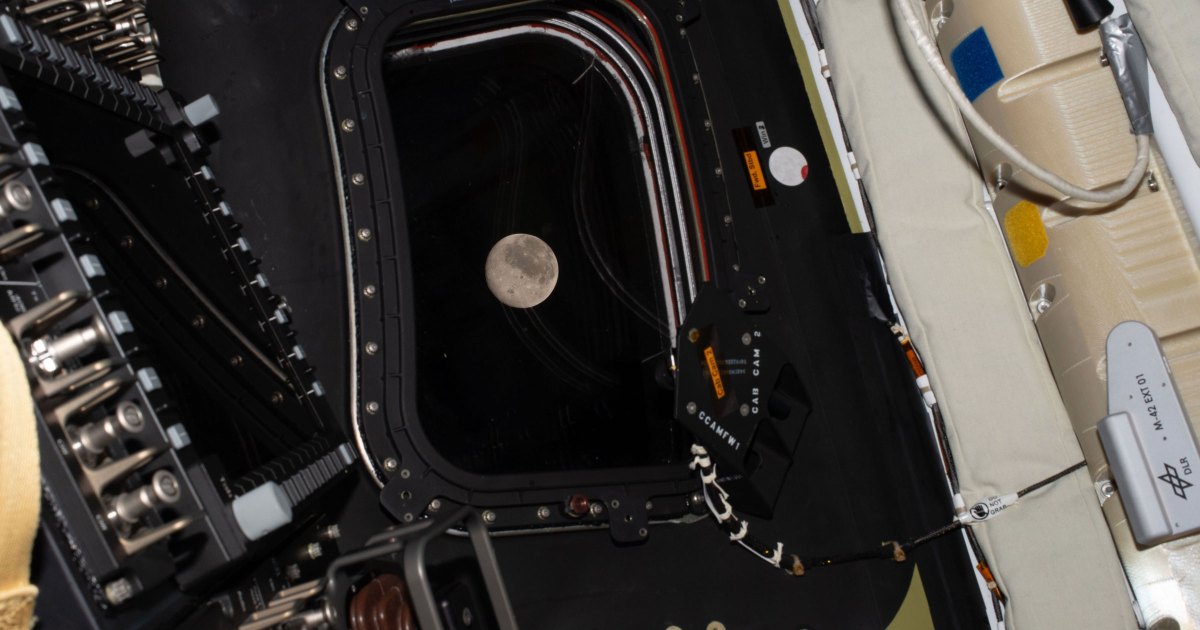

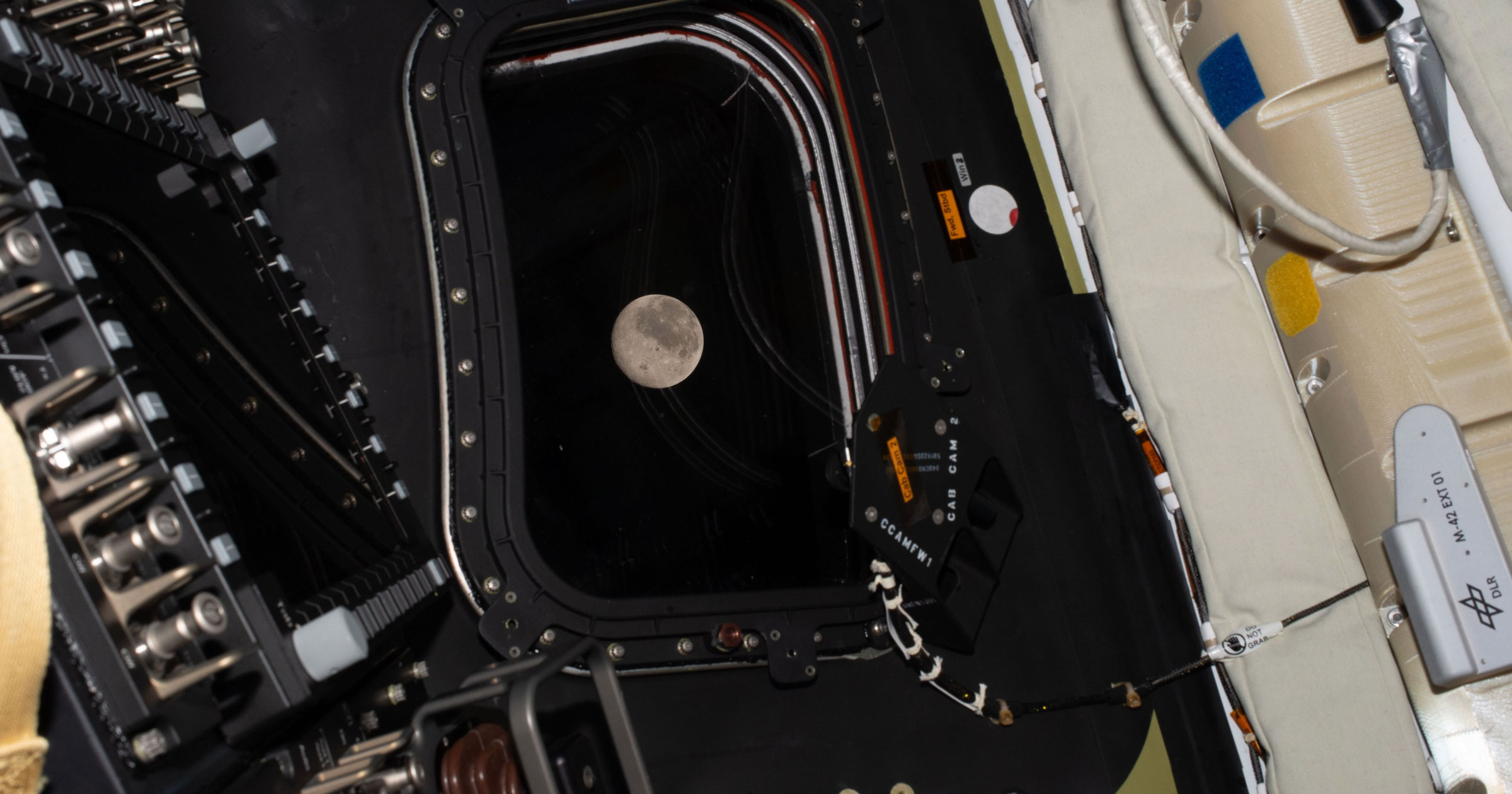
Roughly five days after taking off from the historic Launch Complex 39B at NASA’s Kennedy Space Center in Florida, the four crew members of the space agency’s Artemis 2 mission have officially entered unprecedented territory.
The daring team officially broke the record for the farthest any human has ever traveled from Earth this evening — previously set in 1970 by NASA’s Apollo 13 mission — when they reached a distance of 252,760 miles from home just after 2 pm Eastern time on Monday.
That’s a hair further than the 248,655 miles from Earth that NASA astronauts Jim Lovell, Fred Haise, and Jack Swigert reached during their ill-fated foray around the Moon 76 years ago, on Apollo 13. It was supposed to culminate in humanity’s third crewed lunar landing, following Apollo 11 and 12, but an oxygen tank explosion disabled the life-support systems, forcing the team to loop around the Moon in an unusually wide trajectory to eventually return to Earth.
“From the cabin of Integrity here, as we surpass the furthest distance humans have ever travelled from planet Earth, we do so in honouring the extraordinary efforts and feats of our predecessors in human space exploration,” Canadian astronaut Jeremy Hansen said during a livestream.
“We will continue our journey even further into space before Mother Earth succeeds in pulling us back to everything we hold dear,” he added. “But we, most importantly, choose this moment to challenge this generation and the next, to make sure this record is not long lived.”
While passing behind the Moon, the Artemis crew has been plunged into a radio blackout as the lunar surface blocks any signals from reaching them for around 40 minutes.
Despite the comms interruption, the views are more than likely spectacular. The crew came within just 4,070 miles of the lunar surface before swinging around the Moon, giving them unparalleled views of its more mountainous and less-explored far side.
The crews were guided by experts on which features to photograph during their historic flyby.
“They’ve practiced for many, many, many months on visualizations of the Moon,” NASA geologist Kelsey Young told reporters over the weekend, “and getting their eyes on the real thing, I’m really, really looking forward to them bringing the moon a little closer to home on Monday.”
Besides the spectacular sightseeing, the astronauts are also facing an unprecedented level of space radiation, given their distance from Earth’s protective atmosphere. NASA collaborated with the German Aerospace Center (DLR) for an onboard experiment that measures how much radiation they are exposed to.
It’s an especially relevant subject given the renewed interest in not only visiting the Moon but establishing a permanent presence on its surface as well. Scientists have already been poring over radiation data collected during NASA’s uncrewed Artemis 1.
“Too high a total lifetime exposure can contribute to increased risks of developing cancer or health disorders that could impair cognition and performance,” the agency wrote in a recent blog post, vowing to “minimize that risk” during Artemis 2.
It’s unclear how long their record for the farthest away from Earth will last. The next time the space agency will attempt to reach the Moon — and the lunar surface for the first time since 1972 — will be during its Artemis 4 mission, which is tentatively scheduled for 2028.
The mission will involve its Orion spacecraft entering a much tighter orbit around the Moon to rendezvous with either SpaceX’s Starship or Blue Origin’s Blue Moon lander, likely just hundreds of miles above the surface — not even close to how far Artemis 2 has ventured from home.
Meanwhile, China is also ramping up to launch its own crewed missions to the Moon, leaving the possibility that a Chinese taikonaut could soon hold the coveted title for having ventured the farthest into deep space.
More on Artemis 2: Moon Astronauts Forced to Do It in Bags as “Burning Odor” Emanates From Toilet
