

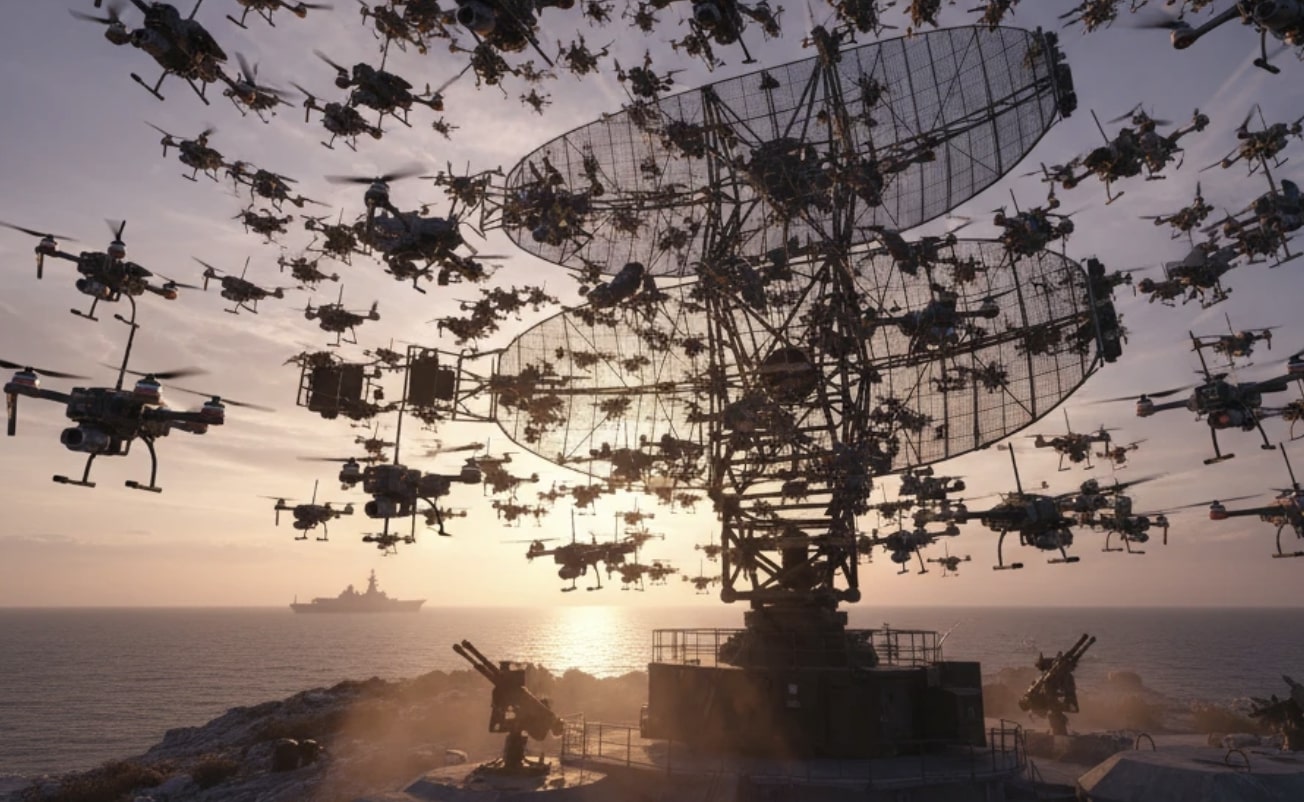

Operation Absolute Resolve was like the US Dream Team of Basketball Domination. It was like Shaq and Jordan in their prime versus a High School Squad. It was a wake-up call for China and Russia. It was a stunning display of military prowess and intelligence and drone infiltration and sabotage.
Recent events in the Russia-Ukraine war and the aftermath of the 2025 Iran-Israel conflict show that both Russia and Iran have struggled to fully prevent drone penetrations that have damaged air bases, military facilities, and other critical infrastructure. This vulnerability aligns with your broader thesis on U.S. (and allied) dominance in stealth, infiltration, and multi-domain operations, as seen in Operation Absolute Resolve against Venezuela.
Russia’s air defenses have faced repeated Ukrainian long-range drone strikes throughout late 2025 and into early 2026, with significant impacts on air bases and strategic aviation.
A major Ukrainian drone operation in June 2025 targeted multiple deep Russian airfields, damaging or destroying dozens of strategic bombers. Russia has not fully recovered from this, with ongoing effects on its air force capabilities despite increased production of interceptors.
Ongoing strikes in December 2025–January 2026: Ukrainian drones have hit air bases in occupied Crimea (Belbek), southern Russia (Lipetsk, Khanskaya), and other rear areas. These have damaged Su-27, Su-30 fighters, and logistics hubs, often using smuggled or long-range one-way attack drones.
During the June 2025 Israel-Iran war (Operation Rising Lion), Israel used smuggled small drones launched from inside Iran to sabotage air defenses, ballistic missile launchers, and other facilities. This enabled follow-on airstrikes that destroyed ~1/3 of Iran’s mobile launchers and constrained its retaliatory missile barrages.
Operation Absolute Resolve on January 3, 2026, saw U.S. forces capture Venezuelan President Nicolás Maduro right from his fortified compound in Caracas. This wasn’t just a win. It was a total humiliation, proving the U.S. has assembled a dream team of next-level capabilities that make adversaries look like a high school basketball squad facing Shaq in his prime.
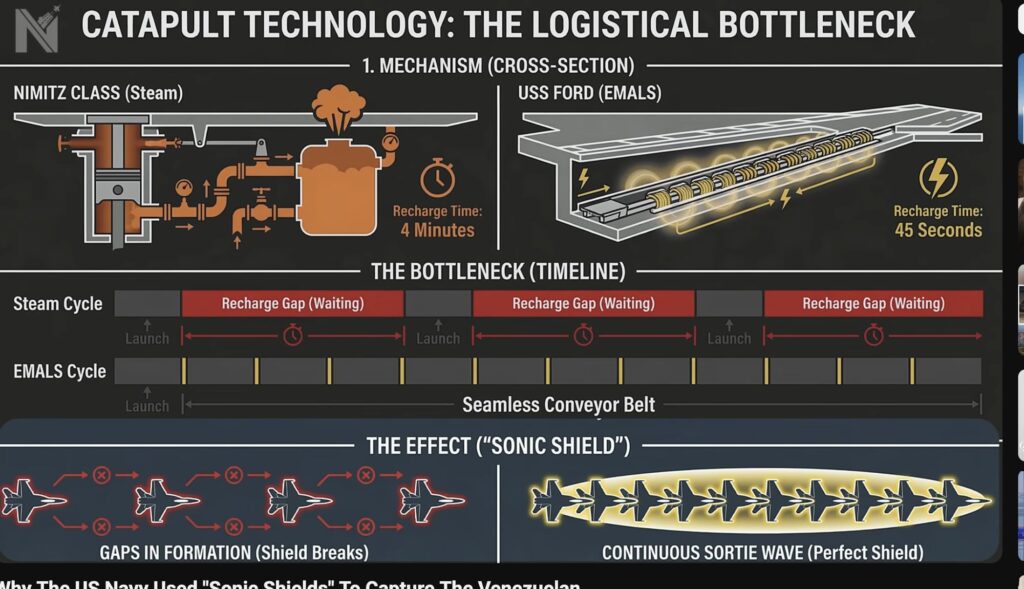

The US could have done a lot less after finding Madura and tracking him. They could have used a missile or some other means to easily kill him. Instead the US chose to dominate and capture him in their capital city.
With integrated stealth drones, special ops, intelligence infiltration, cyber hacking, and overwhelming air power, the U.S. didn’t just beat Venezuelan defenses—they dominated them, despite Russian and Chinese gear and Cuban assistance.
This operation signals that even powers like Iran, North Korea, and potentially China and Russia could face similar fates if they rely on comparable systems without ramping up readiness and integration. If they can’t counter U.S. intel and stealth infiltration, their defenses would be sabotaged and degraded before they have a chance to use them.
Overview of Operation Absolute Resolve
This U.S.-led mission involved elite Delta Force operators, backed by over 150 aircraft, cyber operations, and drone surveillance. In under three hours, with zero U.S. casualties, Maduro and his wife were extracted to face trial on narco-terrorism charges. Framed as law enforcement, it was essentially a decapitating kidnapping in a sovereign capital.
Venezuelan defenses, equipped with Russian S-300 missiles, Chinese radars, and Cuban advisors, were utterly overwhelmed. U.S. forces chose a high-risk capture over a simple drone strike, infiltrating the heart of enemy territory. Months of prep included full-scale replicas for rehearsals and real-time intel on Maduro’s patterns, culminating in precision airstrikes and cyber disruptions that neutralized threats.
Demonstrated U.S. Dominance and Capability Integration
This op showcased seamless integration of U.S. assets, turning it into a masterclass in multi-domain warfare.
Intelligence and Infiltration
Spies and drones tracked Maduro for months. They achieved total surprise against Cuban-assisted security.
Cyber and Electronic Warfare were used to disrupt and cripple communications. This left defenders blind and disorganized.
Air and Stealth Power
Stealth helicopters from the 160th SOAR inserted troops undetected, while SEAD missions crushed foreign-supplied defenses.
Delta Force breached the compound with surgical precision, capturing targets amid resistance.
Minimal Collateral as strikes were pinpoint, avoiding widespread destruction and emphasizing U.S. superiority.
It wasn’t victory—it was domination, embarrassing Venezuela and its backers.
Trump called it a showcase of American might. It was like a dominant Olympic gymnast nailing a triple-twist finish for flair after racking enough on points to win.
Historical Comparisons- From Conquistadors to Modern Raids
Operation Absolute Resolve echoes asymmetric triumphs like Spanish Conquistadors vs. Mayans.
The Conquistadors were a small, tech-superior force (U.S.) leverages advanced tools to crush a vastly larger but outmatched armies (Venezuela with foreign gear).
Operation Neptune Spear (Bin Laden, 2011) was Similar stealth raid, but this was bolder—against state forces in a capital, not a hideout.
Operation Just Cause (Panama, 1989) was where the US captured Noriega on drug charges, but Absolute Resolve was more precise, no occupation needed, thanks to 37 years of tech evolution.
Shaq Dunking on High Schoolers. Venezuela’s degraded military couldn’t contest the U.S. slam. It highlights a massive capability gap.
Assessing the Massive Capability Gap: Dream Team vs. the World
New drone capability and integrated with espionage and special operations is something that traditional defenses have not been able to stop. This means most world militaries like Venezuela, Mexican cartels, or smaller dictatorships are vulnerable. Iran and Russia and other countries have shown vulnerability.
Penetrating a capital with significant foreign defenses proves the U.S. can humiliate mid-tier foes at will.
Venezuela ranked at number 50 out of 145 nations in the 2025 Global Firepower Index. They have around 120,000 personnel on active duty in its military, another 100,000 troops in reserves, as well as over 220,000 personnel in the National Guard. Its Air Force is estimated at around 20,000 personnel, the army at 115,000, and the Navy at 25,500.
Venezuela’s air force is estimated to have over 80 combat aircraft, including two dozen Su-30MK2 multirole fighters – many of them armed with Kh-31 “Krypton” anti-ship missiles – and 18 modernized F-16 Fighting Falcons. Its Navy is equipped with two Type 209-class submarines, six Lupo-class frigates, half a dozen corvettes, over 40 patrol vessels and more than 10 fast attack craft. Its coastal areas are equipped with shore-based anti-ship missile batteries. The army has over 700 main battle tanks, mainly the T-72B1 models, and around 1,500 armored fighting vehicles.
Iran and North Korea are relying on similar Russian/Chinese gear. They would face suppression via cyber and SEAD. U.S. infiltration could enable targeted raids.
Even China and Russia could get dominated. Russia has shown drone infiltration vulnerability. If they can’t defend against U.S. intelligence and stealth drone infiltration, defenses get sabotaged and degraded internally. Higher readiness and integration are musts—Russia’s Ukraine experience shows vulnerabilities. China’s A2/AD bubbles could crumble under multi-domain pressure. It’s not guaranteed humiliation, but the gap favors the U.S. in precision ops, potentially deterring rogues while sparking arms races.
Absolute Resolve marks a leap in U.S. warfare, validating integrated capabilities at an elite level. There could be a flashy finishing operation from the USA to complete the fall of the Iran regime.

Brian Wang is a Futurist Thought Leader and a popular Science blogger with 1 million readers per month. His blog Nextbigfuture.com is ranked #1 Science News Blog. It covers many disruptive technology and trends including Space, Robotics, Artificial Intelligence, Medicine, Anti-aging Biotechnology, and Nanotechnology.
Known for identifying cutting edge technologies, he is currently a Co-Founder of a startup and fundraiser for high potential early-stage companies. He is the Head of Research for Allocations for deep technology investments and an Angel Investor at Space Angels.
A frequent speaker at corporations, he has been a TEDx speaker, a Singularity University speaker and guest at numerous interviews for radio and podcasts. He is open to public speaking and advising engagements.
