

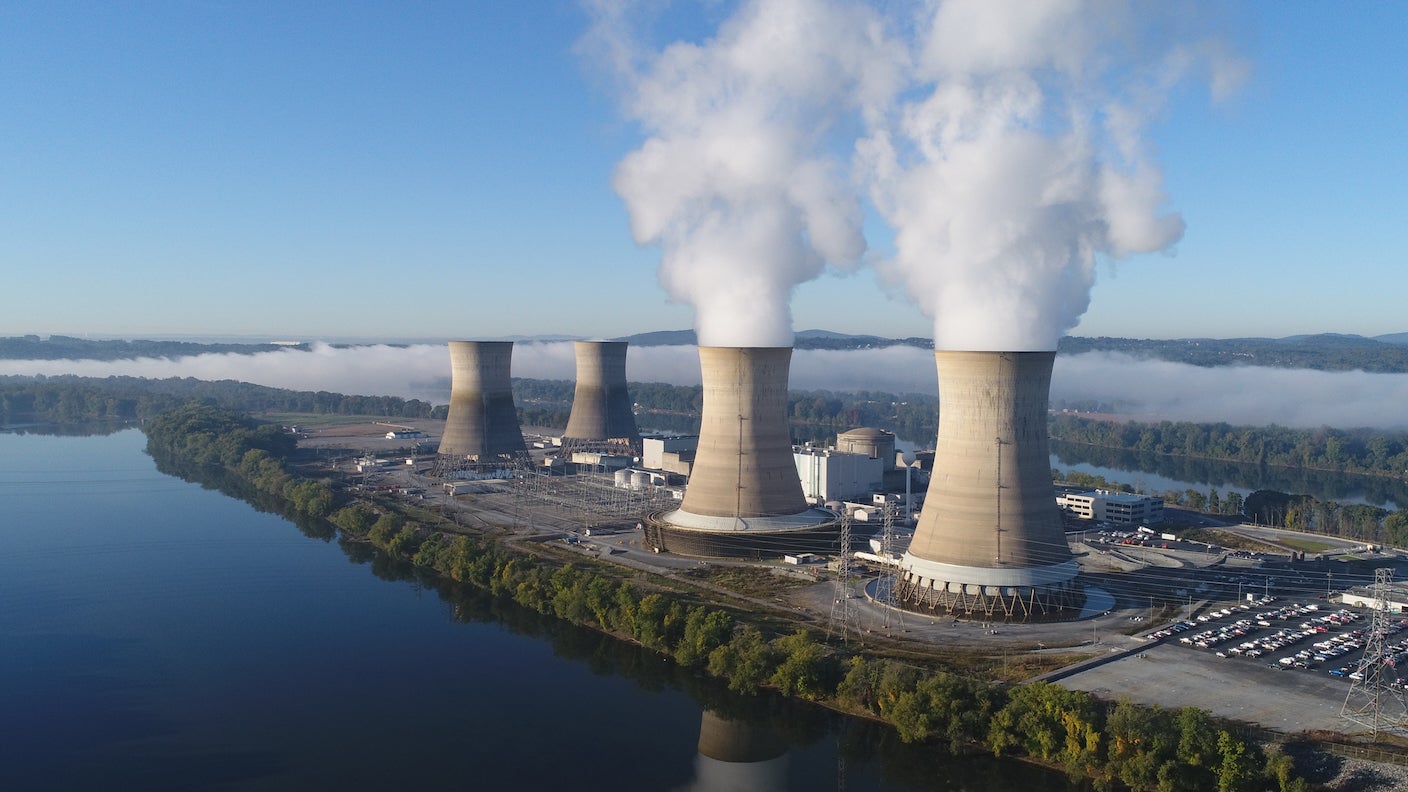

Nuclear energy has had a tough few decades, bedeviled by high costs and waning public support. But AI’s appetite for electricity could be a shot in the arm for the beleaguered industry.
AI’s energy demands are rising quickly, with global data center electricity use expected to double by the end of the decade. And nuclear power’s ability to provide large amounts of emission-free baseload power is hugely attractive for AI firms trying to balance their energy needs against climate commitments.
Google, Amazon, Meta, and major data center operators are signing power-purchase agreements with existing reactors, investing in the development of advanced small-modular reactors, and even helping restart shuttered nuclear plants.
This is a significant turnaround for a sector that has long been struggling to compete with cheap natural gas and rapidly falling renewable energy prices. But if the AI industry’s energy demands continue to grow as expected, the nuclear energy industry could be one of the big winners.
The most immediate impact of this trend could be to extend the lives of existing plants. In June, Meta inked a long-term contract with the utility Constellation Energy to keep its Clinton Clean Energy Center in Illinois operating for a further 20 years, after the plant faced closure due to the upcoming expiry of a credit program for low-emission energy producers.
Constellation says more deals could soon be coming. “We’re definitely having conversations with other clients, not just in Illinois, but really across the country, to step in and do what Meta has done, which is essentially give us a backstop so that we could make the investments needed to re-license these assets and keep them operating,” CEO Joe Dominguez told Reuters.
But demand for nuclear power is so acute that technology companies are also looking to bring already shuttered plants back online. Constellation closed a reactor at its Three Mile Island site in 2019 for economic reasons, but Microsoft has since stepped in to bring it back to life. Last September, the company agreed to a 20-year power purchase agreement to fuel its data centers, giving Constellation the certainty required to restart the reactor.
And Google appears to be following suit. In October, the company announced it was partnering with the utility NextEra Energy to bring back to life the Duane Arnold Energy Center, which closed in 2020. The company has committed to buying power from the facility for the next 25 years, and it could be back up and running by 2029.
But perhaps the biggest impact of Silicon Valley’s new love of nuclear could be a boom in investment in fresh nuclear capacity. Given how long it takes to build and commission nuclear plants, it may be a while before that impact is felt, but this could boost long-term confidence in the sector.
Last December, Meta announced it was seeking proposals from nuclear developers to help meet its energy demands. The company said that it was looking for 1 to 4 gigawatts of new capacity starting in the early 2030s, and that it was open to proposals to build either regular nuclear reactors or small modular reactors—an emerging class of advanced reactors that have yet to be commercialized.
These small reactors have caught the attention of technology giants due to their potential for lower costs and fast deployment. And they typically produce less than a third of the output of a regular nuclear reactor, which makes them suitable for powering smaller facilities. But their modular design means they can also be combined to create higher capacity plants.
Google has agreed to purchase power from Kairos Power, which is developing a fluoride-salt-cooled small modular reactors, becoming the first company to sign a commercial contract with the startup. The agreement covers six or seven reactors, with the first unit targeted for 2030 and the rest by 2035, supplying Google data centers with up to 500 megawatts of nuclear power.
In a similar vein, Amazon has agreed to buy electricity from four small modular reactor modules under development by X-Energy in Washington State, with the option to buy up to eight additional modules once they’re built. The data center operator Equinix has also placed a preorder for 20 transportable microreactors from California-based Radiant Nuclear.
A recent Bloomberg Intelligence report forecasts that US nuclear capacity could rise 63 percent by 2050 thanks in large part to demand from data centers. This would represent a net gain of 61 gigawatts in generation, most of which would come after 2035 when small modular reactors are expected to transition from demonstration projects to scalable commercial deployment.
Whether this comes to fruition will depend largely on whether big tech’s energy demands continue to balloon. There is mounting concern the industry is in an AI bubble primed to burst at any minute, which could put a major dampener on the nuclear resurgence.
But for the time being at least, the industry’s future is looking considerably rosier than it was a decade ago.
