

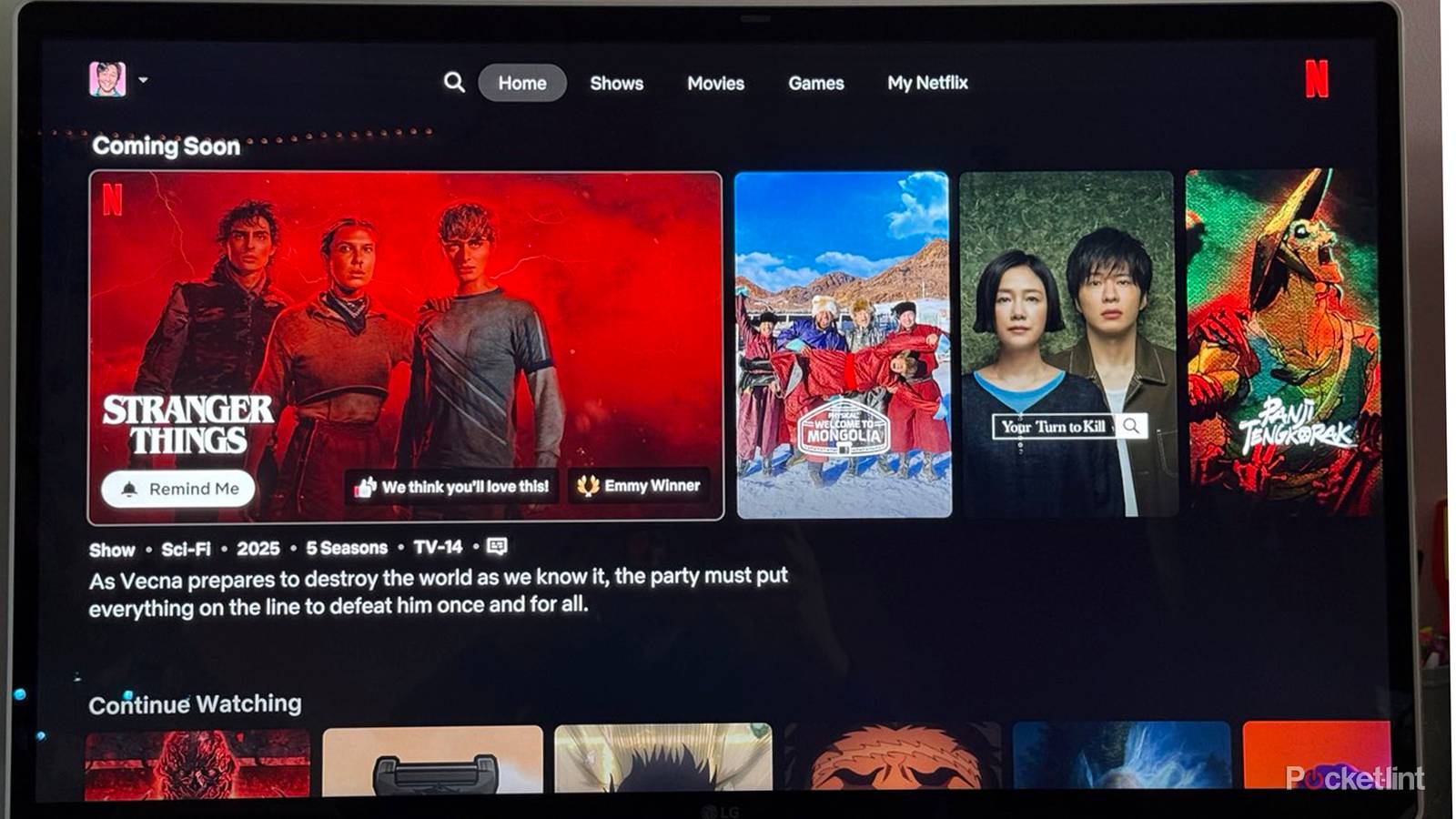

As streaming service prices rise, studios consolidate, and lots of titles seem underwhelming, it’s a good time to reflect on how services operate. As the gold standard for streaming, Netflix provides audiences with countless shows, movies, docuseries, and now even live programs from all around the world. There is indeed no shortage of things to watch, whether you experience murder mysteries, reality dating shows, K-dramas, or anime.
When you sign up to Netflix, you pay a monthly fee in order to gain access to the catalog, and the features present and absent will depend on what tier you subscribe to. But what’s available in that catalog isn’t guaranteed. Here’s what you need to know.

- Subscription with ads
-
$9
- Premium Subscription
-
$20 or $26 options
- Simultaneous streams
-
2-4
- # of profiles
-
5
- Originals
-
Yes
- Live TV
-
No
You don’t own streaming service titles
Subscriptions only grant access to libraries

It’s important to remember that you don’t own any titles on Netflix. They are not yours. You have access to a general catalog, but you don’t own anything within that catalog. This goes for any streaming service and digital platform. Items that you stream and even download aren’t yours to keep. In the case of ebooks, you’re obtaining a license to read the book and not the book itself. Even titles downloaded offline on Netflix and other services only exist within the platform.
All of that means is that what you’re watching doesn’t have to exist forever or even stay in its current form. Netflix owns and operates its library, and can add, remove, and alter whatever it wants. Even the quality of what you’re watching depends on your subscription tier and your internet connection.
Catalogs change and titles don’t last forever
Libraries are fluid and even Netflix originals may disappear

All streaming service libraries regularly add titles, with new shows and movies coming available daily, weekly, and monthly. While Netflix has its own original programming that it constantly adds, it also acquires other shows through licenses, which is why sometimes a series from five years ago is suddenly in its top ten. Viewers get excited when something new is added, even if that something is old.
The library, however, doesn’t grow endlessly. It’s fluid, and just as titles are added, others are removed in a similar fashion. Netflix loses the right to certain shows, and they leave the platform, likely heading to another one. You want to be mindful not to subscribe to Netflix, or any service, solely because they have specific shows you want to watch. Because those shows might not always be there.
That goes for some Netflix Originals too. That’s because often these “originals” are acquired from studios in other countries, and they become Netflix originals in your current country because Netflix is the exclusive provider. In some cases, as with The Last Kingdom, Netflix was only a partial producer and owner, which is why that series is slowly leaving the platform. Netflix doesn’t own all its shows forever, either, especially if they aren’t popular. Early Netflix adopters may remember Hemlock Grove, but current subscribers won’t find it on the service.
Netflix creates edited versions of live shows
Live events are unique but subject to future changes

Another reminder that you are not in complete control of what you’re watching on Netflix involves live programming. The platform has made a huge push in recent years to expand its live fare, making the service a destination for those seeking a shared viewing experience with others around the globe. From sports to concerts to that time a man climbed a tower without a rope, Netflix is big on live events. But what happens live may not be exactly the same when you re-watch the broadcast.
That’s because Netflix edits its live events and repackages it for the streaming service catalog. Often those edits improve quality, whether that’s enhancing audio or addressing technical issues. Captions for live shows are often delayed, but captions for the edited version will be in sync with the action on the screen. However, these edits may be more dramatic. If you watched the Tom Brady roast live, you heard Kim Kardashian greeted by a chorus of boos. The edited version took this out.
Perhaps it’s not a huge issue for some viewers, but it’s worth at least remembering what you’re watching may have been altered. Netflix does make sure that such versions have been edited, but when those edits go beyond technical issues and start to rewrite history, it’s worth wondering what the platform may do next, and if it should.
Missing episodes and edited scenes
Platforms have different approaches to offensive material

There’s another instance of Netflix wielding control on its platform, and that comes in the form of removing entire episodes of certain shows from its catalog. Notably, Community fans could not stream ‘Advanced Dungeons & Dragons,’ the 14th episode of the second season. That’s because Netflix deemed it offensive due to a scene in which the character Chang appears in dark makeup that resembles blackface. Curiously, it’s one of the most beloved and heartfelt episodes of the entire season.
Most of the time, such instances of episodes being removed, or in the case of The Office, a short scene edited out entirely, is due to cultural standards deeming certain moments highly offensive. Sometimes the platform will make the decision, although sometimes the distributor will keep the episode so that the platform doesn’t have it available. Whether or not you agree with these decisions, it’s another reminder that you do not own the titles you are watching. You may not be able to stream an entire series, and that’s because of the choices made by powerful stakeholders.
Disney+ took a different approach a few years back when it added a content warning to movies in its catalog, in part because so much of what the company made in the last century is now rightfully seen as wildly offensive. It explicitly acknowledged “negative depictions” and “mistreatment of people or cultures.” It didn’t want to remove these titles because that would take a chunk out of its catalog. However, there was blow back from people who didn’t want to be reminded of such issues or didn’t care, and as a result of political pressure, Disney+ opted for a more subtle warning.
Discs and tapes offer ownership and consistency

All of this points to the need to weigh the convenience of digital media with the power of physical alternatives. With streaming services, you don’t own any of the titles, and you can’t guarantee the permanence of the library. Movies and shows come and go every month. Netflix originals may leave their own platform, while both Warner Bros and Disney have shown in the past a willingness to limit or control what titles in its back catalog are actually available.
So consider physical media. In most cases, your Blu-rays and DVDs aren’t going to be altered. Not unless, of course, your media player is hooked up online and someone’s company finds a way to update the data on your disc. You’re also guaranteed a specific level of audio and video quality that isn’t scaled down due to a spotty WiFi connection or busy network. With physical media, you can ensure what you’re watching will stay the same, unencumbered by the interests of a platform or studio.
