

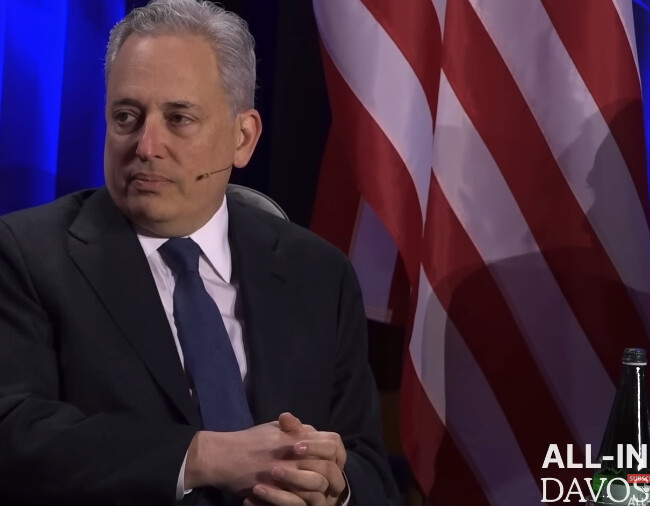

The cost of infrastructure build-out, energy challenges Massive data center/GPU buildout driven by real demand (no “dark GPUs”—all utilized for tokens/AI apps like chatbots/coding).
Unlike dot-com fiber overbuild (unused “dark fiber”), current demand sustains growth; added ~2% to 2025 GDP, expected similar in 2026.
Trump’s AI plan has 3 pillars—out-innovate,
build infrastructure,
export U.S. tech and progress on all.
Regulatory environment key to avoid patchwork of 50 state rules (hurts startups most. big firms cope better).
Push for lightweight federal framework (preemption without nothing); states keep child safety/permitting.
Over 1,200 state AI bills (knee-jerk fears). It is better to study real risks before overregulating.
NIMBY pushback (e.g., Bernie Sanders letter to halt data centers) risks losing race.
Solution: AI firms build own power (behind-the-meter); Trump policy shift allows it (reversing prior grid-only rules).
Microsoft pledged no residential rate hikes; others likely follow. Excess power sold back lowers rates via scale/economies.
Banks/investors (Oracle, Blackstone) see ROI; not overbuild bubble.
Where AI will be most impactful
Evolution: Chatbots → chain-of-thought reasoning → coding assistants
There are major 2025-2026 breakthroughs that developers call “mind-blowing”.
Next Knowledge-worker tools (Excel, PowerPoints, websites in user style/format and Claude’s Co-Work points to files/emails).
Personal digital assistants emerging (task-based now; soon voice/full integration like “Her”).
Vertical impacts: Healthcare (admin reduction, diagnosis aid, research acceleration).
Science (AI for discovery—fragmented data challenge).
Genesis mission: Use national lab data for AI-trained models to speed experiments/feedback loops.
Potential breakthroughs are
Nuclear Fusion simulations (faster timelines),
materials science (space/nuclear),
therapeutics (molecule screening).
Auto/self-driving inflection (robotaxis advancing). Overall productivity boom for knowledge workers.
The China Threat, globalization strategy
U.S. lead in
AI Models (6 months),
AI chips (2 years),
equipment (~5 years).
Deeper stack is a bigger advantage.
China edges are Energy production (grid doubled last decade vs. U.S. 2-3%) and AI optimism of population (83% citizens see benefits vs. U.S. 39%).
U.S. pessimism fueled by media/Hollywood doom narratives, tech leaders’ job-loss talk → regulatory frenzy (1,200+ state bills).
Risk: Overregulation could lose race (self-inflicted).
China ambitions are Export models/chips (Huawei parallel) and subsidize national champions (blocking Nvidia to boost Huawei).
U.S. strategy: American AI Export Program (turnkey packages for Global South; inference-focused, not frontier training).
Commerce RFI/RFP for consortia; partner with DFC/Ex-Im Bank for financing.
Winning = market share/diffusion (U.S. stack used globally). ecosystem effects (apps/developers/partners).
Trump rescinded Biden regs (100-page EO, 200-page export rules). restored “permissionless innovation.”
America’s entrepreneurial AI outlook
U.S. strength is Private-sector/entrepreneur-driven innovation; government enables (light rules, guardrails).
Europe contrast has Regulators as “main characters” (EU AI Act passed pre-ChatGPT; precautionary principle stifles).
U.S. mindset is Whiteboard to unlock/remove barriers vs. precautionary fear/whiteboarding hypotheticals.
Risks are Orwellian government misuse (surveillance/censorship/brainwashing via biased AI).
Trump rescinded Biden DEI/woke AI push. EO bars federal procurement of politically biased AI.
First Amendment allows private bias, but government won’t buy it.
Jobs/abundance is that Musk directionally right (future abundance, no scarcity/money like Star Trek). Rising standards/wages, not mass unemployment soon.
AI boosts longevity/healthcare/science/quality of life and will be a net positive.
The panel aligns with Trump-era policy: pro-growth, anti-overregulation, export-focused, energy-enabled, and wary of bias/China threats. Emphasis on U.S. ecosystem winning via diffusion and entrepreneurship.
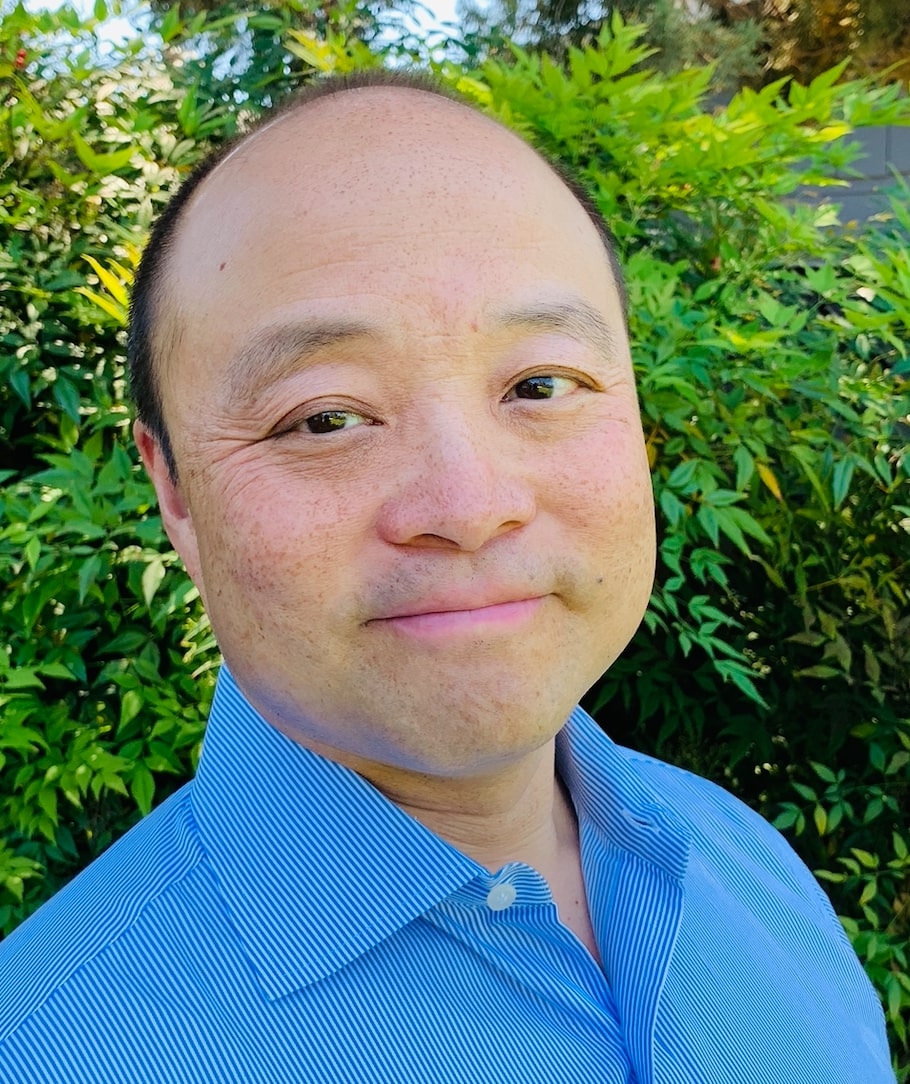
Brian Wang is a Futurist Thought Leader and a popular Science blogger with 1 million readers per month. His blog Nextbigfuture.com is ranked #1 Science News Blog. It covers many disruptive technology and trends including Space, Robotics, Artificial Intelligence, Medicine, Anti-aging Biotechnology, and Nanotechnology.
Known for identifying cutting edge technologies, he is currently a Co-Founder of a startup and fundraiser for high potential early-stage companies. He is the Head of Research for Allocations for deep technology investments and an Angel Investor at Space Angels.
A frequent speaker at corporations, he has been a TEDx speaker, a Singularity University speaker and guest at numerous interviews for radio and podcasts. He is open to public speaking and advising engagements.
