

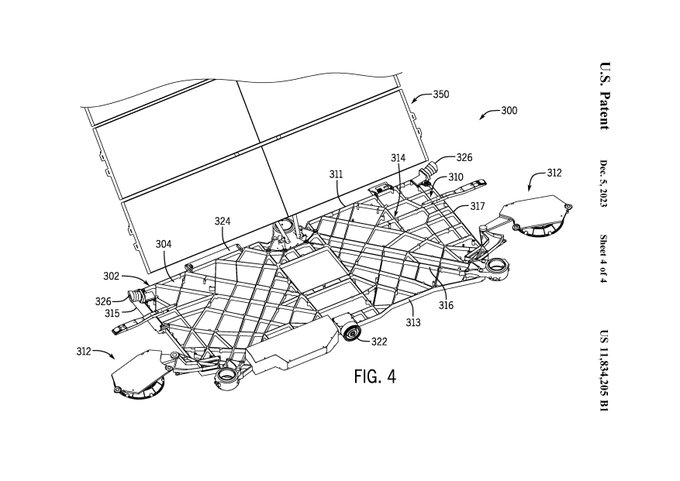

SpaceX already has over 10,000 Starlink satellites in space and the majority are version 2 mini. They already have 10-15 Kilowatts of electricity each. They generate that with solar power (z-fold solar panels). They have to radiate the heat generated. Solar power gets collected and becomes 10+ kilowatts of electricity. It is used by the electronics, some of which are AMD compute chips. However, the usage is irrelevent as the electricity all ends up as heat. Heat pipes take it away and they are radiated into space. The patent shows they have built the thermal system into the body of the satellites. It likely uses two phase ammonia to perform movement of heat and then the radiation of heat.
It is solved. It is working. It is inexpensive. It is mass produced. They are actually the most common solution for thermal management in orbit today.
Those who claim to be experts in physics need to consider that the solution has been made by the leading space satellite and space launch company. You are basically claiming that Apple does not know the physics of upgrading their iPhone. You are claiming that Tesla does not know the physics of the Tesla Semi or the Tesla cybercab. NOTE: Bill Gates has said Tesla and Elon do not know the physics of the Tesla Semi. The Tesla Semi exists and there are several hundred deployed and mass production starts soon.
The stated claim, the physics of X product, does not or will not work, when product X exists, works and is the dominant product shows the person making the claim is wrong and misinformed.
SpaceX has 10000 satellites out of all 14000 in orbit now. They launched over 2000 of other ones that they did not build. Collectively over 100 megawatts of solar power and radiative thermal management. XAI and Tesla have made around 7–9% of all AI data centers. They are roughly 1.2–1.4 million H100-equivalents out of a global total of ~15–16.5 million H100e in operational/completed AI data centers as of February 2026.
They have designs and prototypes of the three times larger V3 satellites. Ready to launch this year and are ready to mass produce. 20+ kilowatt for communication satellites that are ready to go.
Relatively trivial (for SpaceX) to scale what currently works to solar to 100 kilowatts and radiative thermal management to 100 kilowatts. This would be enough for about 50 B300 Nvidia chips.
The patent (V1 STarlink) spacecraft chassis and component configuration.
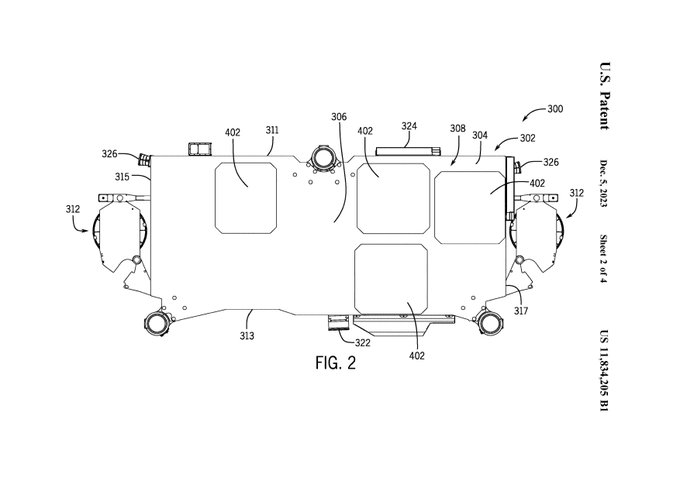
A spacecraft chassis includes a chassis body defined by first and second opposing sides bound by a perimeter, wherein at least one heat-generating component is configured to be secured directly to the chassis body, and at least one heat dissipating feature configured to radiate heat generated from the at least one heat-generating component into outer space.
Starlink satellites (especiallyV1.5/V2/V3 generations) generate/dissipate roughly 5 kW (earlier) to ~20+ kW for V3 estimates from FCC-related discussions and power-density analyses.
The system is mass-produced for over 10,000 satellites already launched (with plans far beyond). Individual satellite costs are in the low hundreds of thousands of dollars range in volume production. The thermal subsystem is integrated into the chassis/structure with negligible added marginal cost per kW—orders of magnitude cheaper than traditional one-off spacecraft thermal systems.
The patent describes a cellular/grid heat-dissipating chassis where electronics mount directly to radiating structure. The Embedded two-phase heat pipes (capillary-driven, constant-conductance or variable) distribute heat evenly across the radiator surfaces. Heat pipes are inherently two-phase (evaporation/condensation). Ammonia is the industry-standard working fluid for satellite heat pipes/LHPs in the typical –70 °C to +90 °C range due to excellent latent heat, surface tension, and compatibility. It is possible and even likely that SpaceX has upgraded the technology used for their solution. The patent was written when they were making V1 Starlink.
I do not think there are components that are needed from suppliers. It is like the structural battery pack in Tesla cars or the channels printed into the Raptor engine. Structure performs two or more functions at the same time.
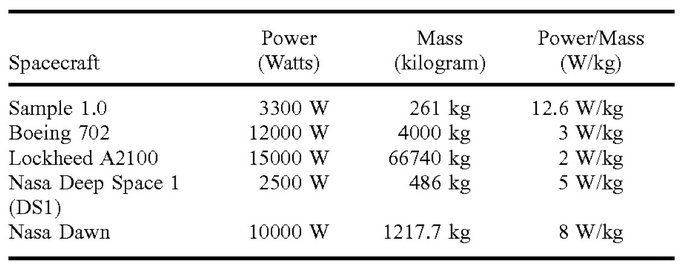
The table shows that SpaceX is about 6 times more efficient in power by weight versus Boeing and even better than super expensive NASA gear. The table shows Starlink v1 satellites. The V2 mini are bigger and have more electricity. The V3 are even bigger and the modifications to get to 100 kilowatts or more will get to even more electricity to weight efficiency.
They will be able to go to an even lighter approach to solar as the current system for communication needs more rigidity for more precise targeting for higher quality communication.

Brian Wang is a Futurist Thought Leader and a popular Science blogger with 1 million readers per month. His blog Nextbigfuture.com is ranked #1 Science News Blog. It covers many disruptive technology and trends including Space, Robotics, Artificial Intelligence, Medicine, Anti-aging Biotechnology, and Nanotechnology.
Known for identifying cutting edge technologies, he is currently a Co-Founder of a startup and fundraiser for high potential early-stage companies. He is the Head of Research for Allocations for deep technology investments and an Angel Investor at Space Angels.
A frequent speaker at corporations, he has been a TEDx speaker, a Singularity University speaker and guest at numerous interviews for radio and podcasts. He is open to public speaking and advising engagements.
