

Close Menu

    Subscribe to Updates

    Get the latest Tech news from SynapseFlow

    What's Hot

    vivo X Fold6 camera and display specs officially revealed, to support teleconverter

    June 15, 2026

    I ignored my smart TV’s interface and plugged in a $30 streaming stick — I should have done it years ago

    June 15, 2026

    I can’t quit Google News, but these 5 things make me want to

    June 15, 2026
    Facebook X (Twitter) Instagram
    • Homepage
    • About Us
    • Contact Us
    • Privacy Policy
    Facebook X (Twitter) Instagram YouTube
    synapseflow.co.uksynapseflow.co.uk
    • AI News & Updates
    • Cybersecurity
    • Future Tech
    • Reviews
    • Software & Apps
    • Tech Gadgets
    synapseflow.co.uksynapseflow.co.uk
    Home»Future Tech»New Volunteer Data from 143 Observatories Unveils the 2024 Total Solar Eclipse
    New Volunteer Data from 143 Observatories Unveils the 2024 Total Solar Eclipse
    Future Tech

    New Volunteer Data from 143 Observatories Unveils the 2024 Total Solar Eclipse

    The Tech GuyBy The Tech GuyFebruary 24, 2026No Comments2 Mins Read0 Views
    Share
    Facebook Twitter LinkedIn Pinterest Email
    Advertisement


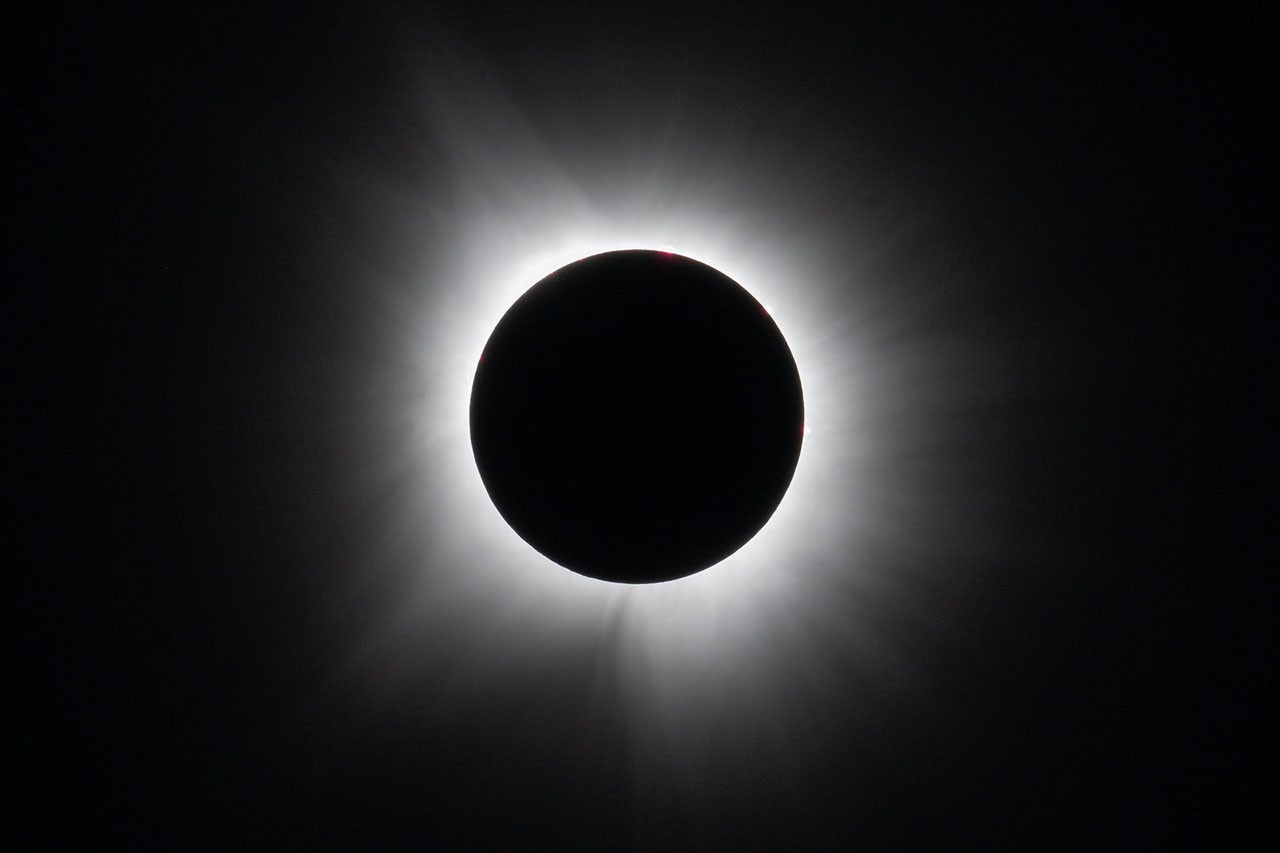
    On April 8, 2024, volunteers participating in NASA’s Eclipse Megamovie citizen science project all around the United States hurried to photograph the solar eclipse with the latest, greatest equipment, capturing groundbreaking images of the Sun’s corona.

    Advertisement

    Now, the Eclipse Megamovie team has released the remarkable new dataset that resulted from this effort — the first-ever, white-light eclipse dataset with calibration frames, spanning more than a cumulative hour and a half of observations of the solar corona. This data, which includes 52,469 total photographs uploaded by project volunteers, is now live: https://eclipsemegamovie.org/database. The data include contributions from 143 unique, mobile, volunteer-led “observatories” – people with cameras charged with taking precise images of the eclipse, taking extra steps to allow the painstaking calibration required to reveal how the corona evolves from one person’s view to the next. Researchers around the world can now use these observations to identify solar jets leaving the Sun’s surface and study how solar plumes grow and develop. The public can also peruse and download all of this data, which is highly accessible and searchable by observatory name and location.

    “Thank you for all you do and have done for us,” said Eclipse Megamovie volunteer Jessi McKenna. “Everyone in the group has been amazingly supportive of each other. And those who are running things are always so obviously appreciative of everyone who has contributed to the project.” 

    The files include data at three different levels of processing, from raw (level 1) data to calibrated (level 3) data, in a format called FITS, or Flexible Image Transport System. It is the standard astronomical data format used by NASA and the International Astronomical Union. Of the 143 unique observatories involved, 28 observatories had clear skies, sufficient calibration frames, and enough unique exposure times to create calibrated level 3 images.

    The Eclipse Megamovie team at Sonoma State University and the University of California, Berkeley and collaborators at NASA’s Goddard Space Flight Center began working together long before the eclipse to construct this database, together with EdEon STEM (Science, Technology, Engineering, & Mathematics) Learning programmer Troy Wilson. But crucially, Eclipse Megamovie 2024 was made possible because of hundreds of volunteers who journeyed into the path of the April 8, 2024 total solar eclipse with their cameras, patience, and curiosity.

    Advertisement
    Share. Facebook Twitter Pinterest LinkedIn Tumblr Email
    The Tech Guy
    • Website

    Related Posts

    SPACEXAI 5 Data Center Locations + More Energy + Rubin Chips = $300 + Billion Revenue Runrate

    June 15, 2026

    Hubble Sees Swarm of Galaxies

    June 14, 2026

    Scientists Investigate Strange Rumbling Beneath Utah

    June 14, 2026

    Is Echostar a Way to Get SpaceX at $80-113 Per Share ?

    June 14, 2026

    Black Eye Galaxy – NASA

    June 14, 2026

    This Week’s Awesome Tech Stories From Around the Web (Through June 13)

    June 13, 2026
    Leave A Reply Cancel Reply

    Advertisement
    Top Posts

    You don’t need a NAS to self-host — I proved it with hardware from my closet

    June 7, 202672 Views

    Spotify is giving one of its best playlists a big visual upgrade to give subscribers ‘a closer connection’ to its New Music Friday curators — and I think it could be the update it’s always needed

    June 12, 202618 Views

    The iPad Air brand makes no sense – it needs a rethink

    October 12, 202516 Views
    Stay In Touch
    • Facebook
    • YouTube
    • TikTok
    • WhatsApp
    • Twitter
    • Instagram
    Advertisement
    About Us
    About Us

    SynapseFlow brings you the latest updates in Technology, AI, and Gadgets from innovations and reviews to future trends. Stay smart, stay updated with the tech world every day!

    Our Picks

    vivo X Fold6 camera and display specs officially revealed, to support teleconverter

    June 15, 2026

    I ignored my smart TV’s interface and plugged in a $30 streaming stick — I should have done it years ago

    June 15, 2026

    I can’t quit Google News, but these 5 things make me want to

    June 15, 2026
    categories
    • AI News & Updates
    • Cybersecurity
    • Future Tech
    • Reviews
    • Software & Apps
    • Tech Gadgets
    Facebook X (Twitter) Instagram Pinterest YouTube Dribbble
    • Homepage
    • About Us
    • Contact Us
    • Privacy Policy
    © 2026 SynapseFlow All Rights Reserved.

    Type above and press Enter to search. Press Esc to cancel.

    Ad Blocker Enabled!
    Ad Blocker Enabled!
    Our website is made possible by displaying online advertisements to our visitors. Please support us by disabling your Ad Blocker.