


Michelle Johnson was 20 weeks into her pregnancy when she learned her unborn son had spina bifida. Because his spine hadn’t fully sealed, the spinal cord was left protruding from a gaping hole. Without surgery, he would face a lifetime of disabilities.
So she jumped at the chance to enroll in a small experimental trial for the condition at the University of California, Davis. The treatment combines fetal surgery, an existing approach, with a dose of stem cells to spur healing.
Now four years old, Johnson’s son Tobi can walk and lacks symptoms such as loss of bladder and bowel control. “Tobi’s physical and mental abilities are nothing short of a miracle,” she said in a press release.
Tobi is one of six children in the CuRe trial, the first study to test if using stem cells to repair tissue in fetuses with spina bifida is safe. Delivered by a small patch sewn onto the damaged site, the stem cells protected the spinal cord from inflammation and helped the wound heal. None of the babies or mothers suffered short-term side effects, like unwanted tissue growth or cancer.
With so few participants, it’s too early to tell how the approach will pan out as the children grow. But thanks to the promising safety profile, the FDA has approved the enrollment of more pregnant women with the same diagnosis.
“This is a major step toward a new kind of fetal therapy, one that doesn’t just repair but potentially helps heal and protect the developing spinal cord,” study author Aijun Wang said in the press release.
CuRe joins other attempts to tackle diseases with stem cells in the womb. Although a very young field, the approach could slow, halt, or cure a number of diseases before babies are born.
A Head Start
Spina bifida is a condition where the spine or spinal cord doesn’t properly seal during development. One in 2,875 newborns are affected in the US every year. In its most severe form, cerebrospinal fluid—a liquid that surrounds the brain and washes out toxins—builds up, causing progressive damage to the fetal spinal cord, lifelong movement problems, and even paralysis.
The condition was first treated after birth, when surgeons would close the defect. But by then, the damage was done. Surgery before birth could stave off symptoms, an idea validated in a 2011 trial. Yet over half of treated babies still struggled to walk without help, likely because injured neurons in the fetuses’ brains and spinal cords didn’t have the chance to heal.
Stem cells spur regrowth by releasing protective nutrients, and the fetal environment is uniquely suited to the cells. The team wondered if adding them could improve prenatal surgery.
They began testing the idea around 2012 using induced pluripotent stem cells. This is a type of stem cell made from skin or other mature cells using a chemical cocktail. Taking this approach could provide a nearly unlimited supply of stem cells. But it didn’t work.
After years of trial and error, the team found success with stem cells derived from placentas. The cells protected neurons from injury and encouraged their growth in lab dishes. They also healed defects in a lamb model of spina bifida. Newborns receiving the cells along with prenatal surgery could stand up and walk; those who only had surgery couldn’t.
Stem cell therapy appeared promising. But for unborn babies, it could carry risk. Since the cells come from donors, they might spark immune reactions. They might also trigger abnormal tissue growth, or even cancer. Because stem cell treatments are rarely used in the womb, little is known about their effects on pregnancy or the overall health of mother and baby.
Landmark Trial
The first stage of the CuRe trial focused on these safety concerns.
The team seeded a small patch with stem cells derived from donated placental tissue. To help the cells integrate, the researchers designed the patch to mimic conditions normally surrounding cells.
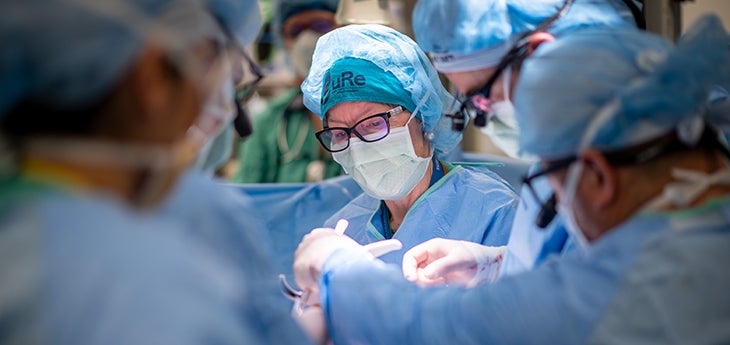
Surgeons made a small opening in the uterus at 24 to 25 weeks into pregnancy and gave the fetus a small dose of painkillers and muscle relaxers. They then placed the stem cell patch onto the exposed spinal cord and sutured the gap closed.
The trial closely monitored six babies, including Tobi, for possible side effects. After delivery by C-section, none had complications, such as leaking cerebrospinal fluid, infection, or signs of cancer. In all cases, the treatment prevented parts of the brain from slipping into the neck, and none required a shunt—a small tube used to drain excess fluid from the brain—an encouraging sign of success.
The team turned to stem cells, they wrote, because the cells can lessen brain inflammation and brain cell death. At the same time, they pump out growth proteins that “support neural tissue preservation and spinal cord integrity.”
The researchers designed the study to evaluate safety not determine whether stem cells enhance the surgery’s results. But Tobi’s remarkable recovery is a hopeful sign that the cells do make a difference. Because spina bifida is structural, treating it before permanent damage occurs could make the therapy a “one-and-done” fix.
The study joins the growing prenatal use of stem cells in conditions such as thalassemia, a blood disorder, and osteogenesis imperfecta, also known as brittle bone disease. Early clinical trials have shown promise, but regulators haven’t yet approved any treatments.
“Putting stem cells into a growing fetus was a total unknown. We are excited to report great safety,” said Diana Farmer, a study author and lead investigator for the CuRe trial. “It paves the way for new treatment options for children with birth defects. The future is exciting for cell and gene therapy before birth.”
The team is actively recruiting more pregnant women for the trial’s second phase. They’ll track the children’s growth and health up to age six to assess brain and cognitive development, motor skills, and other growth milestones.
If the treatment proves successful, longer monitoring may be needed. Spina bifida can increase the risk of kidney disease and certain cancers later in life, and it’s unclear if the stem cells could cause problems months or years down the line.
Uncertainties aside, Johnson is happy to be participating in the trial. “We are forever grateful for the many health professionals who supported Tobi’s journey and continue to watch him conquer the world,” she said.
