


I didn’t switch to Linux to cosplay another operating system. That would be a strange hobby, even by my standards. But somewhere between juggling too many apps and realizing my browser was already doing most of the heavy lifting, a thought crept in and refused to leave:
What if I committed to it?
Not halfway. Not “browser plus everything else just in case.” I mean fully leaning in. Browser-first, tabs as tools, and PWAs (Progressive Web Apps) instead of installs. Treating my system like ChromeOS, except without the part where it tells me what I’m allowed to do. It started as an experiment. The kind you expect to abandon after a day or two. It didn’t go that way.

I Wish I’d Known These 7 Downsides to Chromebooks Before Buying One
Chromebooks are great, but I really wish I’d known these issues before buying one.
I built a browser-first setup on purpose
Turning Vivaldi into something closer to an OS
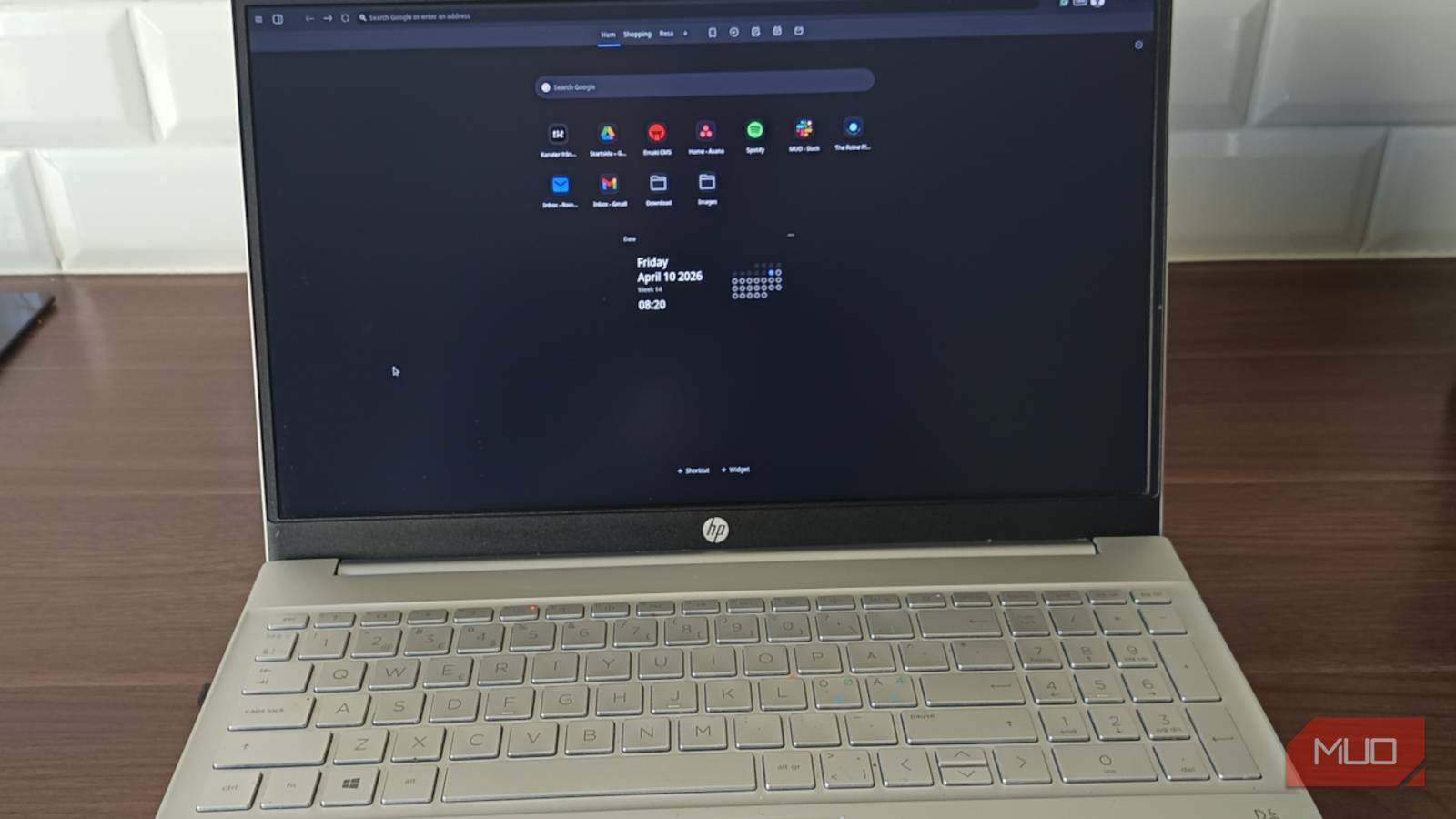
I went all in on Vivaldi. Not casually. Not “Let’s try this for a bit.” I mean, I rebuilt my workflow around it. Pinned tabs became my dock. Gmail, Slack, Spotify, calendar, analytics, everything just lived there, always loaded, always one click away. No opening apps. No hunting through menus. It was there. PWAs filled in the gaps where I wanted something that felt like an app without actually installing one. Some of them behaved surprisingly well. Others felt like slightly dressed-up tabs, but even that was good enough most of the time.
I even tweaked the UI until it stopped feeling like a browser and started behaving more like a control center. Side panels, workspaces, tab stacks, all carefully arranged, so I didn’t have to think about where anything was. And then I went one step further and started removing things. No LibreOffice, no local note apps, and no random utilities cluttering the menu “just in case.” If it wasn’t in the browser, it basically didn’t exist in my day-to-day workflow. For a while, it felt weirdly perfect. Clean, focused, and calm. ChromeOS vibes, but without the invisible leash.
The cracks showed up fast
File handling and offline work refused to play along

Then reality showed up like “Hey, nice idea … but.” File handling was the first thing to break the illusion. Downloads didn’t feel like they belonged anywhere. You click something, it lands in a folder, and suddenly you’re outside your carefully curated browser bubble. Even if it’s just for a second, it’s enough to feel the disconnect. Linux file system expects you to understand it. A browser-first workflow tries very hard to pretend that it doesn’t exist. Offline access was worse, and a lot more inconsistent than I expected.
Some PWAs handled it beautifully. Others gave up the moment the connection hiccuped. And unlike ChromeOS, which is designed around this exact use case, Linux just shrugs. If the app doesn’t cache properly, that’s your problem now. Notifications turned into a bit of a circus. Some came from the browser. Some came from the system. Some showed up twice, as if they were excited to be included. It wasn’t broken, but it definitely wasn’t cohesive. That “everything in one place” feeling started to crack. Not dramatically, but enough that I noticed it every time it happened.
Small tweaks made a big difference
Fixing the rough edges instead of abandoning the idea

This is where Linux quietly flexes. Instead of throwing the whole idea out, I started patching the weak points. I set up a dedicated downloads folder that actually made sense and pinned it where I could reach it instantly. Suddenly, files had a home again, and opening them didn’t feel like stepping into another dimension. Keyboard shortcuts became essential. Opening downloads, switching sessions, jumping between workspaces. Once that muscle memory kicked in, the friction dropped hard. I wasn’t navigating anymore; I was just … moving.

- OS
-
Android, Windows, iOS
- Developer
-
Vivaldi Technologies
- Price model
-
Free
Vivaldi is a highly customizable, privacy-focused web browser packed with built-in productivity tools for power users. It features advanced tab management with stacking, tiling, and hibernation; a unified dashboard for mail, calendar, feeds, notes, and tasks; built-in ad and tracker blockers; integrated translation; and full UI customization including toolbars and themes.
Vivaldi sessions turned out to be incredibly useful. Instead of hoarding tabs like a digital gremlin, I started grouping them by context. Work, personal, and research rabbit holes that I swear I’ll revisit. Switching between them felt intentional instead of chaotic. And then came the small but important realization: forcing everything into the browser was starting to feel just as restrictive as the thing I was trying to emulate. So I let a few native apps back in. Carefully and strategically. Not as a fallback, but as a complement. A proper file manager, a lightweight editor, and nothing more than necessary (for me). And that balance? That’s where things started to click.
The system started feeling lighter
Fewer moving parts meant less drag and better focus

Once everything settled, the difference wasn’t loud. It didn’t hit me in a “wow, everything is twice as fast” kind of way.
It was quieter than that. That low-level drag I’d been ignoring? Gone. The tiny hesitation before doing something? Also gone. It felt like the system stopped second-guessing me. Fewer apps running in the background meant fewer things competing for attention. Fewer windows meant less visual noise. And because most of my work lived in one place, switching tasks stopped feeling like a context shift and more like a quick pivot.
I just did the thing and moved on.
I didn’t have to think about where things were anymore. I just did the thing and moved on. And distractions dropped off a cliff. When your workspace is essentially one controlled environment, it’s a lot easier to keep it that way. No random app stealing focus. No mysterious background process deciding now is a great time to wake up. Just a steady, predictable flow. It wasn’t minimalism for the sake of aesthetics. It was minimalism that actually did something.
I didn’t copy ChromeOS but the idea stuck
This experiment wasn’t supposed to stick. It definitely wasn’t supposed to change how I work long term. But it did. Because what I realized along the way is that Linux doesn’t need to imitate ChromeOS. It can borrow the good parts. The simplicity. The browser-first mindset. The reduced clutter. But it doesn’t have to stop there. The moment something doesn’t work, Linux lets you fix it. Adjust it. Bend it into something that fits your brain instead of forcing your brain to adapt to it.
ChromeOS is clean because it limits you. Linux gets clean because you choose what to keep. And that difference matters more than I expected. So yeah, I tried using Linux like a Chromebook. It worked. For a while. Then Linux did what Linux always does and quietly outgrew the box I put it in.
