


The high $50 Billion per GW lease rates for xAI/SpaceX Colossus and similar premium, immediately available AI clusters are for scarce of ready-to-use, large-scale coherent GPU capacity. Kevin Pathrath’s is wrong about a conspiracy. He is comparing against different types of data center. The $2.7M/MW ($2.7 billion per gigwatt build figure is shell-only and brownfield. Gavin Baker’s framing (via Altimeter research and public commentary) is closer to the economics. High monetization density on scarce capacity, rapid build advantage, and strong IRRs.
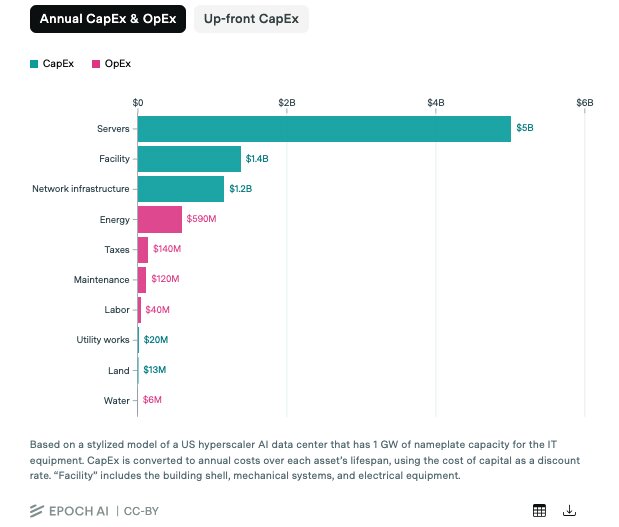
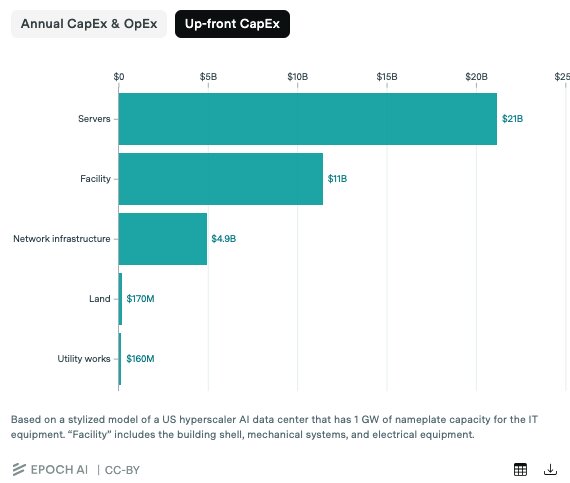
The $2.7M/MW figure SpaceX has referenced for Colossus 2 is the facility/shell + power infrastructure cost in a brownfield setting. It is a repurposed factory and warehouse. It excludes GPUs, servers, networking, and much of the high-density liquid cooling/IT fit-out. Industry benchmarks for AI-optimized shell/powered shell are typically higher—often ~$10–15M+/MW. It can be $15–20M+ with liquid cooling and high density.
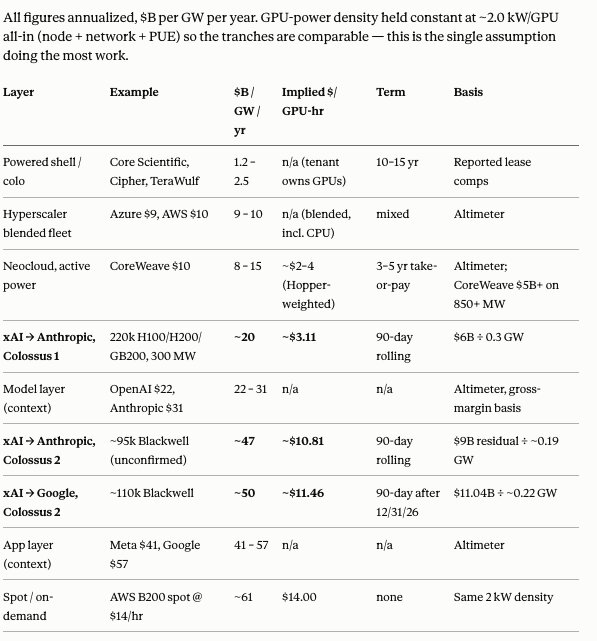
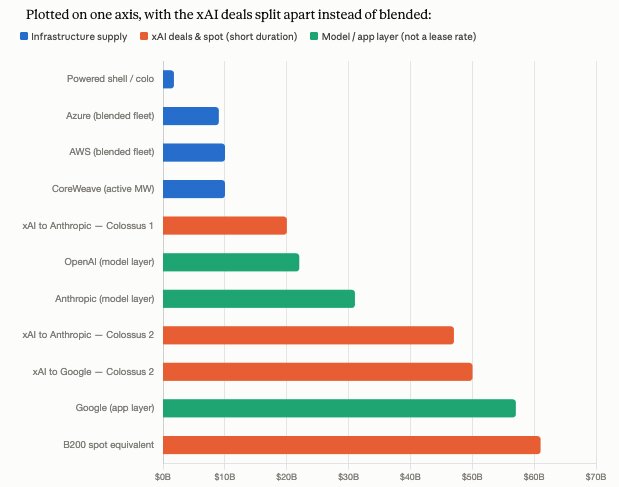
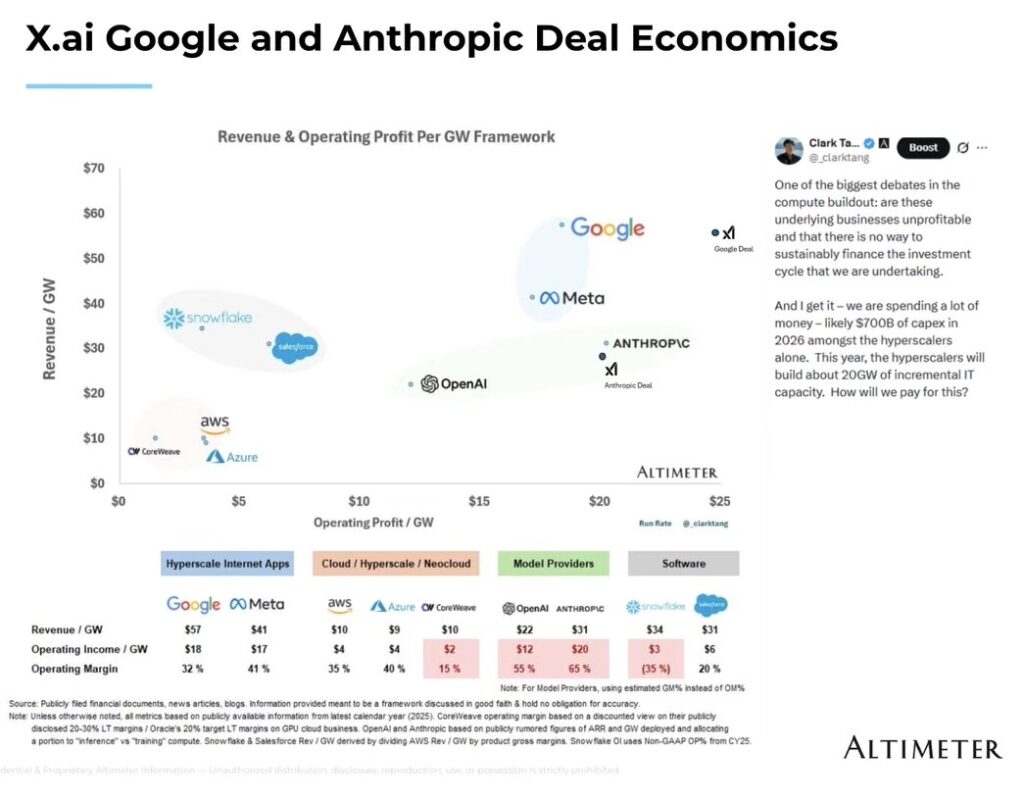
The SpaceXai premium is on immediacy, not on Blackwell. Colossus 1 clears at roughly a 32% premium to a one-year H100 contract. It is for a 220,000-GPU cluster delivered inside a month, taken whole, on 90-day rolling terms, on silicon its owner had already given up on. Colossus 1 was reportedly running near 11% model FLOPs utilization against a 35–45% production norm, because the mixed H100/H200/GB200 fabric couldn’t parallelize Grok training, so xAI moved training to Colossus 2.
Most of the large CoreWeave, Nebius, IREN, and similar GB200/GB300 (Blackwell) contracts are still ramping — only portions are fully live today. Full contracted volumes largely come online through the rest of 2026 into 2027. This is the main reason they price far below the ~$35–55B per GW per year seen on already-operational Colossus capacity.
Neo-cloud mega-deals are typically multi-year (often 5 years) with longer visibility, sometimes prepayments, and more predictable offtake. This lowers the effective annual rate. Colossus-style leases have short cancellation rights after initial periods, so they price more like scarce near-term capacity.
Scale + coherence of a single large cluster
Premium deals deliver hundreds of thousands of GPUs in one tightly interconnected, high-bandwidth fabric optimized for large-scale training. Many neo-cloud blocks are smaller, more fragmented, or multi-tenant. Coherent large clusters reduce communication overhead and enable higher effective utilization for the heaviest workloads.
Hardware readiness and density
These sites already host (or rapidly fill with) current-generation high-density systems (GB200/GB300-class and mixes). The buyer does not wait for GPU allocation + facility fit-out. Regular neo-clouds compete on price partly because they carry more inventory, utilization, and obsolescence risk across a broader book.
Scarcity in a still-constrained market
Overall AI power and advanced GPU supply remain tight. Spot and short-term rates have frequently exceeded longer-term contracted rates. The highest willingness-to-pay appears exactly where capacity is both scarce and immediately usable. Cancellation flexibility (90-day notices after initial periods) exists, but in a tight market it does not eliminate the scarcity rent.
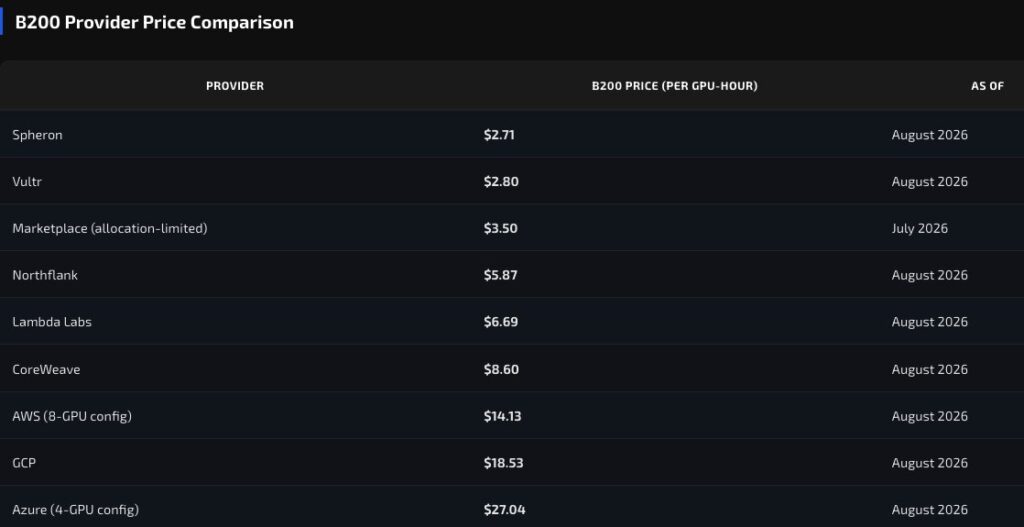
The cleanest like-for-like now available. Colossus 2 is B200/GB200-class silicon, and the market floor for GB200 is $10.50 per GPU-hour across eight providers. Anthropic’s implied $10.81 and Google’s $11.46 sit 3% and 9% above that floor.
Token Path: Who Actually Captures the Value
SpaceX/xAI being a token factory is “more than enough for the next five to ten years per Gavin Baker. The world needs more raw token generation capacity. SpaceX does not need databases, object storage, or the full AWS layer cake to win that demand.
CDNs get a more complicated answer. Cloudflare trades at all-time highs on AI narrative, but Baker estimates CDNs like Cloudflare and Akamai deliver under 1% of tokens consumed on Earth today – possibly under 10 basis points Gavin @ 17:00. The bulk of token generation happens inside hyperscaler and neocloud data centers. The final delivery hop is real but small.
Brian Wang is a Futurist Thought Leader and a popular Science blogger with 1 million readers per month. His blog Nextbigfuture.com is ranked #1 Science News Blog. It covers many disruptive technology and trends including Space, Robotics, Artificial Intelligence, Medicine, Anti-aging Biotechnology, and Nanotechnology.
Known for identifying cutting edge technologies, he is currently a Co-Founder of a startup and fundraiser for high potential early-stage companies. He is the Head of Research for Allocations for deep technology investments and an Angel Investor at Space Angels.
A frequent speaker at corporations, he has been a TEDx speaker, a Singularity University speaker and guest at numerous interviews for radio and podcasts. He is open to public speaking and advising engagements.
