



Brain implants, like the ones made by Elon Musk’s Neuralink, typically involve open-skull surgery. But a Chinese startup says it can skip that step entirely, threading its device into the brain through a vein in a procedure that reportedly takes as little as ten minutes. According to the South China Morning Post, Shanghai-based StairMed Technology is one of several companies pursuing this approach, as the country pushes to expand its homegrown brain-computer interface (BCI) industry.
Faster than Neuralink, on paper
Unlike Neuralink’s implant, which requires a surgical robot to open the skull and place ultra-fine electrode threads directly into brain tissue, StairMed Technology’s device enters through a vein in the neck and travels through the vascular system to reach the brain, said co-founder Zhao Zhengtuo at the Global Health Summit in Hong Kong. Duan Wanru, a physician at Xuanwu Hospital, said a surgeon with four or five years of experience could position the device in just ten minutes, well under the roughly two hours Neuralink’s surgical robot needed to open the skull and place the implant during the company’s first human surgery in 2024.
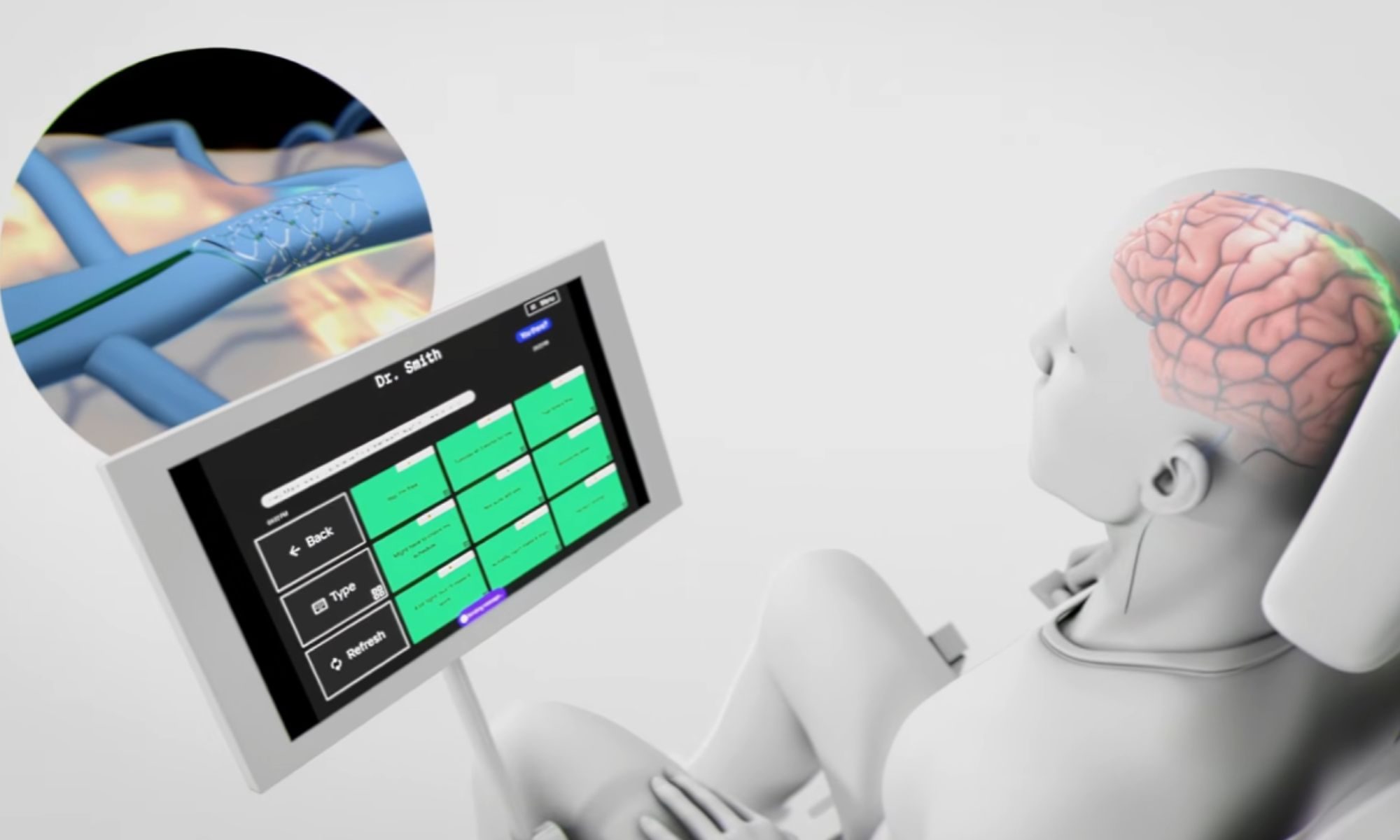
The company has raised more than 1.1 billion yuan (about $163 million) over the past year, backed by Tencent and Alibaba. So far, its vein-based approach has only been tested on sheep. StairMed hasn’t started human trials, so the ten-minute figure is a target rather than a proven result.
The idea isn’t new, the speed claim is
StairMed isn’t the first company to attempt vein-based BCI. Synchron, a US company, has already implanted its own device, called the Stentrode, in ten patients across trials in the US and Australia since 2023, according to IEEE Spectrum. Synchron’s device settles inside a blood vessel near the brain’s motor cortex and reads signals through the vessel wall, while StairMed says its design exits the vessel and anchors just outside it.
The market stakes explain why speed matters here. Morgan Stanley projects the BCI implant market could reach $80 billion in the US alone by 2035, and Beijing has said it wants two or three Chinese companies competing globally in that space by 2030. A procedure that takes minutes instead of hours would be far easier to scale across hospitals, which is likely why StairMed is leading with the ten-minute figure well before it has patient data to support it.
If you’re expecting a ten-minute brain implant to show up in an operating room anytime soon, you should temper your expectations. StairMed still has to prove its device and delivery method work, something Synchron has already spent years doing with a similar approach.
