


Though it feels rarer these days, tech journalists are sometimes asked to make a judgment call not just on a particular product, but on whole brands — say, Apple versus Google or Microsoft. I’m usually reluctant to make those pronouncements. Most companies have a mix of good and mediocre products, and even a company with a bad reputation can turn things around.
I’d actually rate Samsung as mostly good in my experience, including the TVs, phones, washers, and dryers I’ve used. Yet there are factors that steer me towards other brands when I’m shopping for TVs, and you might want to consider these when weighing your own decisions.
They’re comparatively expensive for the specs
Potentially worth it, but check reviews

On a technical level, Samsung legitimately makes some of the best TVs in the world, thanks to an ace up its sleeve: Samsung Display, which develops panels not just for its sibling divisions, but rivals like Apple. Samsung is one of the few companies with a MicroLED TV, and it was an early pioneer in RGB mini-LED technology as well.
The issue here is that it’s up against TCL and Hisense. Those companies frequently charge a few hundred dollars less for similarly-equipped sets, and you legitimately won’t notice the difference in most cases. In fact, because of the price gap, you might be able to afford better specs. So while it’s worth comparing Samsung models when you’re shopping, I’d only gravitate towards them if you can locate a deal, or if specific features call out to you.
They don’t support Dolby Vision
The 800-pound format gorilla

Dolby Vision isn’t as essential as it used to be. While it was the first commercial HDR (high dynamic range) format, that was later followed up by HDR10, then HDR10+, which was co-developed by Samsung and uses dynamic metadata similar to Dolby’s. The latter is increasingly commonplace for movies and TV shows, so Samsung’s decision to exclude Vision — even on TVs costing five or six digits — isn’t necessarily a problem.
Thing is, you may sometimes run into titles that only support Vision and HDR10, and dynamic metadata can make a big difference. Without it, HDR settings stay locked in for an entire video, resulting in a more modest improvement if a creator is going to avoid crushed shadows or blown-out highlights in some scenes. You may also own peripherals that don’t support HDR10+, such as the Xbox Series X, or an older Apple TV 4K. It just doesn’t make sense to buy a TV without Vision when it’s so easy to find models that have it. This trend seems set to continue with the arrival of Vision 2 and HDR10+ Advanced.
Tizen is an awkward OS
You can do better

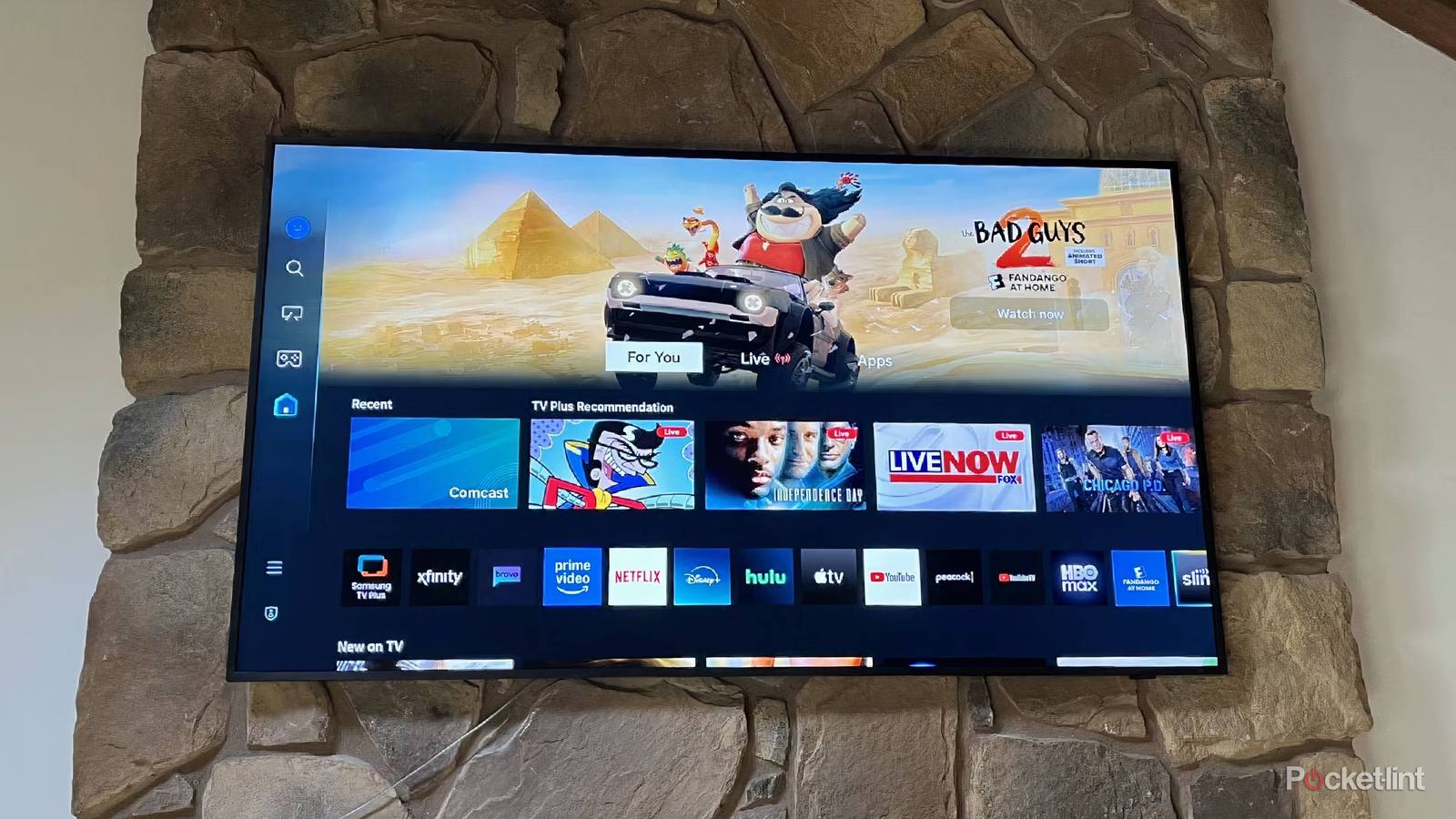
You might not care too much about a TV’s default operating system. Many people prefer having their TV boot straight to a console or add-on media streamer anyway. But you will at least need to use that OS to change settings, and if you’d rather avoid buying an add-on, you’ll encounter all of that software’s quirks.
Tizen does get the job done. I find some elements of it counterintuitive, though, certainly next to Roku OS or Google TV. It also doesn’t feel as snappy as its alternatives, at least on the models I’ve used, and that of course is the thing many of us care about most. I’m not here to engage with Samsung’s proprietary or promoted content — I want to jump straight to Netflix, YouTube, or my Steam Deck, thank you very much.
There’s another factor you might want to consider: AI and smart home ecosystems. That can be a point in Tizen’s favor, since it does integrate many features of Amazon Alexa, but I’d be awfully tempted to pick a Google TV for full support of Gemini and Google Home out of the box.
