

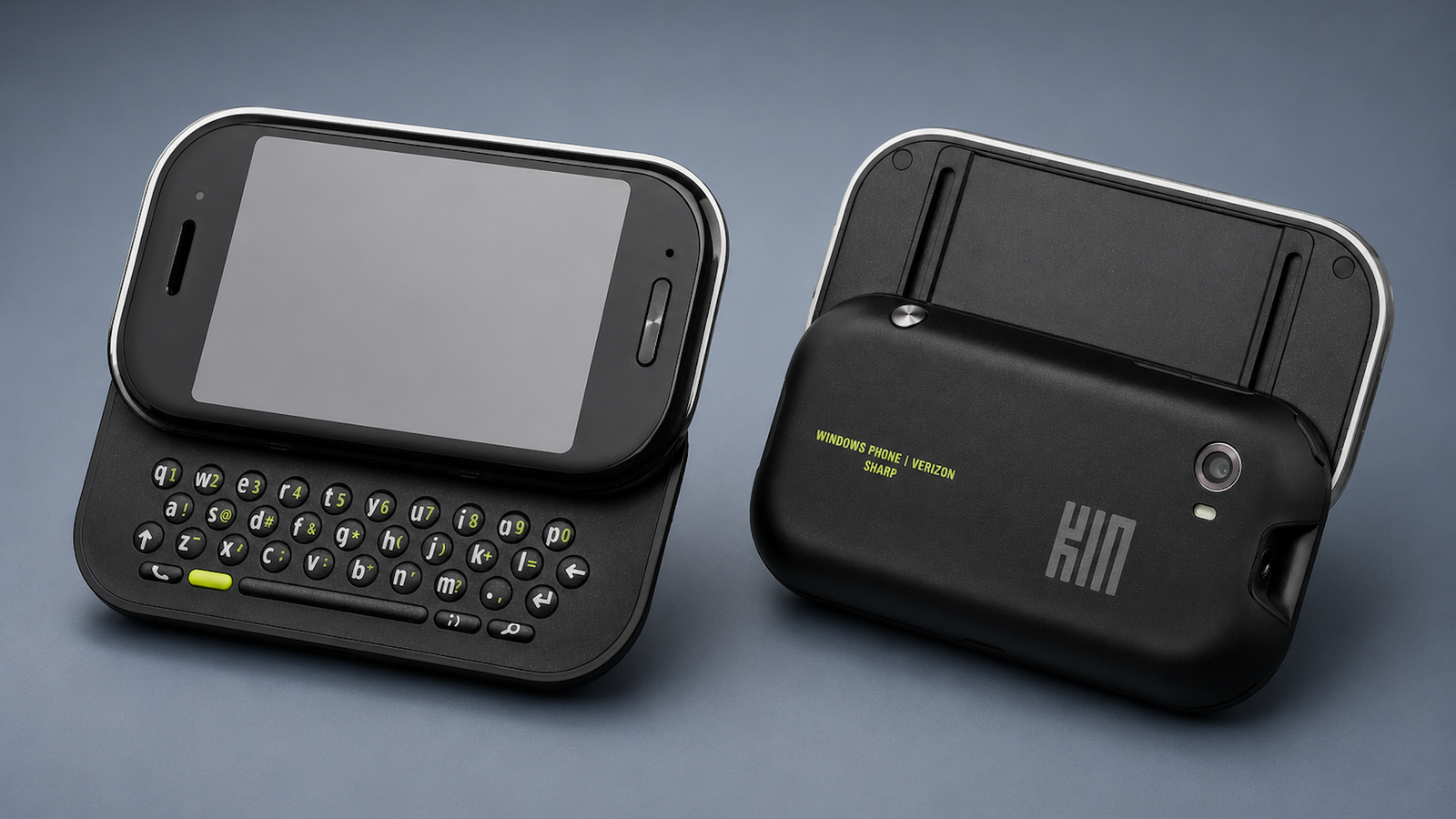

I sometimes think about how much human effort gets buried inside a failed gadget. Years of engineering, design work, carrier deals, and marketing can vanish with the product almost overnight.
Usually, all that work at least buys a device a year or two on store shelves. In the spring of 2010, Microsoft launched the Kin One and Kin Two, then abandoned the project just 48 days after the phones reached Verizon stores.
Microsoft had spent roughly two years getting Kin to market, and contemporary estimates put the cost of designing and launching the project at close to $1 billion.
Microsoft thought it had found its way back into cool phones
The Sidekick connection was a sensible place to start
By the late 2000s, Microsoft had a pretty obvious mobile problem. The iPhone had reset expectations around touchscreens and full web browsing, Android’s early rise as a smartphone platform was gathering momentum, and Windows Mobile still carried a lot of desktop-era baggage. Danger Inc. gave Microsoft another path. The company built the software and services behind the T-Mobile Sidekick, and Microsoft acquired it in 2008. At the time, Microsoft described Danger’s audience as young, internet-savvy, and highly social, which is basically a preview of the crowd Kin would eventually chase.
The Sidekick had already found an audience through its messaging, physical keyboard, social features, and cloud-backed services that kept user data synced. Buying Danger gave Microsoft a team that understood that market without having to squeeze the same ideas into Windows Mobile.
The effort became known as Project Pink. Ars Technica later reported, citing people familiar with the project, that Microsoft shifted the software away from Danger’s Java-based platform and onto Windows CE, a move that reportedly delayed development by about 18 months. The same reporting also described friction between the Kin group and the Windows Phone team.
Whatever the internal politics looked like, the strategic mess was easy to see from the outside. Microsoft was already preparing Windows Phone 7 as its big smartphone reboot, so by the time Kin reached stores, the company was effectively carrying two different answers to the same mobile crisis.
Kin had clever ideas and some baffling holes
Microsoft built the social feed into the phone itself

Kin One was a tiny portrait slider with a rounded body, while Kin Two was wider, with a landscape keyboard and a larger display. Sharp built both phones.
The software was where Microsoft really tried to give Kin an identity. Kin Loop filled the home screen with updates from Facebook, Twitter, MySpace, and other services, while Kin Spot let you drag people and content into a single place before sharing them. Kin Studio, the most ambitious feature, automatically uploaded messages, contacts, photos, and videos to a private web interface you could browse on a PC. Automatic cloud-backed photo libraries barely register as a feature now, when services like iCloud Photos can automatically sync your photo library across your phone and computer, but this was 2010, and Microsoft was already working from the idea that your phone life should spill onto a bigger screen without you constantly plugging in a cable and moving files around.
Kin also borrowed heavily from Microsoft’s forgotten Zune music player, including its music interface and Zune Pass support. The phone had a pretty clear personality until you started looking for the basic smartphone features that weren’t there. It launched without an app store, third-party apps, games, a calendar, or an instant-messaging client. At the time, Engadget also found the browser slow and unstable, while the heavily promoted Twitter integration proved quite shallow. You could read and post updates, but retweets and direct messages were out, and links inside tweets couldn’t be opened directly from the Loop.
Then came the pricing. Kin One cost $49.99, and Kin Two $99.99, after a $100 mail-in rebate and a two-year agreement, while buyers also needed a voice plan starting at $39.99 a month, plus Verizon’s $29.99 smartphone data plan.
That pushed the minimum monthly bill to around $70 before extras. Kin was chasing younger users pretty aggressively, but its service cost put it right beside Verizon’s Droid phones and other full-blown smartphones. A cheaper plan might have given Kin enough breathing room to become its own odd little category, but smartphone pricing meant it had to compete like a smartphone, and that was a much uglier comparison.
Two years of work met 48 days of reality
Microsoft already had another phone future waiting

The retreat came fast. On June 28, Verizon dropped the Kin One to $29 and the Kin Two to $49. Microsoft and Verizon never released official sales figures, so the oft-repeated claim that only a few hundred phones sold should be treated as rumor. Contemporary coverage was much more consistent on the broader point: sales were bad.
Two days later, Microsoft canceled Kin’s planned European launch, said the team would be folded into Windows Phone 7, and shifted its mobile focus to that platform. June 30 wasn’t the exact day every Kin vanished from shelves, since Microsoft initially said Verizon would keep selling the existing U.S. models. Verizon finally pulled them in mid-July.
The famous 48-day figure runs from the May 13 retail-store launch to Microsoft’s June 30 retreat. The phones had actually gone on sale online a week earlier, on May 6, which is worth keeping in mind whenever that wonderfully ridiculous number gets tossed around. With Windows Phone 7 arriving later that year, keeping a second, narrower mobile platform alive was getting harder to defend. Weak sales, pricey service, missing features, and Kin’s messy development history gave Microsoft plenty of reasons to cut its losses.
The real problem started long before those 48 days
Kin’s 48-day reputation makes the collapse look sudden. Most of the conditions working against it were already in place before launch. The smartphone market had moved quickly, Microsoft’s own mobile priorities had changed, and Kin finally arrived carrying decisions made much earlier in its development.
Kin also fits Microsoft’s habit of building something interesting and walking away from it, but the speed of this particular retreat still stands out. By the time the phones reached Verizon stores, Microsoft needed only a few weeks of sales to see how little room was left. The 48 days make Kin memorable, but the two years it took to get there are what make the story so strange.
