

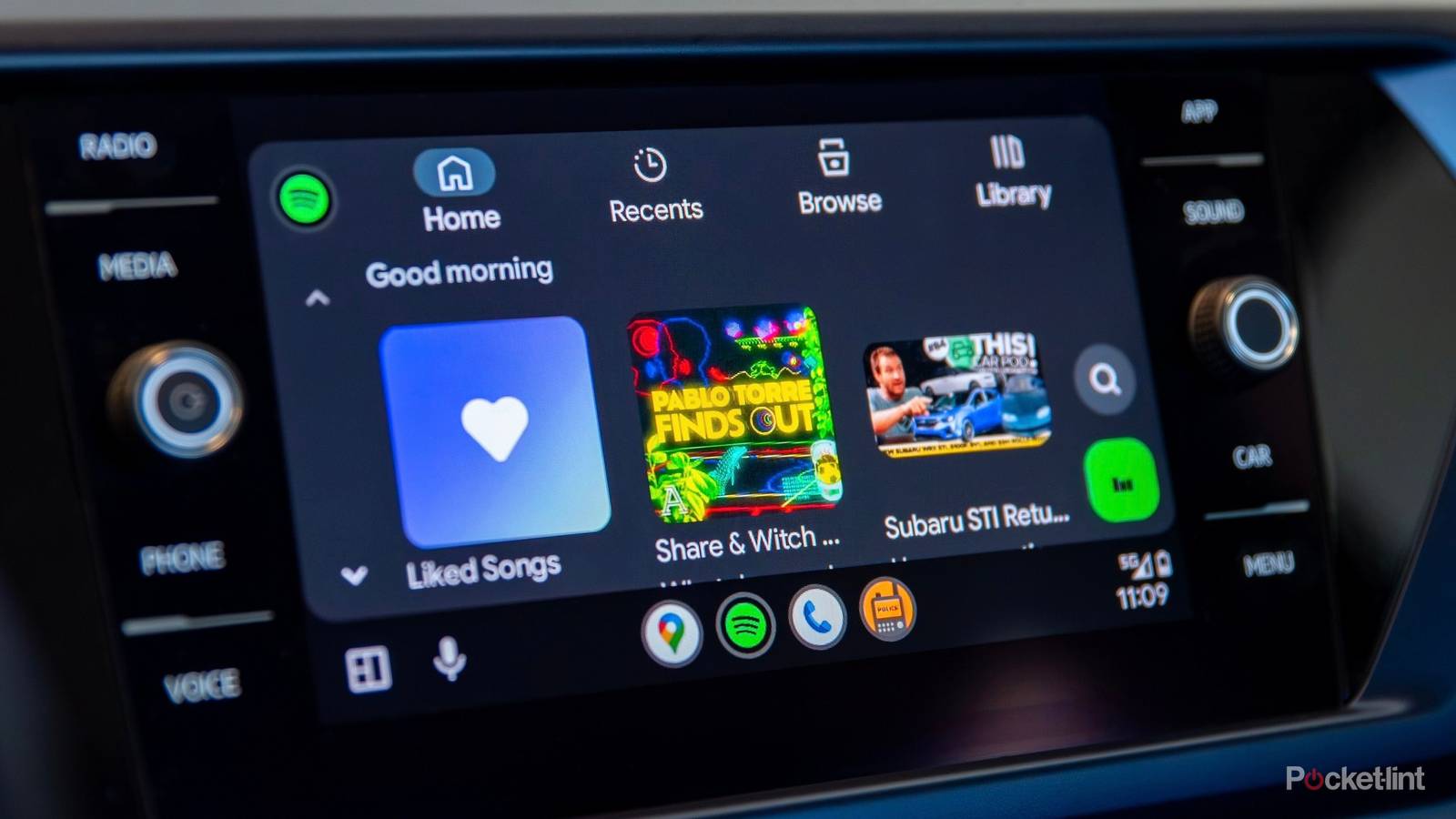

If you’ve been car shopping in the past few years, you might’ve been surprised to learn that some of the best-known brands don’t support Apple CarPlay or Android Auto. In fact, GM is actively stripping those platforms out of its vehicles, with the goal of transitioning to a new proprietary system by 2028. That move might seem backwards, given that your phone still tends to be more powerful and easier to use than many dash systems.
There is an underlying logic to these omissions. And unfortunately, it’s often not in your interests, but rather milking every last dime from customers.

- Brand
-
Google
- SoC
-
Google Tensor G6
Why some automakers skip CarPlay and Android Auto
You are the product

In some circumstances — particularly with advanced EVs like Teslas and Rivians — sticking to a proprietary interface can support special functions, or removing physical buttons and knobs. The standard versions of CarPlay and Android Auto don’t include any way of adjusting air conditioning, much less things like custom traction control modes. For those sorts of features, automakers have to step up to CarPlay Ultra or Android Automotive, and Ultra is just over a year old at this point.
In all other situations though, the decision boils down to one thing: ownership. Some automakers insist on an interface that fits a particular brand aesthetic. They may also want access to your telemetry data, by which I mean things like routing habits, or how often apps are used. When you load up CarPlay or Android Auto, it’s only app developers and Apple or Google that have any access to this, which might frustrate an automaker’s plans for testing future products.
On top of that, phone platforms can create bottlenecks. Labor and other resources have to be invested into ensuring compatibility, and Apple and Google may not always be operating on a convenient development timeline. I haven’t heard of this creating any serious hurdles, to be clear — but there’s obvious freedom in being able to focus on your own software, no matter if extra work has to be done to support features like navigation, voice commands, or AI.
The most insidious incentive for increased ownership is monetization. Thankfully, selling your data to third-party brokers has proven less lucrative than using it internally (according to Hagerty), but it does still happen. And if drivers are dependent on first-party software, it’s easier to market what are euphemistically labeled features on demand (FoD), a.k.a. subscriptions. If you can turn to your phone, there’s no need to pay an automaker for things like streaming services, built-in 5G, or security camera recordings. Subscription profits are an easier way of appeasing investors than a hit new model or improving manufacturing efficiency.
Are CarPlay and Android Auto dying?
Don’t panic yet

While I don’t have a crystal ball, this seems unlikely. Both CarPlay and Android Auto are extremely popular with drivers, to the point that they’re frequently a must-have feature. They also continue to have backing from major brands like Hyundai and Nissan, and I doubt that Apple or Google would surrender their industry footprint without a fight. They’re trillion-dollar megacorporations, so they can throw a lot of money at current or future partners.
If there’s a risk, it’s mostly in whether the transition to Tesla-style systems will gradually render CarPlay and Android Auto irrelevant. I’m still doubtful. Ultra and Android Automotive are adaptable, and even Tesla has reportedly been collaborating with Apple on some form of CarPlay support. GM is actually building on top of Android Automotive — it just doesn’t want you projecting apps from your phone. If you want to send a message, be very picky about the next vehicle you buy or lease.
