


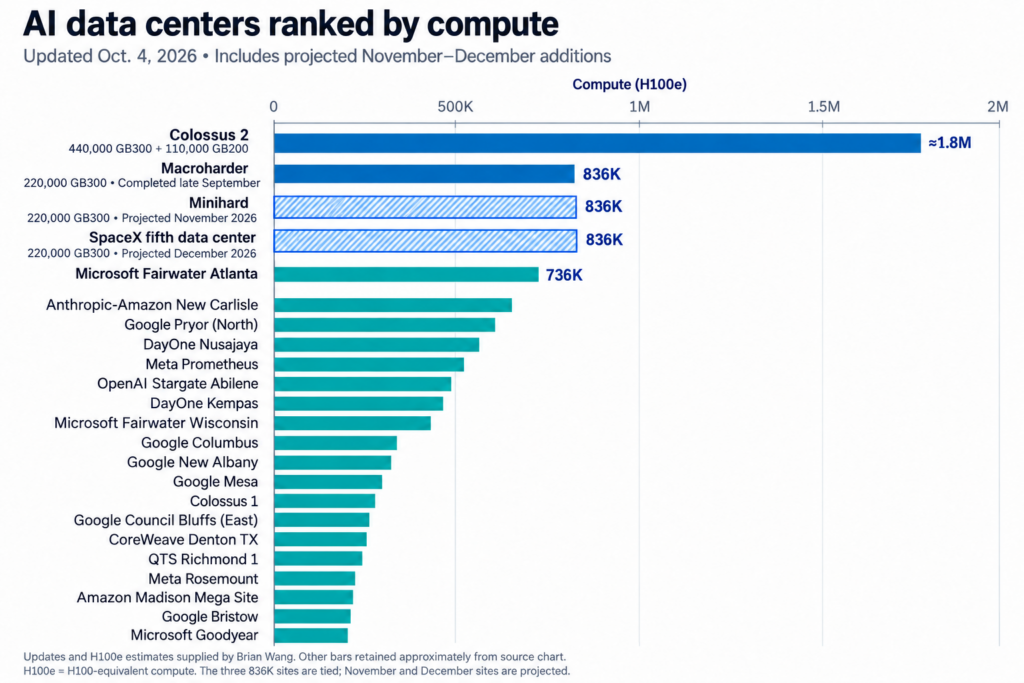
The biggest near-term change in SpaceX’s business is happening already and will be obvious over the next few months. They are completing some of the largest AI data centers on Earth every month.
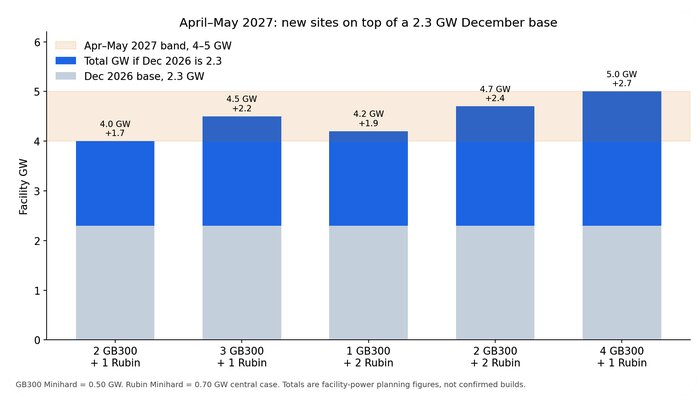
In my latest video, I examine the Macrohard, Macroharder and Minihard buildout—and why a construction cycle measured in months could make conventional revenue forecasts fall behind.
Consider the comparison: a five-month project versus one taking two to four years. That is approximately 4.8–9.6 times faster. The financial consequence is earlier access to usable compute and more months in which that capacity can earn revenue.
Five-month builds support monthly completions
A company does not need to construct an entire data center in one month to finish one every month. It needs several projects progressing simultaneously, with staggered completion dates.
That is the central idea behind my Minihard scenario. If SpaceX can repeat a design, secure equipment ahead of time and keep multiple sites under construction, the business starts to resemble a production operation with regular deliveries.
But the building alone is insufficient. Power, cooling, networking and chips must be ready together. The decisive milestone is usable computing capacity.
Revenue and Profit Impact
Using the model assumption of $50 billion per gigawatt per year, a fully leased 500 MW block represents $25 billion in annualized revenue potential—about $2.08 billion per month.
That does not mean a newly completed building immediately contributes $25 billion to the current year’s revenue. Completion date, customer acceptance, utilization, pricing and internal use all matter. A December opening has a very different full-year contribution from a January opening.
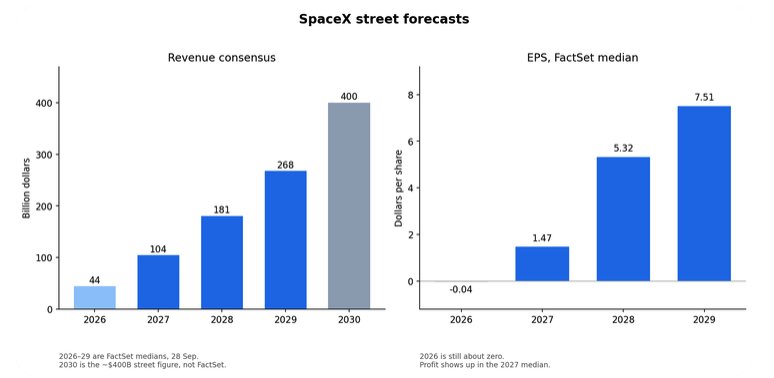
This distinction is essential when comparing SpaceX’s year-end revenue pace with Wall Street’s annual forecasts.
Jensen and Elon describe the scale
The video includes Jensen Huang discussing an estimated 10–20 GW of annual AI infrastructure construction across the United States. He also discusses the economic output that computing infrastructure could support.
Elon Musk describes a much larger long-term ambition for orbital AI: hundreds of gigawatts of compute launched per year.
These are different measures and horizons. U.S. construction is not the global total. Economic output is not SpaceX’s leasing revenue. A long-term orbital ambition is not installed capacity today.
The important connection is that Earth-based construction can generate revenue while SpaceX develops the launch capability for a much larger space-based business.
What would change the forecast?
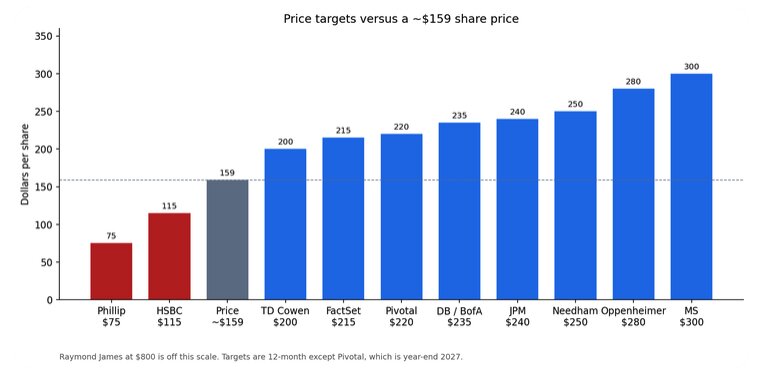
My financial scenarios examine how faster capacity additions, different chip mixes and 40%, 50% or 60% net margins affect earnings and valuation. The $652 share-price case is one modeled outcome, dependent on its revenue, margin, share-count and valuation-multiple assumptions.
The next test is concrete – completed sites, energized power, installed chips and paying customers.
If SpaceX demonstrates a repeatable monthly completion cadence, analysts will need to rerate the share price as AI business will have 5-10X the growth. The first major reassessment could be driven by data centers already taking shape on Earth.
Watch the accompanying video for the construction comparisons, interview clips and financial scenarios.

Brian Wang is a Futurist Thought Leader and a popular Science blogger with 1 million readers per month. His blog Nextbigfuture.com is ranked #1 Science News Blog. It covers many disruptive technology and trends including Space, Robotics, Artificial Intelligence, Medicine, Anti-aging Biotechnology, and Nanotechnology.
Known for identifying cutting edge technologies, he is currently a Co-Founder of a startup and fundraiser for high potential early-stage companies. He is the Head of Research for Allocations for deep technology investments and an Angel Investor at Space Angels.
A frequent speaker at corporations, he has been a TEDx speaker, a Singularity University speaker and guest at numerous interviews for radio and podcasts. He is open to public speaking and advising engagements.
