

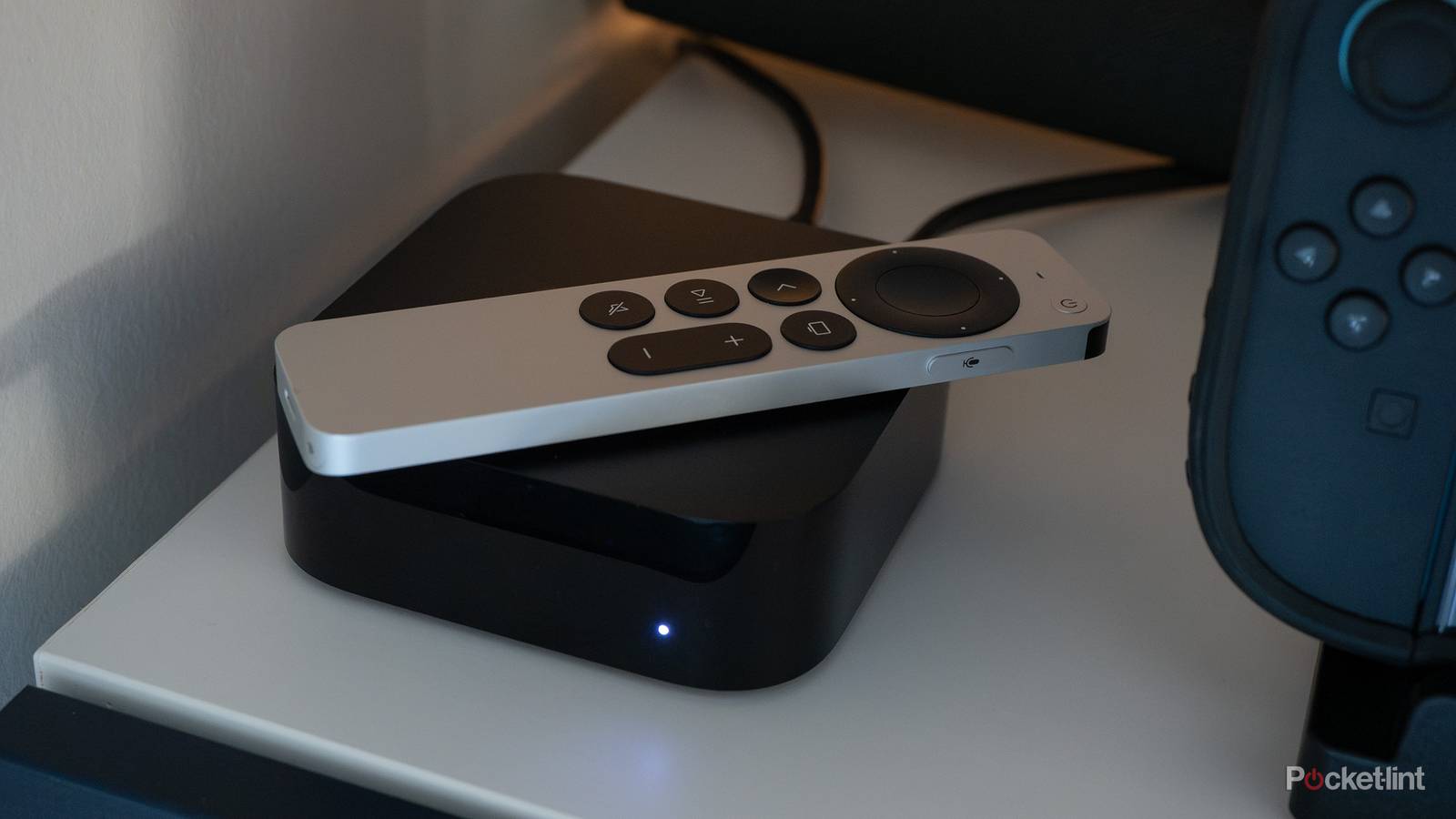

At long last, Apple unveiled its new Apple TV 4K (4th gen) this week, and for the most part, it was exactly what most people expected.
It’s powered by Apple’s A19 chip, which delivers a significant performance boost over the previous A15-powered model. It also adds Wi-Fi 7 and Bluetooth 6 for better connectivity, along with three built-in far-field microphones that let you control it hands-free with Siri.
Speaking of Siri, the new model also supports Siri AI, allowing you to talk to Siri more naturally and ask more complex questions, such as finding shows and movies to watch.
However, while Siri AI support on the new Apple TV 4K (4th gen) was widely expected to be a key feature because of its hardware upgrade, it surprisingly isn’t exclusive to the new model, as many expected.
Hidden in the footnotes of Apple’s press release for the new Apple TV 4K is an interesting note: “Access to Siri AI is also available on Apple TV 4K (2nd generation) and later.”
That means when Siri AI launches on the Apple TV 4K (4th gen) next month with tvOS 27.2, it’ll also be available as a free upgrade on the 2nd-gen and 3rd-gen Apple TV 4K models, released in 2021 and 2022, respectively.
How will older Apple TV 4Ks run Siri AI?
Apple is leveraging Private Cloud Compute

While it’s nice to see Siri AI and its capabilities are not exclusive to the new Apple TV 4K (4th gen), which costs a staggering $300, if you’re scratching your head wondering how on earth older Apple TV 4K models will actually run Siri AI without absolutely wrecking their performance, given that they don’t have the power of the A19 chip, you’re not alone.
The answer to this seems to be thanks to the cloud. Apple explains that Siri AI requests on the Apple TV 4K are handled in two ways: on-device processing or Private Cloud Compute.
Since the new Apple TV 4K (4th gen) has the A19 chip and more RAM, Siri AI will likely rely mostly on on-device processing, since it can handle it without slowing down the rest of the system.
But given that the 2nd-gen Apple TV 4K from 2021 is powered by the A13 and the 3rd-gen from 2022 by the A15, these chipsets would struggle to handle Siri AI without slowing down the rest of the system and destroying performance. To try to prevent that, Apple will likely be heavily reliant on Private Cloud Compute to process Siri AI requests to not put as much stress on the hardware.
“Siri requests on Apple TV 4K can use on-device processing or Private Cloud Compute, which extends the privacy of the device to the cloud,” Apple explains in a press release. “When processed in Private Cloud Compute, data is neither stored nor made accessible to Apple or anyone else.”
All things considered, I think it’s great that Siri AI isn’t exclusive to the new Apple TV 4K and that Apple is bringing it to older models as a free upgrade, too. Apple’s competitors, particularly Google with Gemini and Amazon with Alexa+, already rely on the cloud to handle AI processing on their cheaper, less powerful streaming devices, so it only makes sense for Apple to do the same.
I just really hope Apple has properly integrated Private Cloud Compute into the experience so that Siri AI doesn’t inadvertently tank performance on the 2nd- and 3rd-gen Apple TV 4K. With the new model carrying a hefty $300 price tag, upgrading isn’t something many people will want to do right now, and the last thing they need is their existing hardware suddenly slowing to a crawl, which Private Cloud Compute will hopefully prevent.
Siri AI will be available on the 2nd-gen Apple TV 4K or newer starting next month, when tvOS 27.2 is released, likely on or before November 13, when the new Apple TV 4K (4th gen) launches.
