

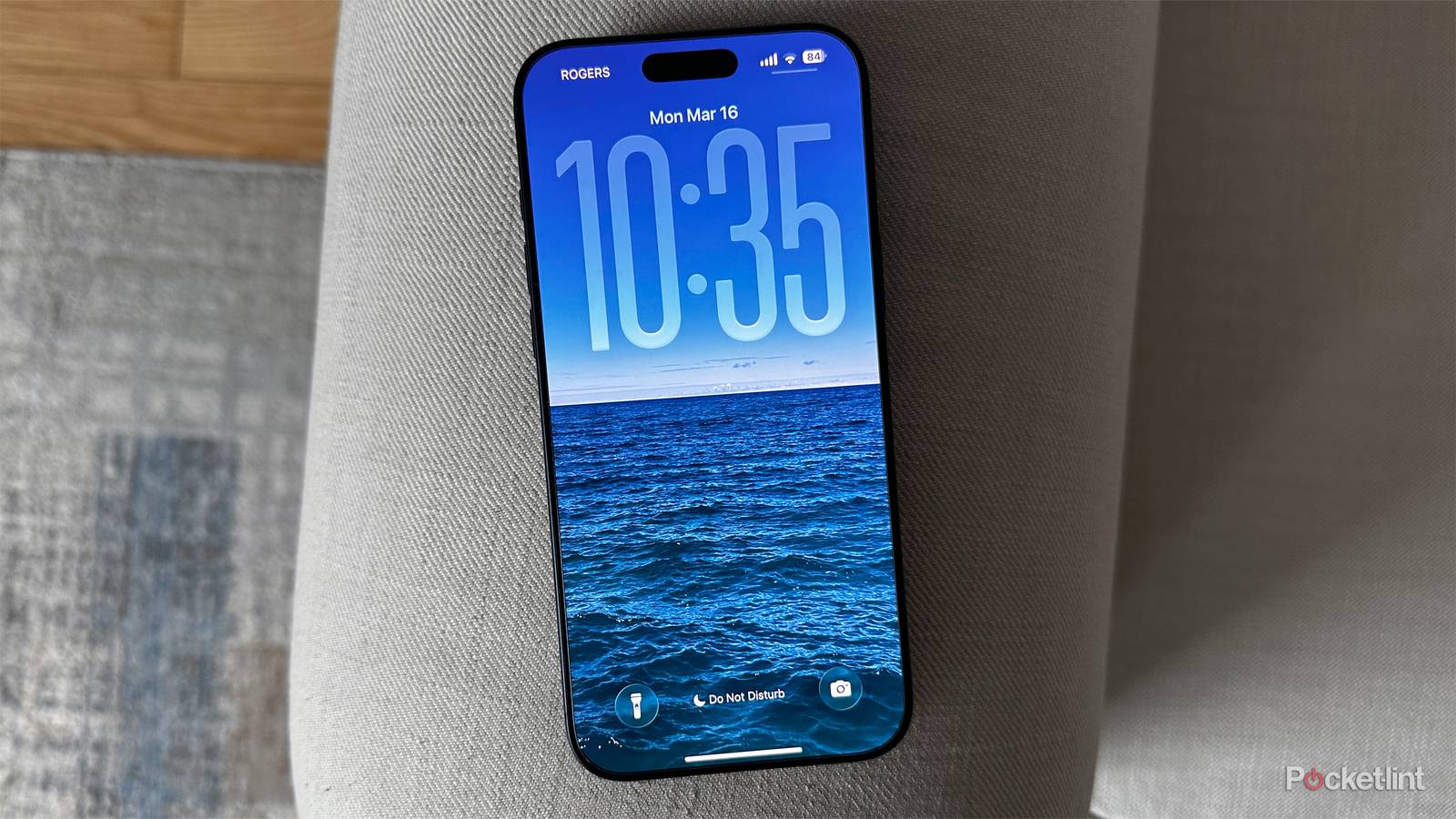

I absolutely love organic light-emitting diode (OLED) screens. When compared to traditional liquid crystal display (LCD) panels, OLED displays are, on average, punchier, more vivid, and inkier in their black levels. Even Mini-LED, which is a step-up from bog-standard IPS LCD, fails to truly capture the visual qualities innate in a good OLED.
Considering OLED’s display quality, it’s no surprise that many of the highest-tech consumer electronics out there — whether they be phones, tablets, laptops, or TVs — feature OLED configurations. Some manufacturers have even gone a step further by outfitting their flagship devices with tandem OLED screens, which significantly increase brightness by virtue of doubling up on the OLED goodness.
OLED technology is great, to be sure, but it’s also not without its flaws. Like older cathode-ray tube (CRT) and plasma screen setups, OLED suffers from the possibility of burn-in. This is because the organic diodes within OLED tend to degrade unevenly as they emit light. The end result is that, if you leave a static picture up on an OLED screen for too long, it can leave a permanent shadow in its wake.
OLED burn-in is a very real threat
Organic materials break down over time

Thankfully, manufacturers take preventative measures to reduce the likelihood of OLED display burn-in. Smartphone always-on displays (AODs) subtly shift their on-screen elements so as to avoid tiring the same pixels, smart TVs feature automatic dimming modes and pixel shifting techniques, and computers have an array of screensavers to choose from.
Additionally, advancements at the technical level have made newer-generation OLED panels more resistant to burn-in as a whole. The aforementioned tandem OLED screens found in some newer devices are even less likely to suffer from burn-in, thanks to their dual-stack architecture (each OLED layer can operate at half the current density while still achieving the same brightness).
Still, OLED burn-in remains a very real risk, especially if you play video games (thanks to many games featuring static heads-up displays (HUDs) for surfacing relevant information. While burn-in isn’t quite as common or widespread as it used to be, all you have to do is take a look at your local cellular carrier’s phone kiosk to understand that it’s still very much a reality.
How to avoid OLED burn-in
Screen burn-in can be largely avoided

Fundamentally, reducing the risk of OLED burn-in involves avoiding keeping static imagery up on your screen for extended periods of time. It’s important to make use of built-in burn-in reduction tools like auto-dimming and screensaver modes, as these can make all the difference when it comes to preserving your display panel.
Personally, I’m a huge fan of screensavers. Aside from protecting OLED displays from burn-in, they also imbue personality and aesthetics into a given tech setup. I always have a fireplace or aerial views up and running on my Apple TV 4K, my Mac is decked out with the fanciest clock face imaginable, and my Android phone harkens back to the good old days of the Google Nexus era with Nexus Revamped.
Other tips for avoiding OLED screen burn-in include lowering your display brightness, using auto-brightness, shortening your screen timeout setting, embracing dark mode, hiding your taskbar or dock, and turning off desktop icons. Some smart TVs also feature pixel refresh or pixel clean cycle settings, which can help give pixels a much-needed break.
There’s light at the end of the tunnel
Display burn-in could eventually become a thing of the past

No matter how much effort you put into protecting your OLED display panel, it’ll still eventually suffer from one form of degradation or another thanks to the organic part of the equation. Simply put, organic light-emitting diodes have a limited shelf life. The good news is that display advancements are always taking place, and much work is being done to reduce burn-in on the whole.
What’s most promising of all is the existence of micro-LED, which is a fancy display technology that promises to match OLED’s true blacks and punchy vividness, all while featuring inorganic elements that don’t suffer from burn-in. For the time being, micro-LED is very niche. It’s simply too expensive to produce at scale, and production yields are still too low. That being said, the future certainly looks bright (and vivid).
…I simply can’t see myself returning to LCD anytime soon.
It’s unclear whether micro-LED will eventually take over the mainstream, but I certainly hope to see it do so in the coming years. micro-LED is effectively the best of all worlds, combining OLED’s picture quality with LCD’s physical resilience and robustness. As a sort of penultimate display technology, micro-LED is incredibly promising — and having it on a smartphone or a PC sounds like a dream come true.
In the meantime, I’ll stick with OLED displays and screensavers. After recently switching to an OLED smart TV from LG, and after growing accustomed to my iPhone’s brilliant screen, I simply can’t see myself returning to LCD anytime soon. Next up, here’s hoping the rumors of an OLED-clad MacBook Pro prove accurate when said device potentially launches on October 28.
