

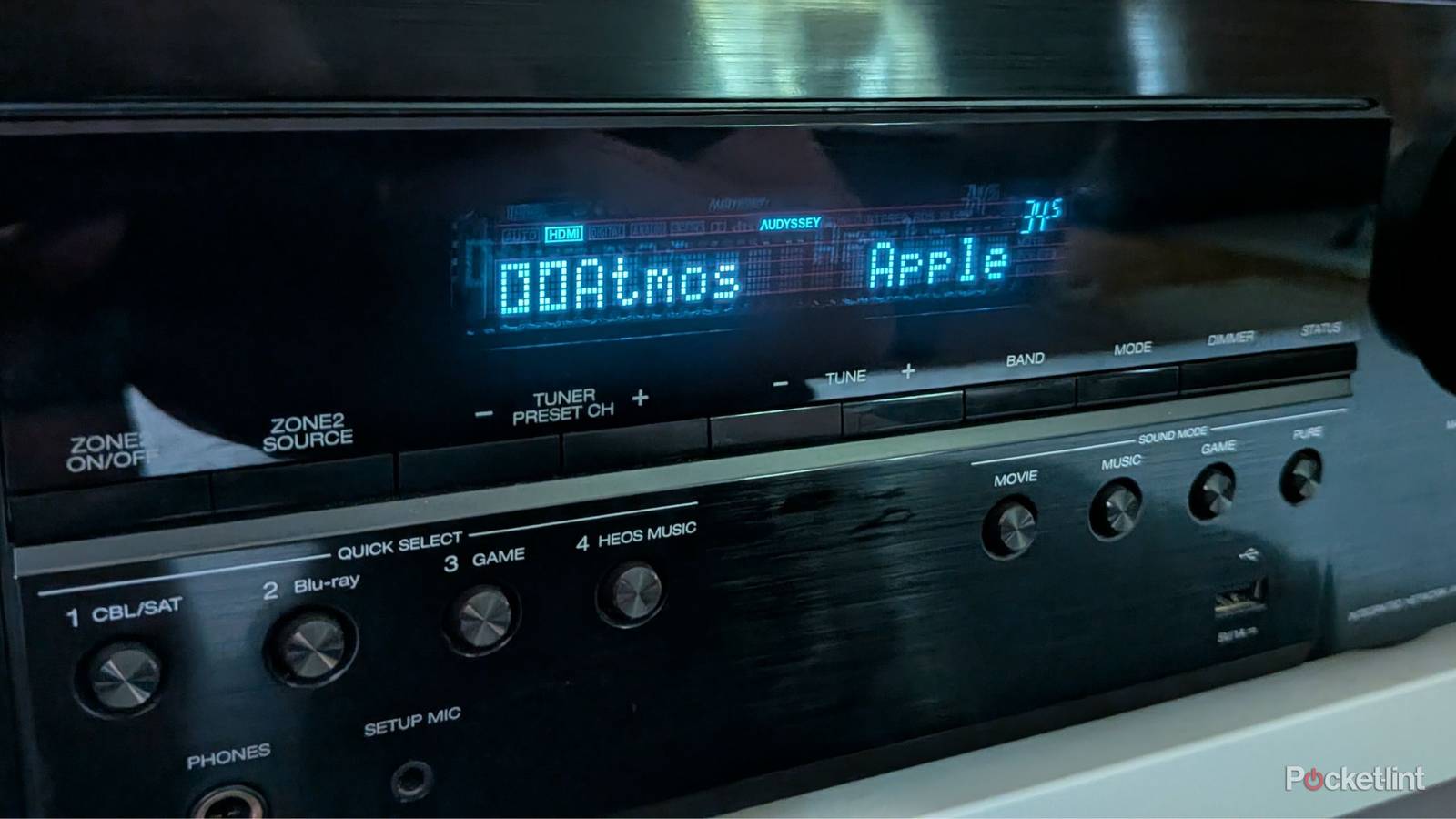

Dolby Atmos is a fantastic audio format, and for many people, it’s the format to strive for. I’m in that same boat, and I have a 5.1.2 Dolby Atmos setup in my living room. The Atmos part of that setup comes from two satellite speakers that I have mounted close to my ceiling, acting a front heights. My receiver recognizes them as such, and I have no complaints. I do have to eventually upgrade those speakers to get some more performance, but I’ve been telling myself that for years.
The big thing you need to be aware of that I don’t think many are is that there are many ways to get Dolby Atmos into your living room. A lot of people do it via a Dolby Atmos-branded soundbar. Others go the receiver route and set up speakers. No matter the path you take, there’s not necessarily a wrong answer — it’s just different. That’s right, not all Atmos is created equally. While your TV show or movie will still output Atmos, the way it does so will vary.
Upfiring speakers are quick and easy
Doesn’t take up a lot of room either

Upfiring speakers are the most common way you’ll see Dolby Atmos implemented in practice. This is what modern soundbars are doing to give you Atmos-quality sound, and for the most part, it works great. The way upfiring speakers work is that the Atmos speakers are angled up toward your ceiling where the sound comes out of the speakers, bounces off the ceiling, and eventually lands at the listening area. When it works, it works quite well. However, there are some important factors that go into how well it works.
Dolby recommends a ceiling height between 7.5 and 14 feet, so you’ll want to do some measuring before you go out and buy an upfiring Atmos soundbar or install some upfiring speakers. Fortunately, many ceilings fall into this height range, but you’re dealing with a less-than-ideal audio situation if you’re outside of it. Another thing to note is that you want to try and make sure your couch is positioned where the sound will reflect. It’s a hard thing to do, especially if you want to avoid having your couch in the middle of the room, and that’s why upfiring speakers aren’t the greatest way to experience Atmos.
What makes upfiring speakers great, however, is the versatility. Having it baked right into a soundbar is no hassle. You don’t have to wire anything and you don’t need a ladder to mount anything. Even the upfiring speakers you can place directly on top of speakers are nice because they just fit neatly without taking up more space. Not having to drill holes or do any extra work is obviously a big benefit. However, I think this is currently the worst way you can get Dolby Atmos sound.
Height speakers are a good middle ground

A step up from upfiring speakers are height speakers. These are speakers you mount above your front speakers, and you want to get them as close to the ceiling as you can. It does mean you’ll have wires coming down from your ceiling unless you find a way to cover them up, so it’s not something that’s for everyone. I have my speakers angled slightly downward facing my viewing area, and I have no complaints.
Height speakers represent a good middle ground between upfiring speakers and installing speakers in your ceiling. Having your height speakers placed high up works wonders in making the audio sound like it’s coming from above. There’s no trickery involved here either as the sound is simply coming from a height channel instead of being reflected off a surface. It might sound daunting, but it’s very easy to set height speakers up, so don’t let that hold you back. Yes, there will have to be some drilling, and you’ll want to run the wires through your wall or cover them up with some tape if you don’t like seeing them hang around. You can double all that if you decided to do rear height speakers to go along with your fronts.
Installing height speakers is a largely non-instrusive install. If you’re using satellite speakers like I am, then you don’t even have to worry about whether your wall can support the weight of a speaker or not. Obviously, if you can afford to mount a bigger and better speaker, then do it. My speakers leave a lot to be desired, so they’re definitely on the list of upgrades when I finally decide to get around to it. A true endgame would be in-ceiling speakers, but I’d say that’s out of range for most people.
In-ceiling is the endgame
Out of reach

Upfiring and height speakers are easy to make happen in a living room, but in-ceiling speakers would work best in an actual home theater room. A lot of people have dedicated rooms built. and if that’s you, then by all means leave some space for in-ceiling Atmos speakers. These will be placed on the ceiling above you, and you can put several of them up there to ensure maximize audio quality. The issue here is you’ll have to put in a lot of work, and many people don’t want to go through the trouble. Yes, it’s arguably the best way to get the most out of your Atmos setup, but it’s also out of reach for most people.
There’s a lot of drilling, a lot of installation, and there will be a lot of wires. You’ll also need to find a receiver that can support the extra speakers if you plan to put four of them in the ceiling, for example. It’s a big price commitment, and if you can afford it, it’s great. I think this tier of Atmos is best suited for people with dedicated home theater rooms. I would say it’s not worth the trouble for most people, and regular rooms would be better suited for height speakers. I like having good audio as much as the next person, but I can’t justify the time or cost of installing in-ceiling speakers.
The nice part about dedicated in-ceiling speakers is that they aren’t as expensive as the rest of your speakers. The C34E speakers that are often recommended come at $150 a pop, so the expensive part comes from your receiver and the construction needed to get these installed. I would say that if you’re in the process of building a home theater room, just leave room for in-celing speakers and go from there. If you have to tear apart your ceiling, then I think heights are the better options.
