

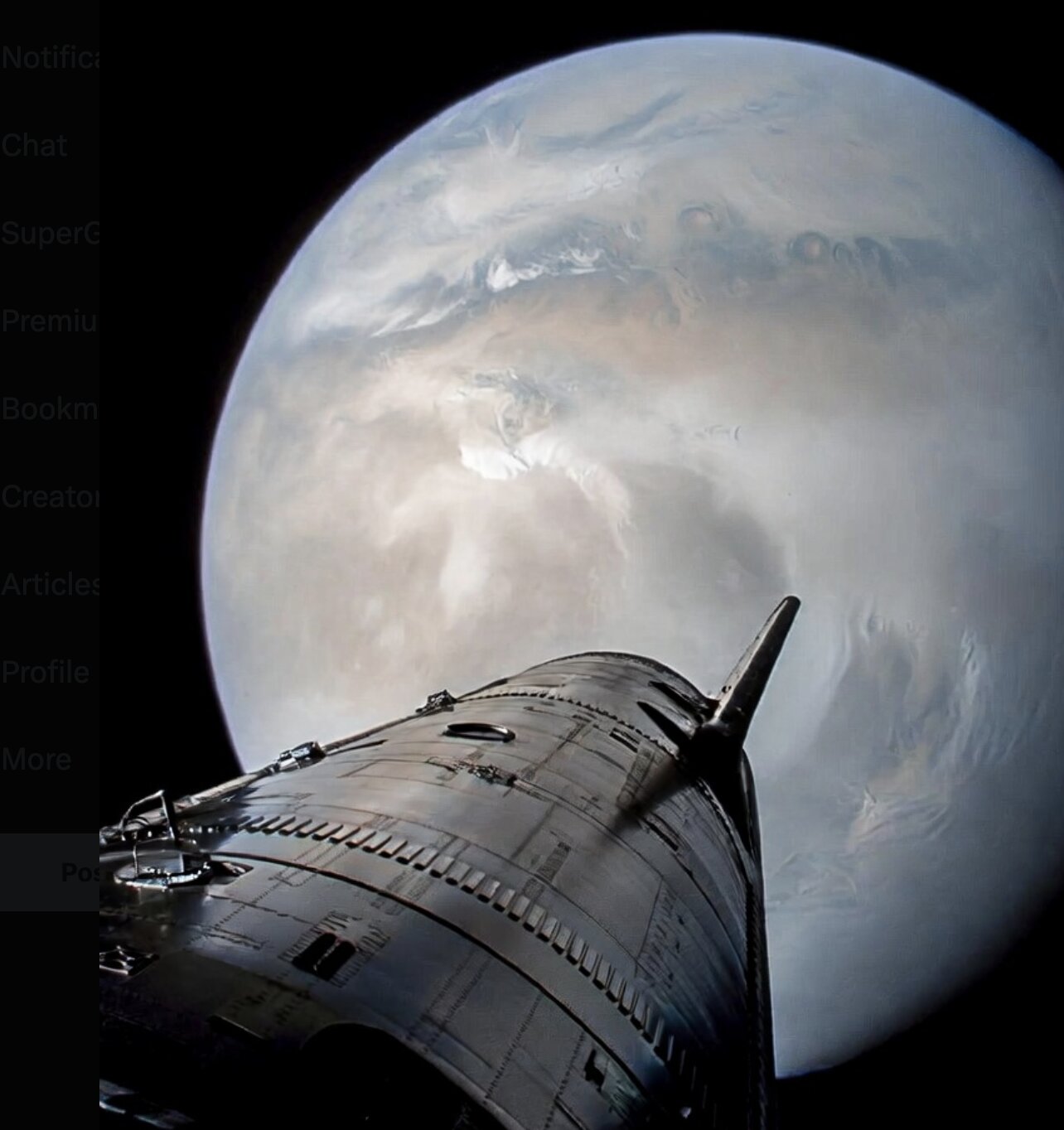

2034 Earth–Venus–Mars opportunity looks promising. 10–15 on-orbit refueling operations may be needed to make a crewed ship full. (A version 4 Starship could refuel with five tanker launches. Most refueling can be done at an altitude of 180–200 km, made possible by Starship’s size. The final refueling may be performed at a higher altitude of ~2000 km, just below the Van Allen belt.
Earth departure on 2034-08-21 from 2000 km orbit. A Trans-Venus Injection burn of ~3.7 km/s will place the ship on an Earth–Venus–Earth free-return trajectory. Venus flyby is expected on 2034-12-19, 120 days after departure. Two weeks before the encounter, if the mission proceeds as planned, a 25-m/s maneuver will shift the trajectory from Earth-return to Mars-bound. If not, the ship will free return to Earth in September 2035.
The Venus gravity assist will send the ship into another Earth free-return trajectory, with Mars flyby around 2035-06-02. One week before reaching Mars, a system health check will determine whether to commit to Mars Orbit Insertion. If it’s GO, a small 10-m/s manuever will put the ship to less than 100 km altitude periapsis. Otherwise, a Mars flyby will lead to an Earth return in May 2036.
The ship will enter the Martian atmosphere at about 9.4 km/s, performing an aerobrake to slow to 4.88 km/s and capture into a 100×140000 km, 7-day period high elliptical orbit. At apoapsis, a 50-m/s plane change will align the inclination with Mars’ equator, followed by additional aerobraking to remove about 650 m/s of velocity, placing the spacecraft in a 120×6128 km orbit. A 550-m/s burn at 6128 km altitude will then adjust the trajectory into Phobos orbit.
The ship will stay at Phobos for about 7 days. The Mars–Phobos L1 point is only about two miles above Phobos’ surface, and Mars would dominate nearly half the sky, appearing about 80 times larger than the Moon from Earth.
The ship will depart for Deimos afterward. Two burns totaling roughly 750 m/s will transfer the ship from Phobos to Deimos. And the ship will stay at Deimos for 7 days more.
From Deimos, the ship will raise its apoapsis to form a 20000×140000 km altitude, 7-day orbit, requiring about 420 m/s of delta-v. At apogee, a 50-m/s burn will adjust inclination and lower periapsis to ~500 km for final Trans-Earth Injection. If time and propellant allow, the orbit can be aligned to a polar inclination for Mars ice-cap observations before departure.
A Trans-Earth Injection burn at 500 km altitude, requiring 1.5–1.6 km/s of delta-v in early July 2035. If departure on the first days in July, Earth arrival is expected in December 2035. If missed that window, a March 2036 arrival may look more feasible.
Nominal mission duration: 490 days, with 30 days in Mars orbit and 14 days at Phobos and Deimos.
2034 Earth–Venus–Mars opportunity looks promising. 10–15 on-orbit refueling operations may be needed to make a crewed ship full. Most can be done at an altitude of 180–200 km, made possible by Starship’s size. The final refueling may be performed at a higher altitude of ~2000 km,… pic.twitter.com/P8JoAmMNc4
— Chun (@satofishi) October 11, 2025

Brian Wang is a Futurist Thought Leader and a popular Science blogger with 1 million readers per month. His blog Nextbigfuture.com is ranked #1 Science News Blog. It covers many disruptive technology and trends including Space, Robotics, Artificial Intelligence, Medicine, Anti-aging Biotechnology, and Nanotechnology.
Known for identifying cutting edge technologies, he is currently a Co-Founder of a startup and fundraiser for high potential early-stage companies. He is the Head of Research for Allocations for deep technology investments and an Angel Investor at Space Angels.
A frequent speaker at corporations, he has been a TEDx speaker, a Singularity University speaker and guest at numerous interviews for radio and podcasts. He is open to public speaking and advising engagements.
