

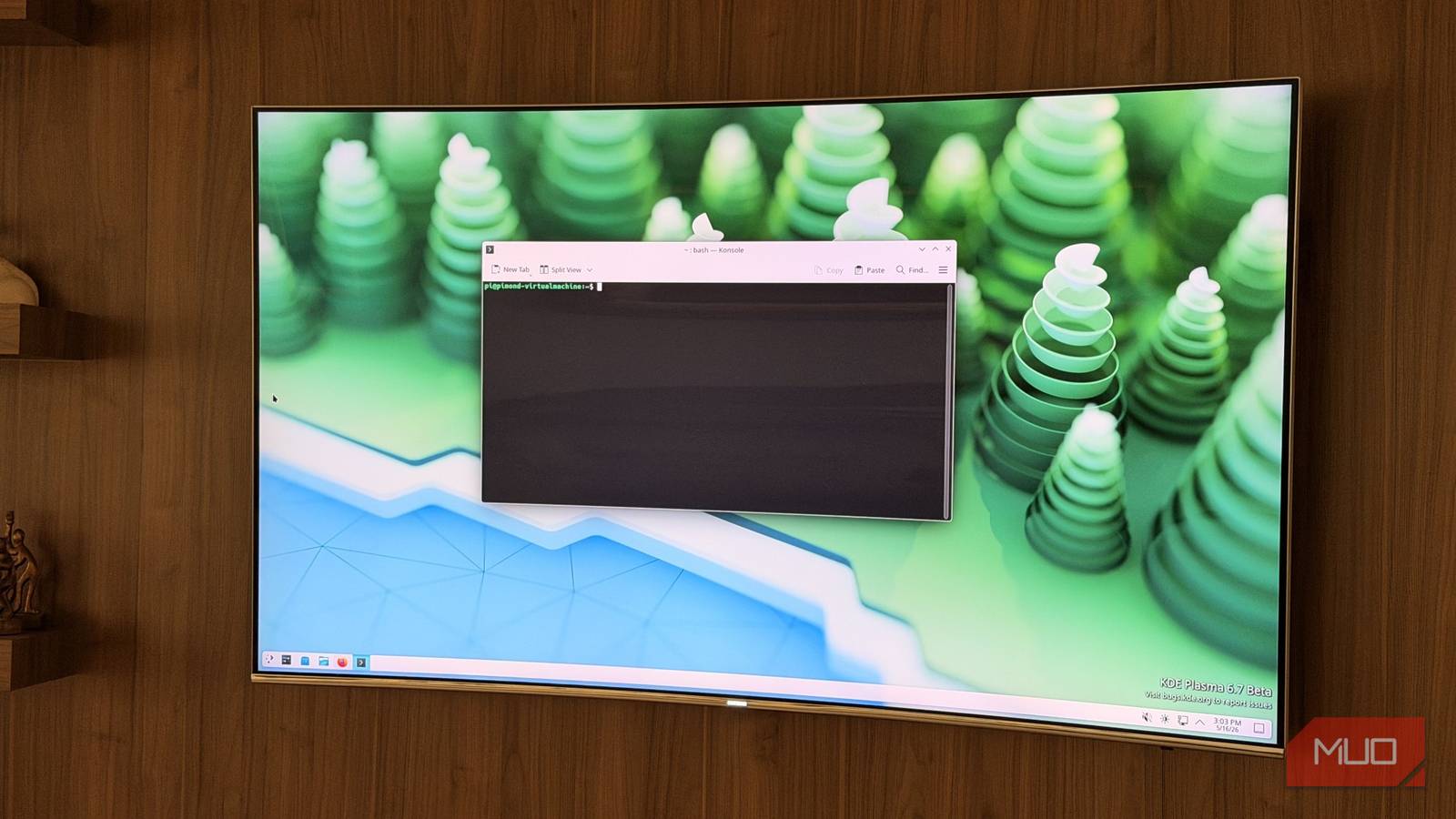

There’s just something about a complete desktop experience. Tiling window managers can be great and really light on system resources, but setting everything up from scratch is a real pain. Which is why I decided to venture back into my favorite desktop environment, KDE Plasma, one more time — thanks to precarious circumstances.
COSMIC looked like the future of Linux desktops — switching to it was a mistake I didn’t see coming
Needs more time in the oven.
A bit of a backstory
No one to blame but myself

While I was using a tiling window manager (for months!) before this point, I’ve always preferred KDE Plasma as my Linux desktop environment. That being said, there have always been a few specific advantages regarding tiling WMs, the most notable of which is its simplicity.
Less is more, or so they say — and there is some joy in setting up a desktop from scratch. Still, it can be a bit overwhelming at times and downright unusable in certain setups.
For me, it was my eGPU setup that forced me to move on to KDE. External GPU hot-plugging kind of doesn’t work on most tiling window managers, and Niri unfortunately happens to be one of them.
Another peculiar problem I’ve had as of late is display scaling, which doesn’t seem to apply correctly on Niri, which seems to have a mind of its own.
Admittedly, it’s a self-inflicted problem and a really niche use case — but my point still stands: you really cannot expect the same degree of cohesiveness in a tiling window manager unless you know exactly what you’re doing.
There are some things a proper desktop environment is just better at
It’s more than just features

A traditional desktop environment just works better out of the box. Most desktop environments have an additional suite of apps that integrate well with KDE and are much more feature-rich than standalone apps.
Take Dolphin, for example. KDE’s default file manager app is one of the best there is, and something like PCManFM is nowhere near that level of complexity.
The point being, if you’re looking for something that “just works” (mostly), GNOME and KDE are your best picks.
There’s also yet another area in which KDE excels. Remote desktop and remote input work surprisingly well on KDE, and with something like Deskflow, it’s possible to remotely control a second computer.
Niri and most other tiling window managers seemingly lack this ability, which is frustrating. There are workarounds, yes, but none of them are real fixes.
The transition was shockingly smooth
KDE has evolved a lot in recent years

Reinstalling KDE was very easy. On Arch Linux, it was as simple as installing the Plasma package, followed by its meta and applications packages. Of course, since this is Arch, I had the option to select only the packages I actually needed, removing unnecessary dependencies and “bloat” that would otherwise come with the system.
sudo pacman -S plasma spectacle dolphin ark gwenview okular kdeconnectAfter enabling the smooth Plasma Login manager and rebooting, I was finally greeted with the KDE Plasma desktop interface, along with its fresh mascot. It’s been a while since I’ve used KDE, and Plasma 6 is a definitive step up from Plasma 5.
The whole interface looks cleaner, and the transition to Wayland seems well worth it, even if some things (such as accessibility) are a definite downgrade.
It’s also a lot more stable, and I’ve encountered fewer crashes this time.
I’ll still miss Niri
KDE doesn’t have any good tiling options yet
Tiling on KDE Plasma is woefully inadequate. The built-in manual tiler is not intuitive and seems to forget the layouts after a reboot, which makes things even more frustrating.
Which is still better than Plasma 5, which had zero built-in options. Unfortunately, the transition to Plasma 6 also effectively killed off the only good auto-tiler on KDE, Bismuth.
There hasn’t been anything quite like Bismuth on Plasma 6, although Kronhkite does come a close second.
Even then, it’s not exactly easy to set up, and requires some extensive manual configuration (and package installs!). Compare this to something like Pop-Shell for GNOME, though, and things start to look a bit grim.
This was one of the reasons I switched over to Sway, and eventually Niri. I’m still looking for scrolling tilers, however, and Karousel might be next on the list. Until these features get incorporated into a well-supported tiling window manager, I’ll be sticking to KDE.
Settling on a (possible) compromise
Another route I haven’t considered yet is Quickshell. Quickshell-based options essentially transform tiling window managers into a full-fledged desktop environment, and almost all the heavy lifting is done for you.
Something like DMS (Dank Material Shell) is really well-built and polished, and, in many ways, a better experience than what KDE offers. That being said, the small issues I’ve had still persisted, and it might be a while before I can switch.
