

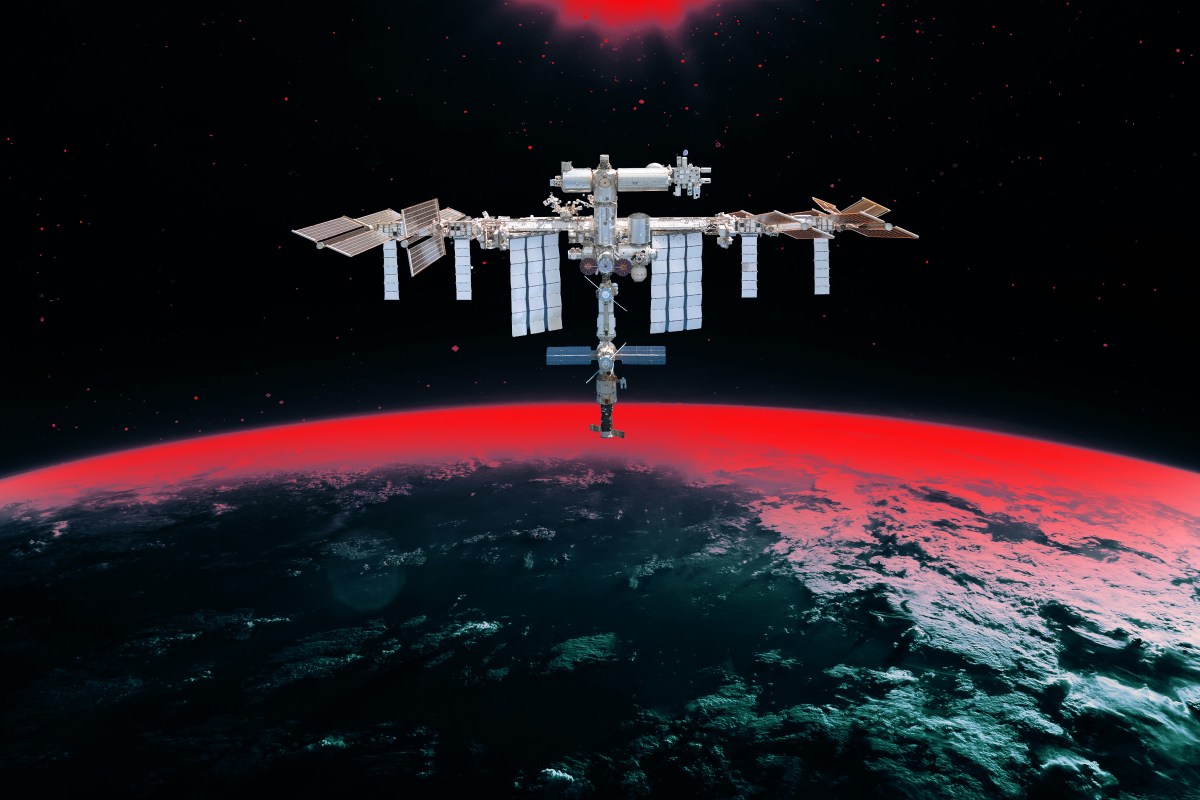

For many years, both NASA and its Russian counterpart Roscosmos have struggled to contain persistent leaks plaguing the International Space Station. The aging orbital output has been through two decades of continuous habitation, and it’s really starting to show its age.
In particular, a short tunnel section dubbed PrK, which connects the Russian Zvezda module to the station’s aft docking port, has been leaking air on and off since at least 2019, alarming officials.
The situation once again came to a head on June 5, when NASA press secretary Bethany Stevens noted in an update that five astronauts would be taking shelter in a docked Dragon spacecraft “out of an abundance of caution” due to Russia’s “mitigation measures” to repair “cracks.”
Both NASA and Roscosmos have been quiet about what exactly occurred that day. But according to officials, who have since spoken to Ars Technica and The Register on condition of anonymity, Roscosmos was looking to take drastic measures to fix the leak — which had NASA rattled.
Tensions flared as both agencies butted heads over what to do, highlighting an international relationship that hasn’t always fostered peaceful cooperation in space.
According to The Register, one initial plan involved a handsaw, while another involved a “drill” and a “drill stop,” a device designed to punch a hole all the way through the wall of the module, per Ars.
“We threatened we would put astronauts in suits, in Dragon, to send a message to the world that we disagreed,” one NASA official told Ars. “They didn’t care.”
The situation escalated even further, with cosmonauts approaching the “PrK module with a saw and the intent to remove a load-bearing bracket,” according to Ars‘ sourcing.
After communications broke down between the two agencies, NASA decided to play it safe, directing all four crew members of the Crew-12 mission, as well as NASA astronaut Chris Williams, who had arrived at the station on board a Soyuz capsule in November, to shelter inside the Dragon spacecraft.
“We felt there was a very high probability of a bad outcome happening if they sawed that bracket off,” a NASA source told Ars.
NASA’s drastic decision to have its astronauts shelter in place was reportedly enough to convince Roscosmos to stand down.
The implications of the tesnse incident could be significant for the ISS. According to Ars, the PrK module will be decommissioned and no longer pressurized until that happens, which could greatly limit the use of its attached dock.
Whether that will be the end of the years-long debate over how to address the risk of a leak — or worse, a sudden depressurization — remains to be seen.
“So, yeah, worst case, you could seal it off,” ESA astronaut Andreas Mogensen told The Register in 2024, referring to the PrK module, “and I think the Space Station could continue.”
“But of course, you never know what other problems might arise,” he added.
More on the leak: ISS Astronauts Ordered to Enter Evacuation Mode
