

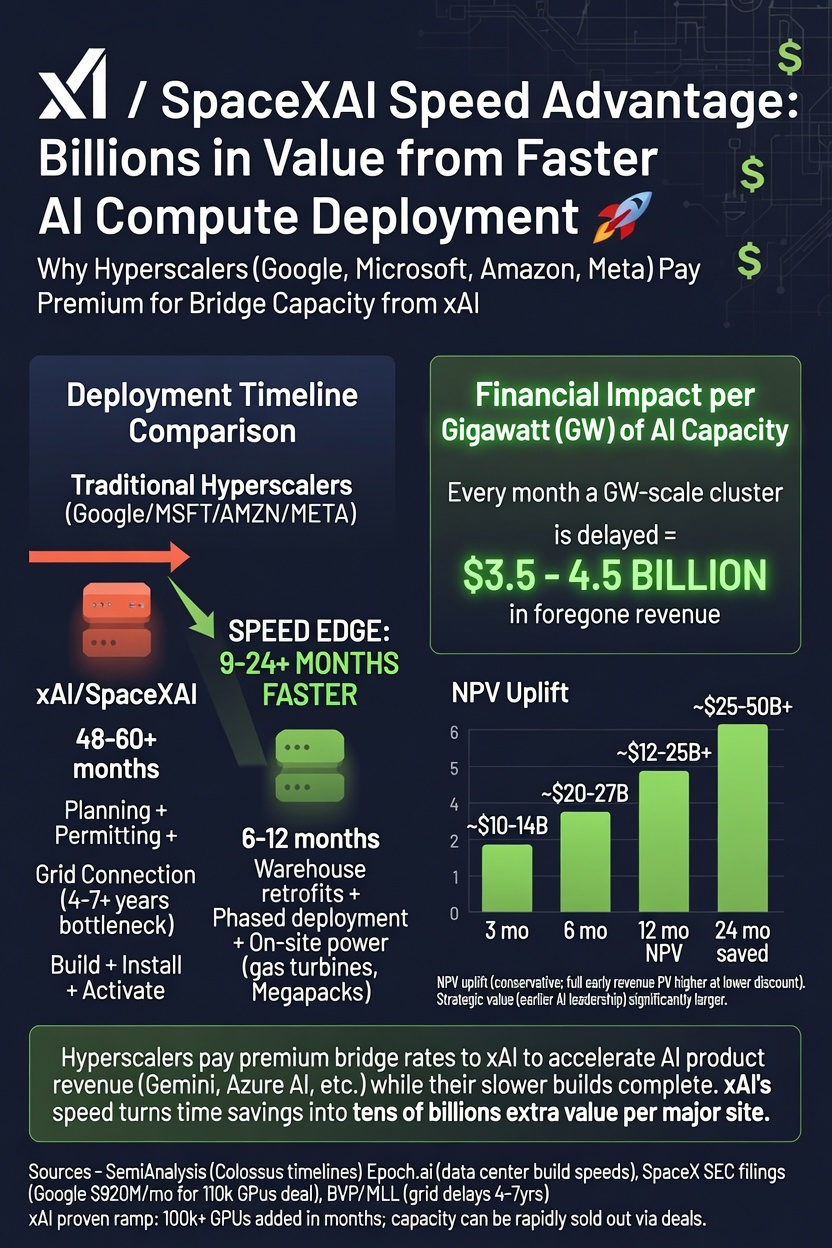

SpaceXAI has real-world proof of 6–12 month deployments for large clusters via warehouse retrofits, phased build-out, and on-site/mobile power. They have gas turbines from partners like Solar Turbines + APR Energy that can install in days to 6-12 weeks.
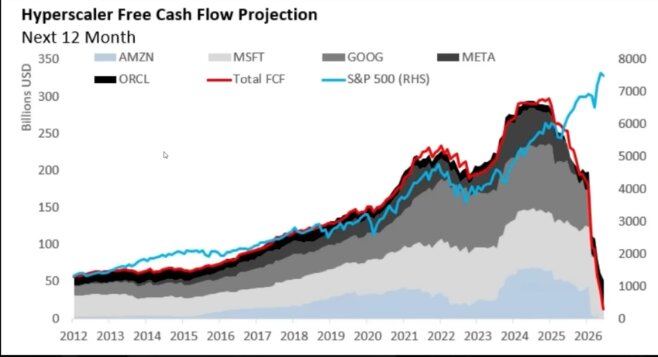
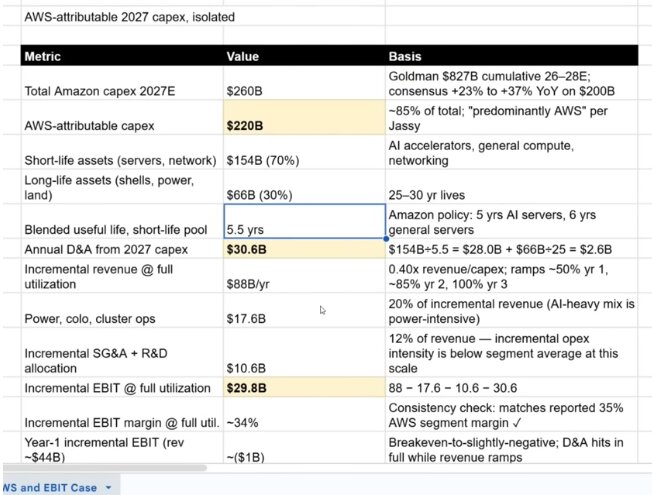
People are worried about how quickly the big tech hyperscalers are spending their hundreds of billions in cash on AI and AI data centers. The issue is how fast the spend turns into actual functioning data center that becomes revenue and profit. They can spend $220 billion on capex. $60 billion on buildings and energy and they can make $80-90 billion per year in revenue. However, when does the tens of billions per year come back. They will make big profits when they do. They need to turn to SpaceXAI who have the actual powered up chips. 110,000 powered up B300 chips is worth $20-30 billion per year in revenue so they are willing to pay SpaceXAI $11-16 billion per year in leasing costs to get those chips. Those chips from other companies and projects will not be working for 12-36 months.
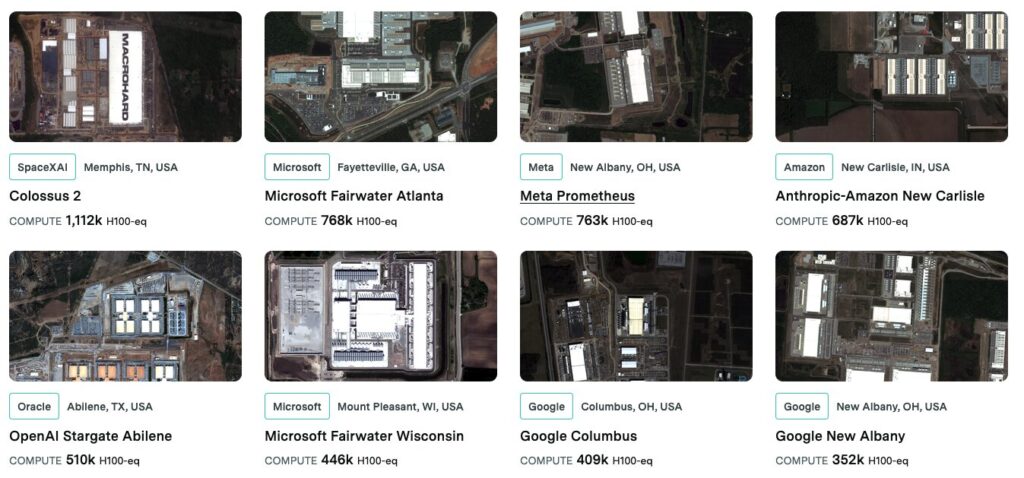
SpaceXAI already has 440k B200-B300 chips at Colossus 2. They need to get more cooling to activate those chips.
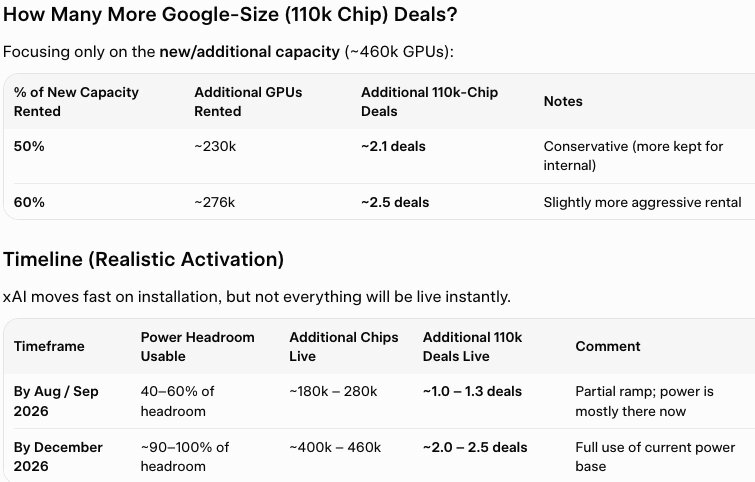
Current power already installed supports another ~460k B300 chips.
Of that new capacity, at 50–60% rented, they can do roughly 2 – 2.5 more Google-sized (110k chip, $11 Billion per year) deals by the end of 2026.
By August/September, expect about 1 – 1.3 additional Google sized deals ($12-20 billon per year) to be live and billable. Google, Microsoft and Anthropic will do the deal for fast AI data centers because each Gigawatt is worth $30-60 billion per year to them even paying SpaceXAI $50 billion per year to rent.
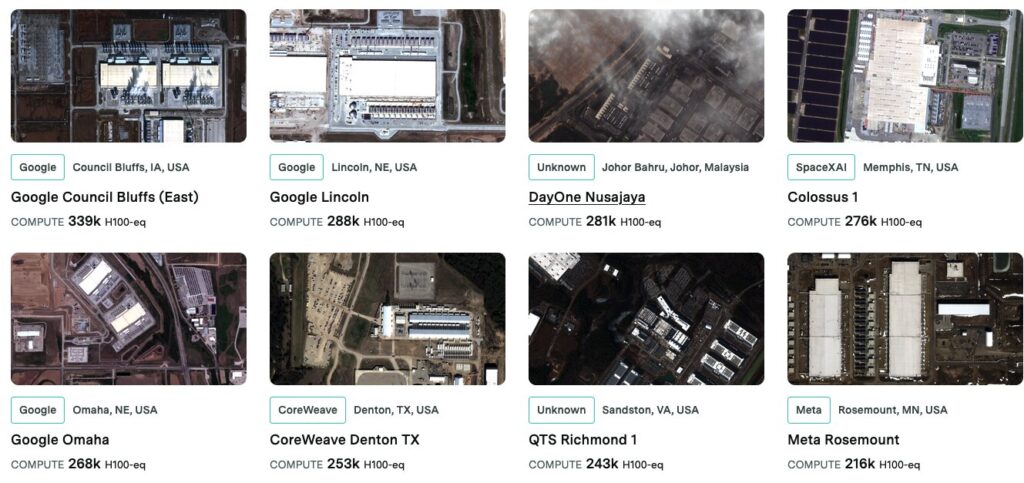
Colossus 1 had 100k H100 GPUs live in ~122 days (~4 months) from groundbreaking/announcement in a former factory. Doubled to 200k GPUs in ~92 additional days.
Colossus 2 (Southaven/Memphis area) had a warehouse acquired March 2025. ~200 MW cooling/IT capacity online by August 2025 (~6 months).
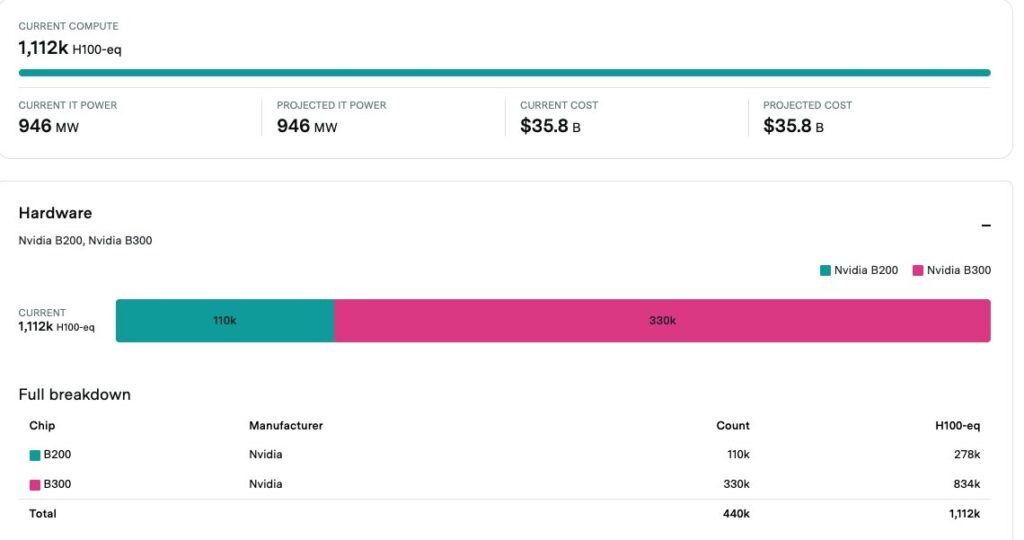
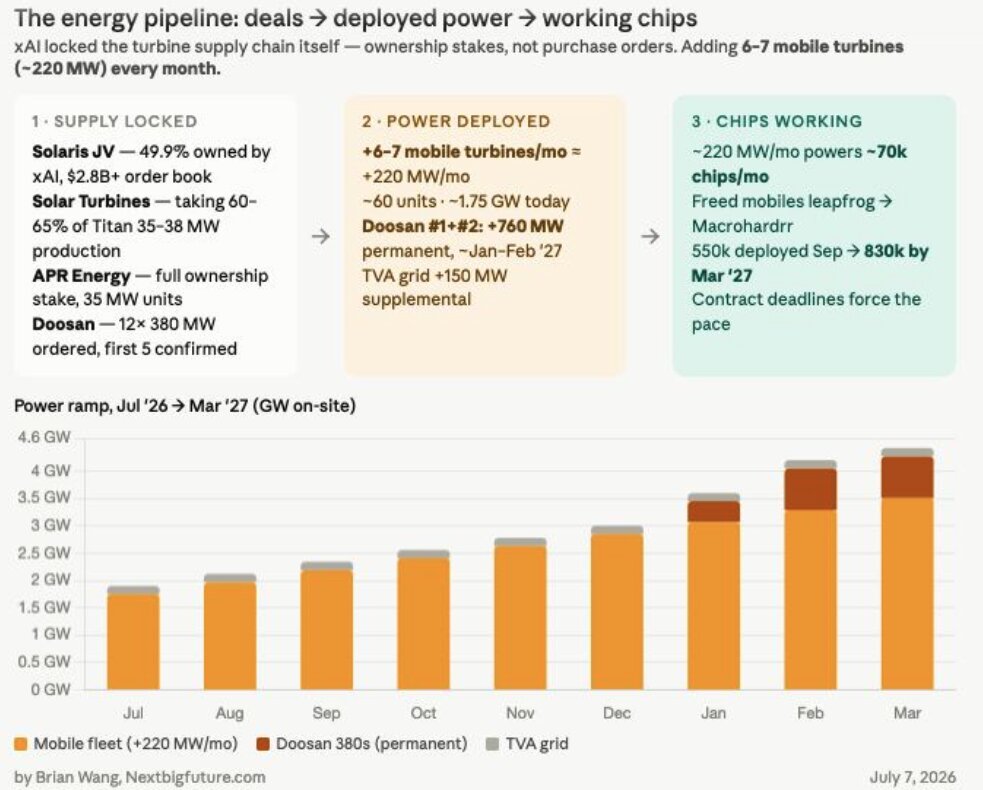
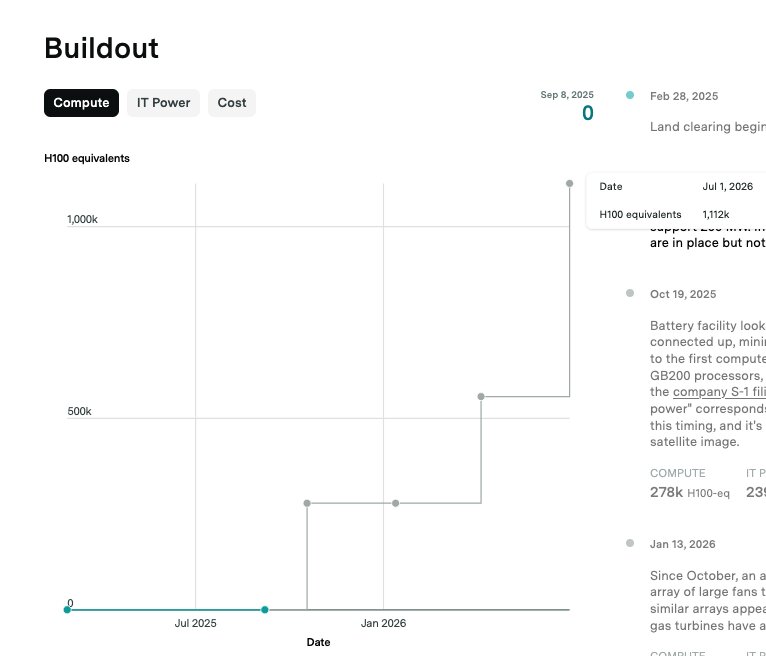
Epoch.ai Jul 1, 2026 UPDATE on Colossus 2 and MACROHARDRR
The site is estimated to have at least ~830 MW of GPU server power, with at least “at least 220,000 additional GB300 processors and over 400 additional megawatts of compute power”, corresponding to the “next phase of expansion” found in the following company S-1 filing, page 76. The timing is based on the air-cooled condensers needing to be complete to handle this power capacity. The second array at MACROHARD and the first array at MACROHARDRR, although both projected to be completed prior, are not enough and more cooling capacity is needed. We estimate this expansion to be completed 90 days after April 6th. On one hand, SpaceXAI has progressively added more capacity in less time with their Colossus projects. On the other hand, 400 MW is more capacity than the previous expansions of 210 MW and 220 MW. We also believe that MACROHARDRR will be partly operational with this expansion, because its air-cooled condensor array is expected to be completed by then and fitting the entire expansion into only MACROHARD would result in extremely high levels of power density.
More cooling is being added.
SemiAnalysis notes this is dramatically faster than comparable efforts. xAI has publicly stated they achieved in 4 months what others estimated at 24 months.
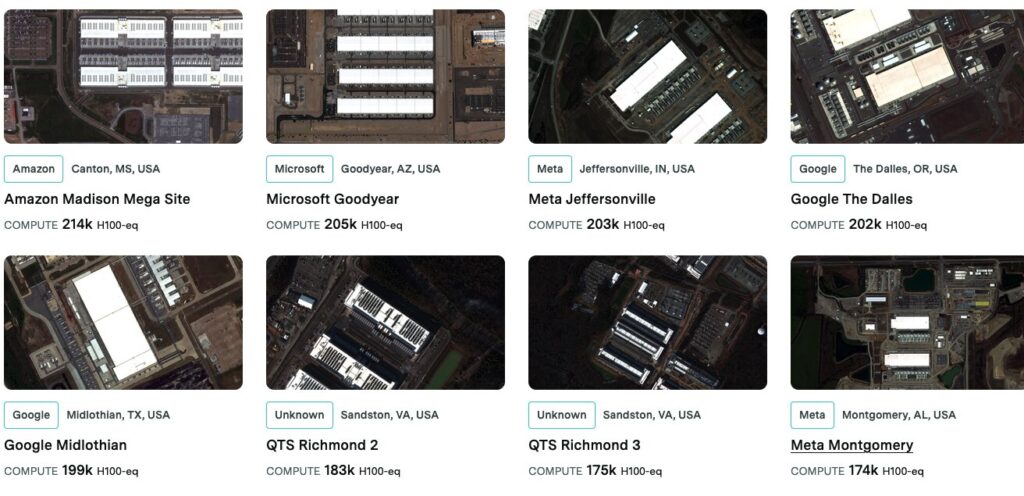
Google, Microsoft, Amazon, Meta, etc.) can make the building (aka shell) for AI construction in about 12–18 months in aggressive cases, but power/grid infrastructure is the dominant bottleneck (4–7+ years for utility interconnection in many markets. median queues >5 years historically). Overall planning-to-fully-live revenue-generating GW-scale clusters often span 3–5+ years, with frequent 1–2+ year delays.
The huge money is being spent but how fast does the money go out before the AI chips and memory turn on? The gap is the time from cash being spent before the incremental revenue comes back.
Brian Wang is a Futurist Thought Leader and a popular Science blogger with 1 million readers per month. His blog Nextbigfuture.com is ranked #1 Science News Blog. It covers many disruptive technology and trends including Space, Robotics, Artificial Intelligence, Medicine, Anti-aging Biotechnology, and Nanotechnology.
Known for identifying cutting edge technologies, he is currently a Co-Founder of a startup and fundraiser for high potential early-stage companies. He is the Head of Research for Allocations for deep technology investments and an Angel Investor at Space Angels.
A frequent speaker at corporations, he has been a TEDx speaker, a Singularity University speaker and guest at numerous interviews for radio and podcasts. He is open to public speaking and advising engagements.
