

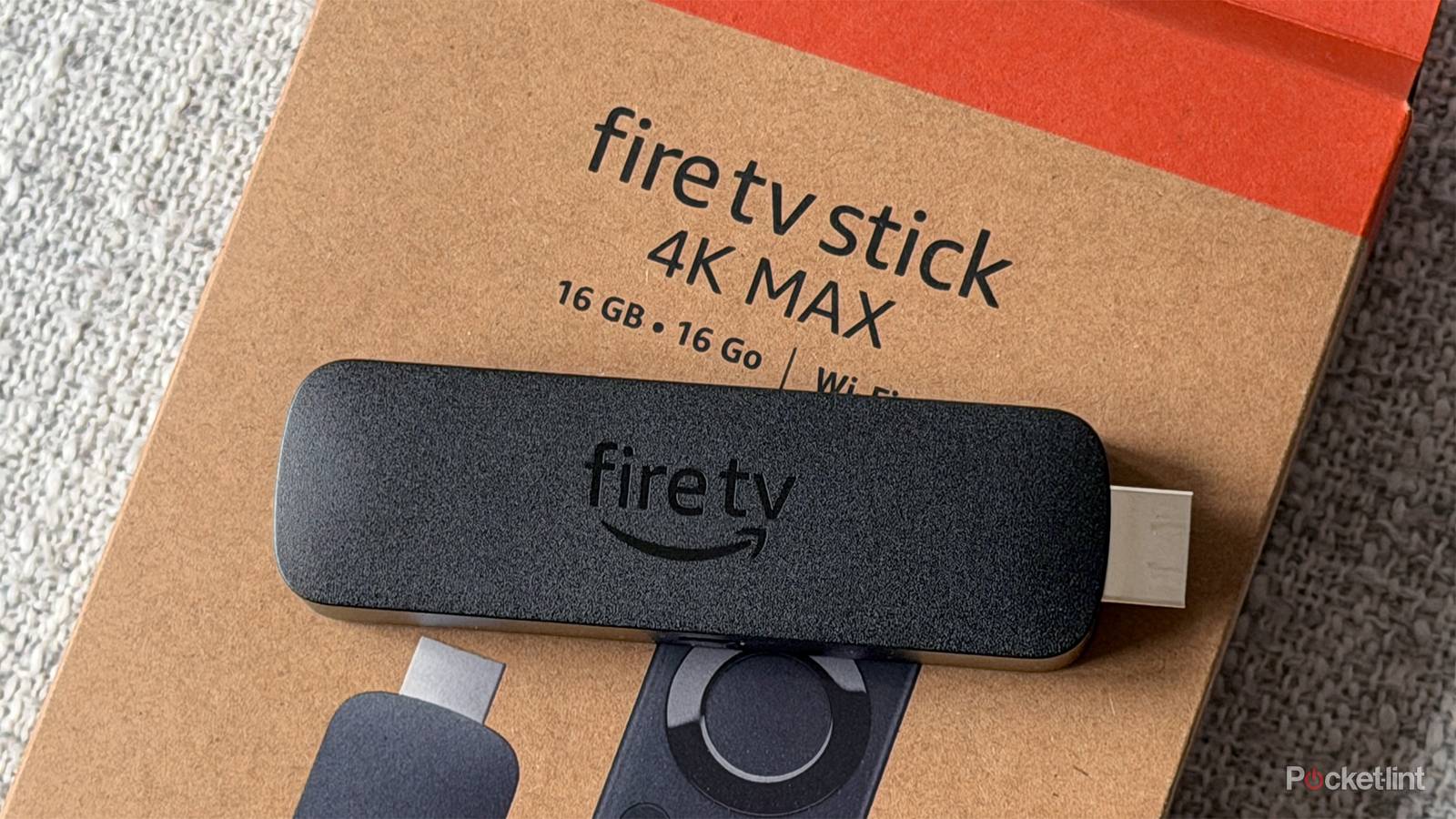

It’s an open secret that electronic devices connected to the internet are telemetry hungry. This is doubly true for smart television platforms like Roku OS, webOS, and Fire OS / Vega OS. In many cases, manufacturers subsidize the cost of their hardware by inserting advertisements into the experience, whether it be on the home screen or within screensavers.
Banner ads are pesky enough on their own, but in a lot of cases, they’re actually more of a privacy violation that initially meets the eye. This is because of data harvesting, in which your content viewing habits are tracked, analyzed, and sold to data brokers and marketers. In turn, you receive targeted ads that more accurately reflect your interests and spending proclivities.

- Brand
-
Amazon
- Operating System
-
Fire OS
- Downloadable Apps
-
Thousands
- Resolution
-
4K, Dolby Vision, HDR10
- Ports
-
HDMI
The Amazon Fire TV Stick 4K Select can stream in 4K resolution. It offers millions of titles on a variety of streaming services.
What is ACR, and why would I want to disable it?
ACR stands for Automatic Content Recognition

Collectively, the detecting, analyzing, and ‘personalizing’ of your advertisement experience across smart television platforms is something known as Automatic Content Recognition, or ACR for short. This form of fingerprinting is commonplace within the AV industry, improving marketers’ ability to target you with tailored advertisements.
On the one hand, personalized ads might not sound so bad — after all, if you’re going to be served ads either way, they may as well be relevant to your interests. On the other hand, ACR is pretty intrusive from a privacy standpoint, even if certain data is technically anonymized.
…ACR is pretty intrusive from a privacy standpoint.
You see, when ACR is enabled (and it often is right out of the box, or in some cases, presented euphemistically during the out of box experience (OOBE), the system continuously tracks and collects data as you use your TV, effectively spying on you as you sit back and relax in front of the big screen.
ACR is capable of determining such things as what’s on your screen, how long you’ve watched a piece of content, when you’ve watched it, and more. ACR’s reach extends far beyond just streaming applications — in many cases, the system can detect and collect information from sources like antenna/cable/satellite TV, Blu-ray players, VHS tapes, and more — it’s all fair game when ACR is enabled.
How do I disable ACR on my Amazon Fire TV device?
The process only takes a few steps

ACR can be disabled on most Amazon Fire TV streaming sticks, set-top boxes, and television sets without trouble. The process is roughly the same regardless of whether your Fire TV device runs the older Android-powered Fire OS operating system, or the newer Linux-based Vega OS.
To disable ACR on your Amazon Fire TV device, follow these steps:
- Press the Settings button on your Fire TV remote control.
- Select the Preferences button on-screen, and then navigate to Privacy Settings.
- From here, toggle off Automatic Content Recognition (the verbiage used to describe the feature may vary based on make and model).
For added privacy, I’d also recommend disabling Device Usage Data, Collect App and Over-the-Air Data, as well as Interest-based Ads. You can also dive into the Your Advertising ID section to further home in on privacy controls.
Once disabled, your Amazon Fire TV device will cease the fingerprinting of your watch data, though it’s worth noting that existing data that has already been sent to Amazon and its partners cannot easily be cleared or erased. Even when disabled, of course, basic telemetry will continue to be sent over to Amazon, as is the case with all other modern software platforms.
