

Close Menu

    Subscribe to Updates

    Get the latest Tech news from SynapseFlow

    What's Hot

    AegisAI Raises $36 Million for AI-Powered Email Security

    July 24, 2026

    NASA’s ESCAPADE Snaps Family Portrait of Earth, Moon

    July 24, 2026

    Shokz OpenDots Air review: reliable, affordable, lightweight, and ultimately the best clip-style open earbuds for most people

    July 24, 2026
    Facebook X (Twitter) Instagram
    • Homepage
    • About Us
    • Contact Us
    • Privacy Policy
    Facebook X (Twitter) Instagram YouTube
    synapseflow.co.uksynapseflow.co.uk
    • AI News & Updates
    • Cybersecurity
    • Future Tech
    • Reviews
    • Software & Apps
    • Tech Gadgets
    synapseflow.co.uksynapseflow.co.uk
    Home»Reviews»Scientists made robots curious like toddlers, and it helped them learn language twice as fast
    Scientists made robots curious like toddlers, and it helped them learn language twice as fast
    Reviews

    Scientists made robots curious like toddlers, and it helped them learn language twice as fast

    The Tech GuyBy The Tech GuyJuly 24, 2026No Comments2 Mins Read0 Views
    Share
    Facebook Twitter LinkedIn Pinterest Email
    Advertisement


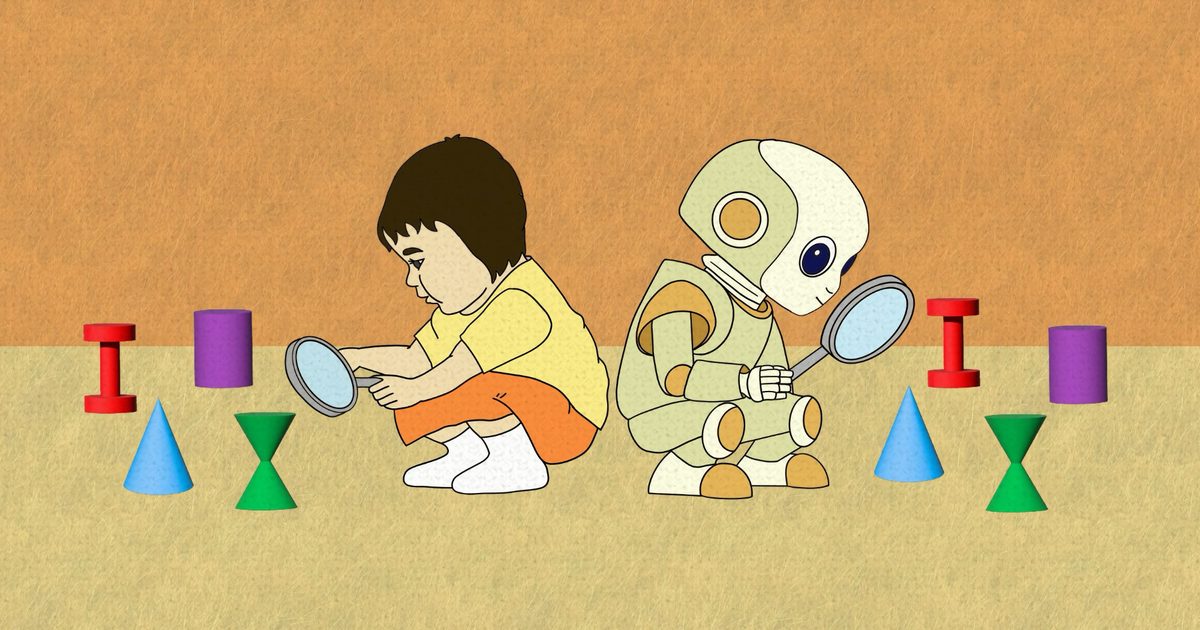
    Scientists have been trying to figure out how kids pick up language so fast for decades, and a new study out of the Okinawa Institute of Science and Technology (OIST) might have cracked part of the puzzle: curiosity.

    Advertisement

    Researchers built a virtual robot with a brain-inspired neural network and set it loose in a simulated 3D world full of shapes, colors, and simple commands like “push left magenta dumbbell.” 

    Some robots were rewarded only for completing tasks correctly. Others got an extra reward for curiosity, essentially getting a little internal high whenever they encountered something that challenged their existing understanding of the world.

    How does curiosity help a robot learn language?

    The curious robots didn’t just edge out their indifferent counterparts; they blew past them. According to the study, published in Science Advances, curious robots reached a genuine understanding of language in about half the time. 
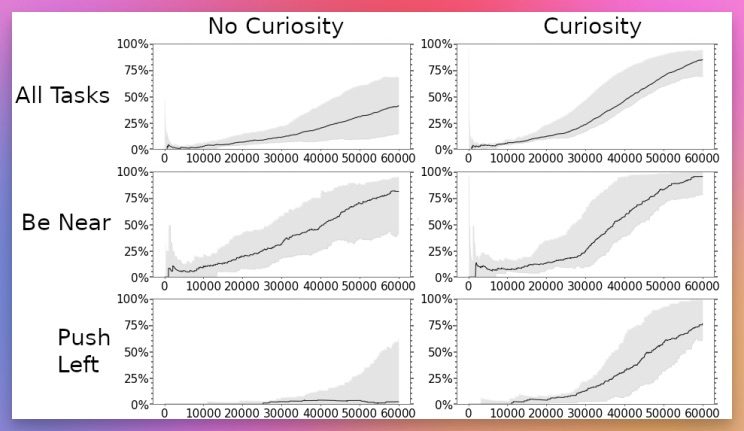
    Success rate of robots when rewarded
    Okinawa Institute of Science and Technology

    Study author Theodore Tinker compared it to trying white chocolate for the first time even though you already love dark chocolate. You take the risk anyway, and you walk away knowing more about chocolate in general.

    Things got even more interesting halfway through training. The curious robots started knocking things over and experimenting with actions nobody asked for, basically playing. Nobody programmed that behavior in. It just showed up on its own.

    Do robots really make the same mistakes as toddlers?

    The robots also mimicked a well-known quirk in how children learn language. Kids often get certain verb forms right at first, then start applying grammar rules too broadly and make mistakes on verbs they’d previously used correctly, before eventually sorting out the exceptions and correcting themselves. The robots followed the same U-shaped dip in performance.

    U-shaped exception-handling performance in robots
    Okinawa Institute of Science and Technology

    It’s also a nice contrast to how today’s chatbots learn. Large language models like ChatGPT train on massive datasets and spit out the statistically likely next word. This robot’s brain works more like ours, prioritizing accuracy while trying to keep its beliefs intact, only updating them when something surprises it enough to be worth the trouble.

    None of this means robots understand language the way we do. But it does suggest that curiosity paired with a wide variety of experiences might be a big part of how toddlers crack the language code with so little to go on.

    Advertisement
    Share. Facebook Twitter Pinterest LinkedIn Tumblr Email
    The Tech Guy
    • Website

    Related Posts

    Shokz OpenDots Air review: reliable, affordable, lightweight, and ultimately the best clip-style open earbuds for most people

    July 24, 2026

    Narwal Flow 2 Review – Trusted Reviews

    July 24, 2026

    Honor and Arri will showcase the Robot Phone next week, Honor unveils a new logo

    July 24, 2026

    Keychron K2 Ultra 8K review: a great value keyboard with a few issues

    July 23, 2026

    This 50-inch Toshiba Fire TV just got a serious price cut

    July 23, 2026

    Lenovo’s new thin-and-light handheld leaves out one crucial detail

    July 23, 2026
    Leave A Reply Cancel Reply

    Advertisement
    Top Posts

    You don’t need a NAS to self-host — I proved it with hardware from my closet

    June 7, 2026306 Views

    Spotify is giving one of its best playlists a big visual upgrade to give subscribers ‘a closer connection’ to its New Music Friday curators — and I think it could be the update it’s always needed

    June 12, 2026187 Views

    The iPad Air brand makes no sense – it needs a rethink

    October 12, 202516 Views
    Stay In Touch
    • Facebook
    • YouTube
    • TikTok
    • WhatsApp
    • Twitter
    • Instagram
    Advertisement
    About Us
    About Us

    SynapseFlow brings you the latest updates in Technology, AI, and Gadgets from innovations and reviews to future trends. Stay smart, stay updated with the tech world every day!

    Our Picks

    AegisAI Raises $36 Million for AI-Powered Email Security

    July 24, 2026

    NASA’s ESCAPADE Snaps Family Portrait of Earth, Moon

    July 24, 2026

    Shokz OpenDots Air review: reliable, affordable, lightweight, and ultimately the best clip-style open earbuds for most people

    July 24, 2026
    categories
    • AI News & Updates
    • Cybersecurity
    • Future Tech
    • Reviews
    • Software & Apps
    • Tech Gadgets
    Facebook X (Twitter) Instagram Pinterest YouTube Dribbble
    • Homepage
    • About Us
    • Contact Us
    • Privacy Policy
    © 2026 SynapseFlow All Rights Reserved.

    Type above and press Enter to search. Press Esc to cancel.

    Ad Blocker Enabled!
    Ad Blocker Enabled!
    Our website is made possible by displaying online advertisements to our visitors. Please support us by disabling your Ad Blocker.