

Close Menu

    Subscribe to Updates

    Get the latest Tech news from SynapseFlow

    What's Hot

    New ‘ShieldCrash’ Zero-Day Exploit Targets Microsoft Defender

    September 10, 2026

    APOD: 2026 September 10 – LDN 1295: The Giraffe Nebula

    September 10, 2026

    Jackery Explorer 2000 v2 portable power station review

    September 10, 2026
    Facebook X (Twitter) Instagram
    • Homepage
    • About Us
    • Contact Us
    • Privacy Policy
    Facebook X (Twitter) Instagram YouTube
    synapseflow.co.uksynapseflow.co.uk
    • AI News & Updates
    • Cybersecurity
    • Future Tech
    • Reviews
    • Software & Apps
    • Tech Gadgets
    synapseflow.co.uksynapseflow.co.uk
    Home»Future Tech»Man Announces That He Has Synthesized a New Schizophrenia Treatment in His Garage, Based on a Formula Devised by ChatGPT
    Man Announces That He Has Synthesized a New Schizophrenia Treatment in His Garage, Based on a Formula Devised by ChatGPT
    Future Tech

    Man Announces That He Has Synthesized a New Schizophrenia Treatment in His Garage, Based on a Formula Devised by ChatGPT

    The Tech GuyBy The Tech GuySeptember 10, 2026No Comments4 Mins Read0 Views
    Share
    Facebook Twitter LinkedIn Pinterest Email
    Advertisement


    Sign up to see the future, today

    Can’t-miss innovations from the bleeding edge of science and tech

    Advertisement

    These days, large language models are pushing the line between schizophrenic break and reality closer than ever before.

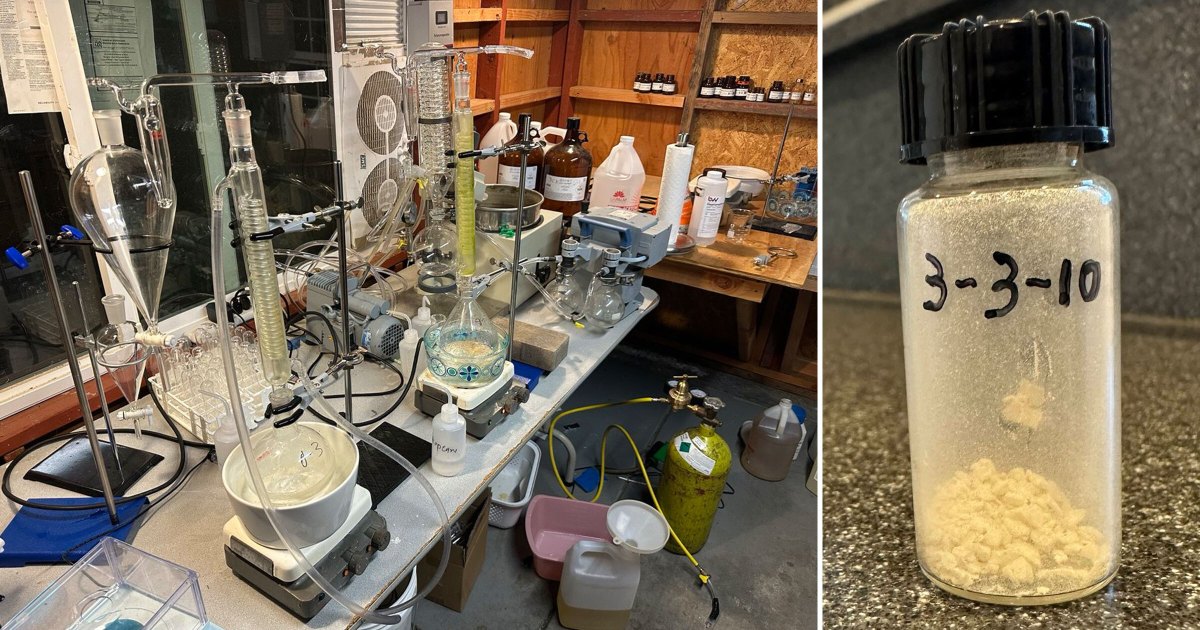
    In a wild new post that’s going viral on X-formerly-Twitter, an enterprising young biochemist named Douglas Yao showcased a new drug he’s been developing with the aid of ChatGPT. He’s not employed by any pharma company, and his drug lab is setup on a couple folding tables in his garage.

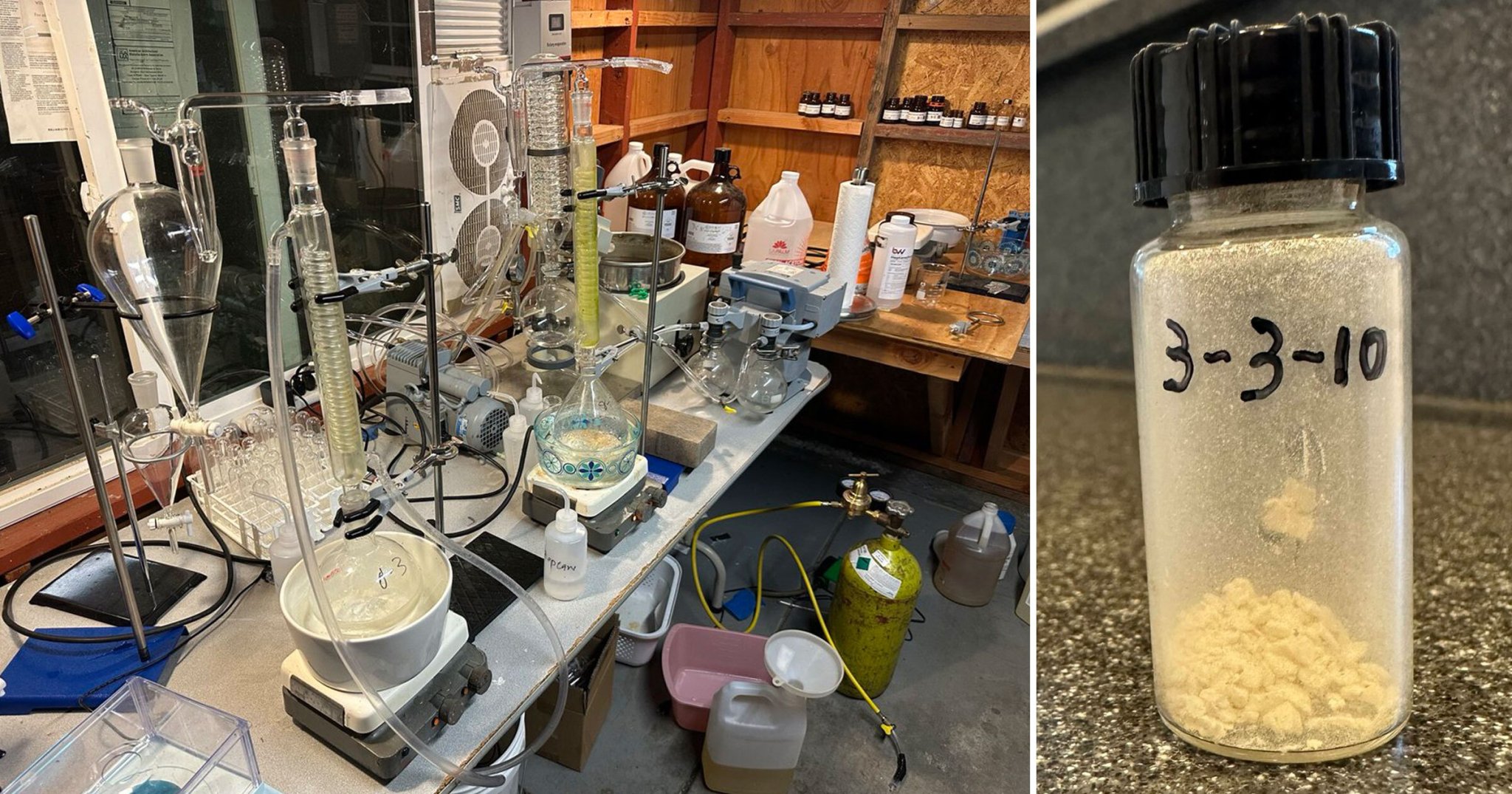
    Specifically, Yao enthuses about a new drug he calls “PAC-3310,” which he says is meant to treat schizophrenia. “It was designed by ChatGPT,” Yao explains, “and I synthesized it in a chemistry lab I built in my garage.”

    The result is a small vial of yellow powder — the first sample of 3310, apparently — which Yao says is modeled after the recently-authorized antipsychotic Cobenfy, “but improved.”

    This vial contains a new drug called PAC-3310. It was designed by ChatGPT, and I synthesized it in a chemistry lab I built in my garage.

    PAC-3310 is a new selective M4 muscarinic receptor agonist for treating schizophrenia – similar to the recent breakthrough drug Cobenfry, but… pic.twitter.com/o7z6iLR50T

    — Douglas Yao (@DouglasYaoDY) September 8, 2026

    On his GitHub page, Yao boasts that he’s used AI to “design several thousand new small molecule drugs” over the past year, including a “new Alzheimer’s drug,” which he’s developing in addition to the schizophrenia treatment.

    “I then taught myself synthetic chemistry, built a chem lab in my garage, and synthesized a hundred of them,” he continued. “I’m now testing these compounds in cell lines and mice.”

    But whatever the one-man pharma lab hopes to accomplish is difficult to say. Yao references the fact that “drug developers typically spend tens of millions of dollars generating pre-clinical efficacy evidence for a new drug,” saying that “my approach can do this at 1/1000 the cost.” This seems to suggest dreams of someday manufacturing the various drugs on a massive scale for human consumption — a process that would take years of grueling and expensive work for a well-resourced drug lab, let alone a solo entrepreneur using a box fan as a fume hood.

    For instance, to even approach the Food and Drug Administration’s “New Drug Application” — itself a costly 12-month process requiring inspection of the facility where the drug will be manufactured — one first has to conduct rounds of preclinical testing followed by three phases of clinical trials. Forget “tens of millions,” as Yao mentions; this is a process that can easily cost several billion.

    Even then success is far from guaranteed, as only 13.8 percent of drugs that enter clinical trials go on to obtain full approval from the FDA.

    While Yao might have been right at home in the free-wheeling research landscape of the 1970s, we no longer live in a world where a mad genius can synthesize hundreds of new drugs a year from a private lab. For one thing, the regulatory environment is much more demanding, as outlined above, to say nothing of the fact that all the low-hanging fruit has been picked from the vine decades ago.

    When it comes to Yao’s ChatGPT-generated Alzheimer’s treatment, the landscape is particularly fraught. As one 2019 study found, no new drug has been approved to treat Alzheimer’s since 2003, and not for a lack of trying: as the study notes, over 200 proposed substances meant to treat the disease have either failed in clinical trials or been abandoned by their creators.

    The graveyard of failed Alzheimer’s treatments is so vast that the renowned organic chemist Derek Lowe has built a blog on drug discovery which routinely features after-action reports on failed substances designed to treat the neurodegenerative disease. Simply put, to think that ChatGPT alone is enough to overcome these scientific and institutional hurdles is delusional.

    Replies to Yao’s post were quick to point out the irony here, of using ChatGPT — which is well-known for leading vulnerable users down dangerous breaks from reality — to synthesize drugs to treat cognitive diseases like Alzheimer’s and schizophrenia.

    “Hello schizophrenic, take this medicine that chatgpt made for you,” one poster quipped on X.

    Another replied that “believing you single-handedly cured schizophrenia on a commercial laundry folding table in a garage is, ironically, a classic symptom of schizophrenia.”

    More on ChatGPT: Man Obliterated When Court Obtains His ChatGPT Transcripts


    Advertisement
    Share. Facebook Twitter Pinterest LinkedIn Tumblr Email
    The Tech Guy
    • Website

    Related Posts

    APOD: 2026 September 10 – LDN 1295: The Giraffe Nebula

    September 10, 2026

    SpyCloud 2026 Identity Threat Report Finds Non-Human Identities Are Now the Leading Path into the Enterprise – NextBigFuture.com

    September 9, 2026

    NASA Names Two Artemis II Astronauts to Emeritus Program

    September 9, 2026

    Could GLP-1 Drugs Help You Live a Longer, Healthier Life?

    September 9, 2026

    Bizarre Glitch Causes Delivery Robots to Swarm Busy City Sidewalk

    September 9, 2026

    Jensen Says AGI Is Here. What Comes Next? – NextBigFuture.com

    September 8, 2026
    Leave A Reply Cancel Reply

    Advertisement
    Top Posts

    You don’t need a NAS to self-host — I proved it with hardware from my closet

    June 7, 2026391 Views

    Spotify is giving one of its best playlists a big visual upgrade to give subscribers ‘a closer connection’ to its New Music Friday curators — and I think it could be the update it’s always needed

    June 12, 2026210 Views

    The iPad Air brand makes no sense – it needs a rethink

    October 12, 202517 Views
    Stay In Touch
    • Facebook
    • YouTube
    • TikTok
    • WhatsApp
    • Twitter
    • Instagram
    Advertisement
    About Us
    About Us

    SynapseFlow brings you the latest updates in Technology, AI, and Gadgets from innovations and reviews to future trends. Stay smart, stay updated with the tech world every day!

    Our Picks

    New ‘ShieldCrash’ Zero-Day Exploit Targets Microsoft Defender

    September 10, 2026

    APOD: 2026 September 10 – LDN 1295: The Giraffe Nebula

    September 10, 2026

    Jackery Explorer 2000 v2 portable power station review

    September 10, 2026
    categories
    • AI News & Updates
    • Cybersecurity
    • Future Tech
    • Reviews
    • Software & Apps
    • Tech Gadgets
    Facebook X (Twitter) Instagram Pinterest YouTube Dribbble
    • Homepage
    • About Us
    • Contact Us
    • Privacy Policy
    © 2026 SynapseFlow All Rights Reserved.

    Type above and press Enter to search. Press Esc to cancel.

    Ad Blocker Enabled!
    Ad Blocker Enabled!
    Our website is made possible by displaying online advertisements to our visitors. Please support us by disabling your Ad Blocker.