

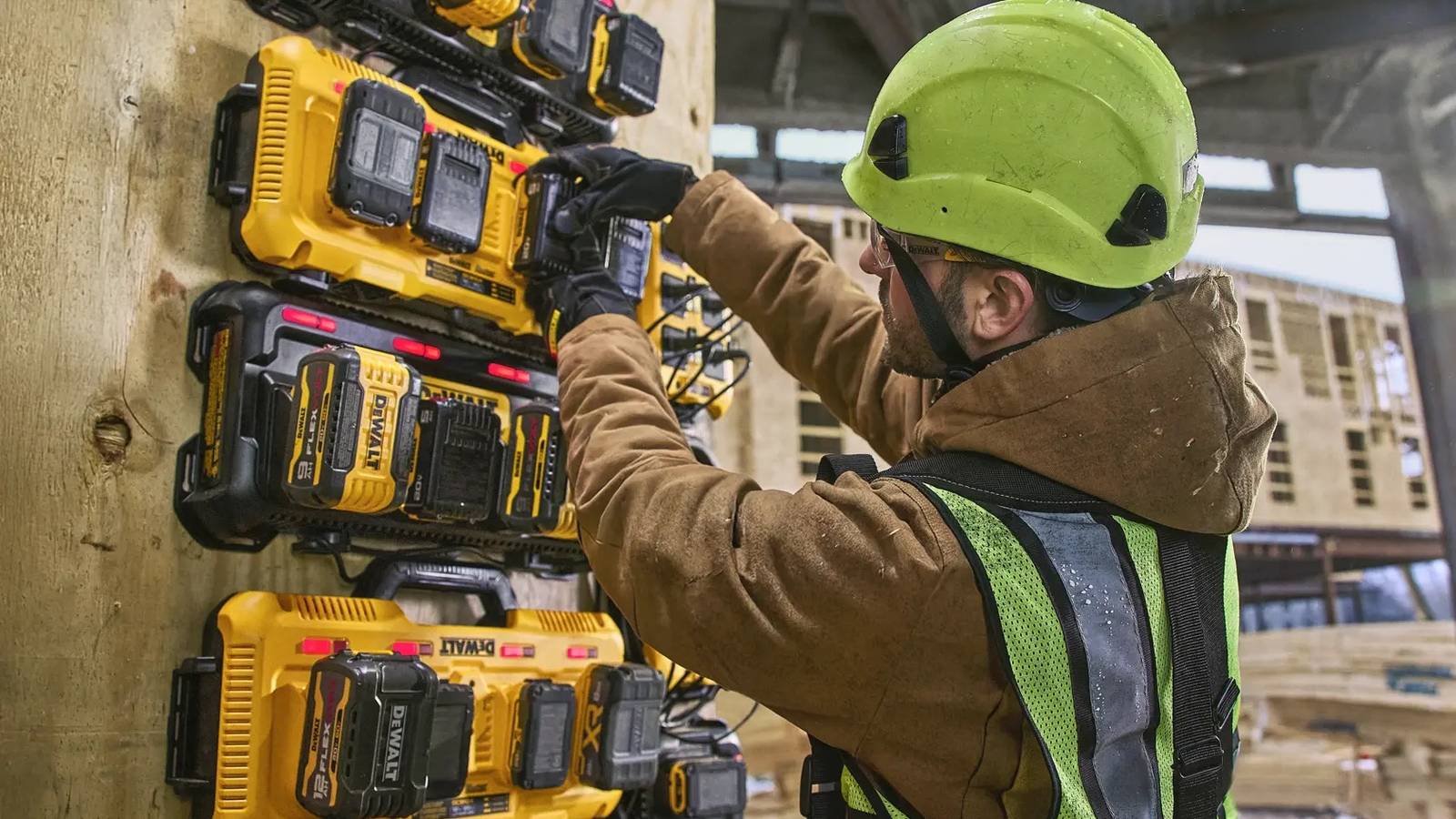

The drill in the kit box is a decoy. When you buy your first cordless tool from Ryobi, Milwaukee, or DeWalt, the tool is the cheap part of the deal, and the brands count on it. What they want is your commitment to a battery platform, because once a few packs sit charging on your bench, you quit shopping across brands and start buying whatever clicks onto what you already own. I figured this out slowly after I moved my whole workshop onto Ryobi ONE+.
Twenty-some tools later, the drill that started it barely registers. The packs, the chargers, and a growing shelf of bare tools sharing one rail are what I’d have to walk away from to switch.
The first kit is priced to pull you in
Picture the razor-and-blades model, then flip which half you keep buying. The starter kit looks like the real purchase: a tool, a battery or two, and a charger, all for a price that feels fair. After that, nearly every tool on the peg is sold bare, no pack included, and it lands $30–$70 under the kitted version. That discount is not generosity. It only makes sense if you already own batteries, which means you already picked a side.
Ryobi, Milwaukee, and DeWalt all run this play. Tool margins are thin and the shelf is crowded with near-identical drills, so the profit and the loyalty both migrate into the pack. Spend a year in any of these systems and you feel the pull. Adding a capability stops being a real decision and turns into a $40 impulse, as long as it clicks onto the rail you already committed to. That is the money quietly moving off the tool and onto the battery.
They will never break the rail
Backward compatibility is the strategy, not a courtesy
Notice what these companies refuse to touch. Ryobi’s 18V connector traces to 1996, when the packs inside were nickel-cadmium, and a battery you grab at Home Depot this weekend still seats in a tool from that first generation. Ryobi even prints the streak on the box, calling it 30 years of compatibility.
Milwaukee has held the M18 connector steady since 2008, so a drill from that year accepts the newest FORGE pack with no adapter. DeWalt has kept 20V MAX intact since 2011. Every brand frames this as a favor to you, and it partly is, since Ryobi’s refusal to move that rail has saved owners a fortune. It is also the cleanest retention tool in the business. Each pack you add raises the price of ever leaving. Break the connector and you hand customers a reason to price-shop the competition, so nobody does.
2026 showed where the fight really is
All three spent the year reworking batteries, not tools

The past year settled the question. In August 2026, Ryobi folded three 18V tiers into two, renaming its High Performance packs as 18V ONE+ Lithium and the step-up packs as 18V ONE+ Lithium EDGE, and it pushed IntelliCell electronics and COOL-CORE heat management across the whole line. The EDGE packs moved to a tabless cell design that Ryobi says can roughly double the power and quadruple the runtime of the old standard battery.
DeWalt spent the same stretch scrapping its PowerStack and PowerPack labels, sorting everything into plain 20V MAX and 20V MAX XR, and adding a tabless XR pack on top. Milwaukee’s FORGE line blends pouch cells and tabless cells to erase the voltage sag you feel when a saw bites into hardwood. Now look at what got the attention. The drills barely changed. The batteries got the new chemistry, the new names, and the marketing budget, which tells you where each brand thinks the money lives.
What this means when you’re standing in the aisle
Choose the platform, not the tool

So the choice that counts is not which drill feels best in the store. It is which battery family you want to marry, because the platforms do not mix. A Milwaukee M12 pack will not run an M18 tool, the two lines use different voltages and different slots, and no brand’s battery crosses to a rival without a questionable adapter. Whatever you clip into first, you are choosing for years of purchases after it.
If you want the widest cheap catalog and packs on the shelf at every hardware store, Ryobi ONE+ is the straightforward pick, and it is the one I made for a house and a yard. Tradespeople who lean on high-draw tools all day tend to land on Milwaukee M18 for the tool depth and the output of the FORGE packs. DeWalt sits in between, a strong middle for crews that want serious power without Milwaukee’s sticker. Pick the one that fits your next ten years, not the drill that happens to be on sale today.

- Battery Type(s)
-
Lithium-Ion
- What’s Included
-
2 Batteries
You already picked a side
Here is the part the marketing never says out loud. The moment you own four packs and two chargers, the brand has already won, and every tool you buy after that is a formality. That is not a trap so much as a deal worth making with your eyes open. Committing to one platform is convenient, and living on a single rail has made my garage simpler and my projects faster. Just make the call knowing what you are actually buying. You are not picking a drill for the weekend. You are picking the battery you will still be charging in 2036.
