

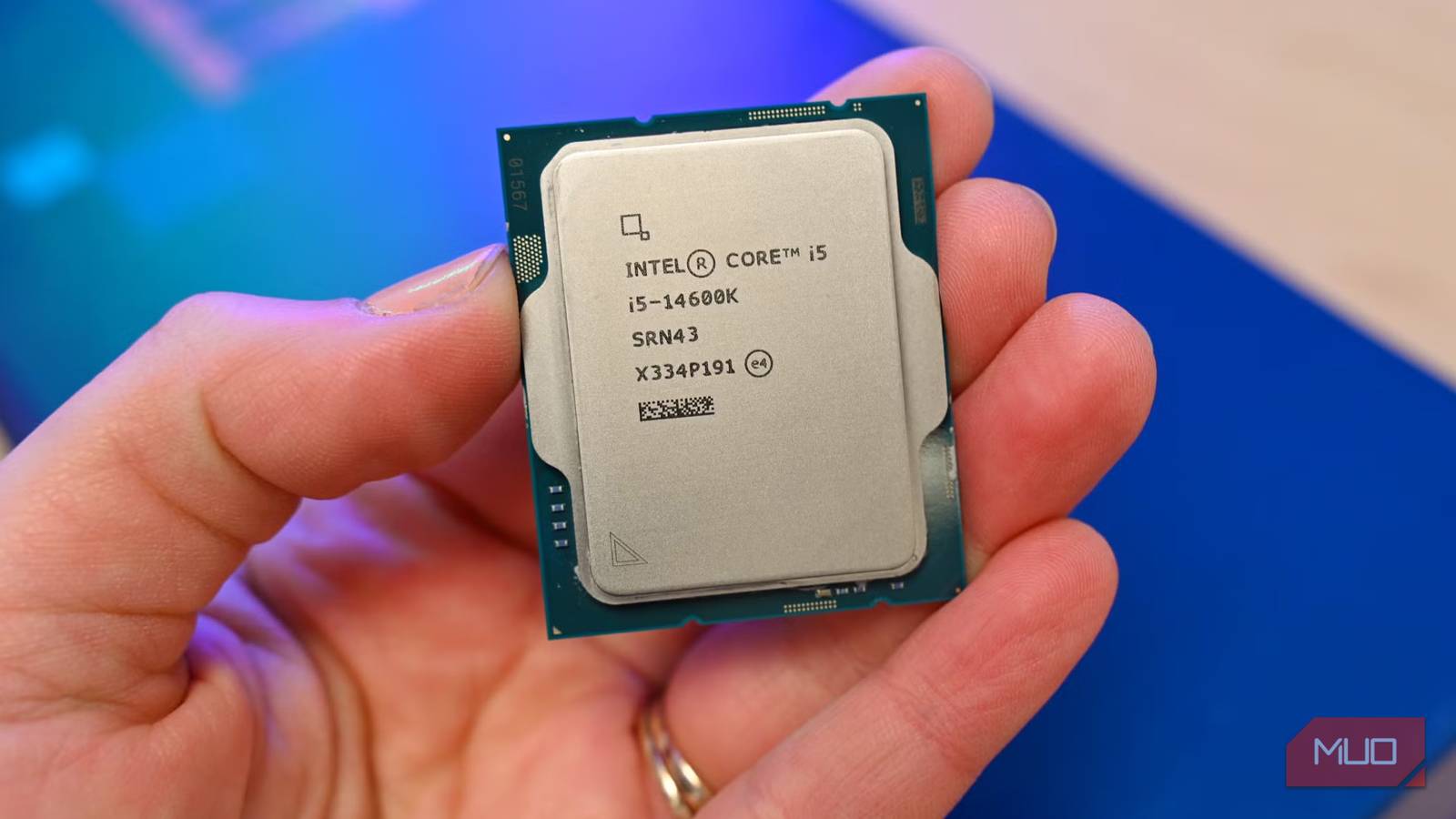

CPUs are mostly advertised by their clock speeds, and GHz is the unit used to evaluate them. As important as it is to evaluate how many cycles per second a processor runs, it still doesn’t determine its true capabilities. There are other specifications to look out for, and without them, clock speeds mean little on their own.
Why GHz became the headline number
Pentium 4 turned clock speed into the easiest thing to sell

A GHz translates to one billion cycles per second, and in the beginning, higher clock speeds represented a huge upgrade for consumer CPUs. As to why clock speeds became the headline numbers, it all started with the Pentium IV processors, which were based on the NetBurst architecture, a huge upgrade from the Pentium III.
Pentium 4 allowed Intel CPUs to reach speeds as high as 3.8 GHz (for the 570J/670 models), something nobody had ever seen before.
Higher clock speeds were the easiest improvements for the market, because buyers could compare a single number instead of a plethora of specifications. More than 25 years later, clock speeds haven’t advanced much numerically, and newer CPUs like the Ryzen 9 9950X3D run at 4.7GHz, which doesn’t sound like much of an upgrade.
The same problem that existed back then persists today: clock speeds beyond the number feel vague and non-specific for most folks.
IPC decides what each GHz is worth
Two CPUs at the same clock speed can perform very differently
A processor from 2014, like the Intel Core i7-4790K, has the same base clock speed as the Intel Core i7-12700K at 4.0 GHz from 2021. This shows that clock speed doesn’t really matter without a key specification called IPC.
Instructions Per Cycle shows how much a CPU can do in a single clock cycle. A CPU with a higher IPC can handle more instructions per cycle. For instance, two CPUs at 4 GHz, each with two cycles, could handle 8 billion instructions per second, but a second CPU with four cycles could handle up to 16 billion instructions per second.
IPC was the reason Pentium 4 CPUs lost to AMD Athlon 64 chips because they traded IPC for clock speed.
However, IPC isn’t a specification that CPU makers publish per chip. In fact, because IPC varies with workload, it’s measured using performance counters by dividing instructions retired per cycle. Generally, they’re abstract figures that are difficult to test.
The best way to find a CPU’s IPC is to check benchmarks comparing CPUs at the same clock speed, but other specs can interfere. This is why reviewers usually restrict these tests to a single thread with locked clock speeds, so other specifications don’t interfere with IPC calculations.
Architecture and cache shape IPC
Wider cores and bigger caches keep the CPU from waiting on data

Even though IPC is integral to determining the work a CPU can do, it isn’t a single spec you can adjust on its own; it comes from other CPU specifications and factors.
- Architecture dictates how the CPU handles instructions. It comes down to the CPU’s exact blueprint: how its internal components are designed and arranged to handle these instructions. With newer architectures, CPUs can increase core width (which indicates how many instructions a core can process), core count (important for handling more tasks at once), and improve branch prediction.
- Cache is another important factor that determines how fast a CPU can process data. Compared to a CPU, RAM is much slower, so the processor stores a small amount of frequently used data. This is divided into three levels: L1 is the fastest, L2 is larger and slower, and L3 is the largest and slowest level out of the bunch, but still faster than RAM.
In gaming, cache helps improve 1% lows and frame latency. This is why newer AMD X3D CPUs are better than Intel CPUs for gaming: 3D V-Cache technology stacks L3 vertically, increasing the total cache size.
Cooling and power limits cap your real clocks
Boost speeds hold only while the chip stays cool and within its power budget

The CPU’s spec sheet lists two clock speeds: base and boost. Boost clocks are the short-term higher speeds a CPU reaches when a workload necessitates them. However, this increase is very short and raises CPU temperatures significantly, which risks thermal throttling when a component exceeds the temperature threshold and must lower its clock speed and voltage to avoid permanent heat damage.
This directly translates to PL1 and PL2, which represent power limits in watts. PL2 is the short-term turbo power for Intel CPUs, and PPT is the equivalent for AMD. A CPU can only maintain good clock speeds with decent thermals. Without them, you’re bound to thermal throttle.
TDP is the measurement used when buying a CPU cooler and equals PL1, but it doesn’t account for PL2; the latter is the figure you should look for when buying a cooler.
Benchmarks beat spec sheets
Clock speeds are unreliable for measuring CPU performance across different generations and brands. To actually account for all other specifications and factors, check benchmarks for the CPU you’re buying and compare it to other models in the same price bracket, which gives you a better idea of where the processor stands in terms of performance.
