


The minimum level of truly meaningful AI Data Center in space is about 10 Gigawatts before the end of 2030.
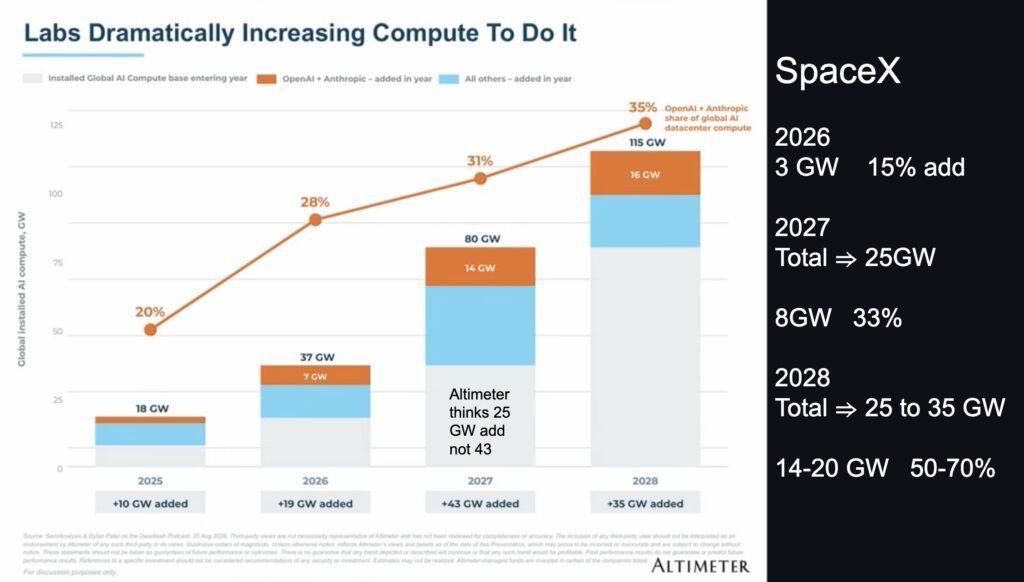
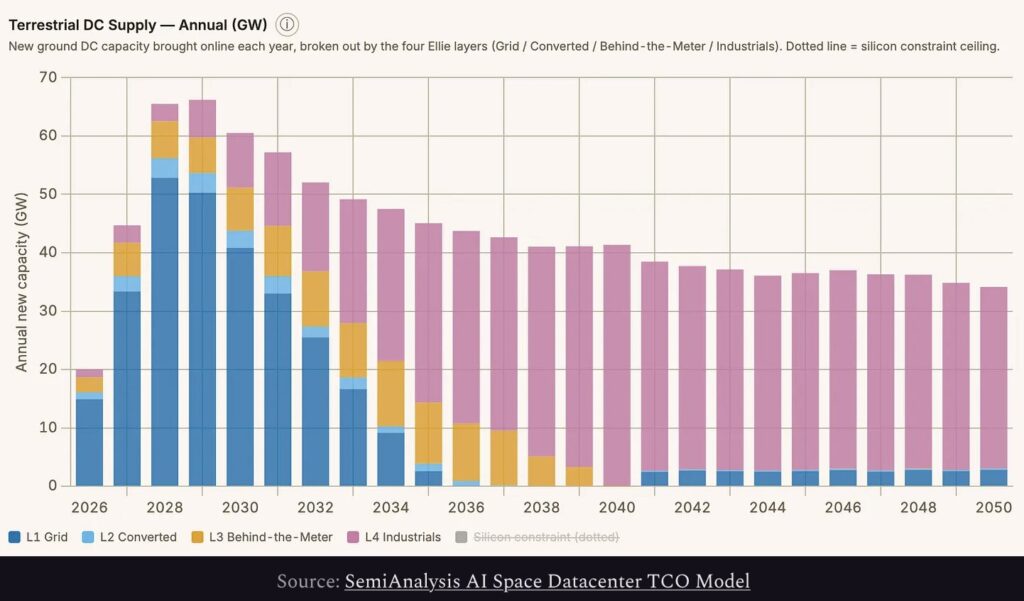
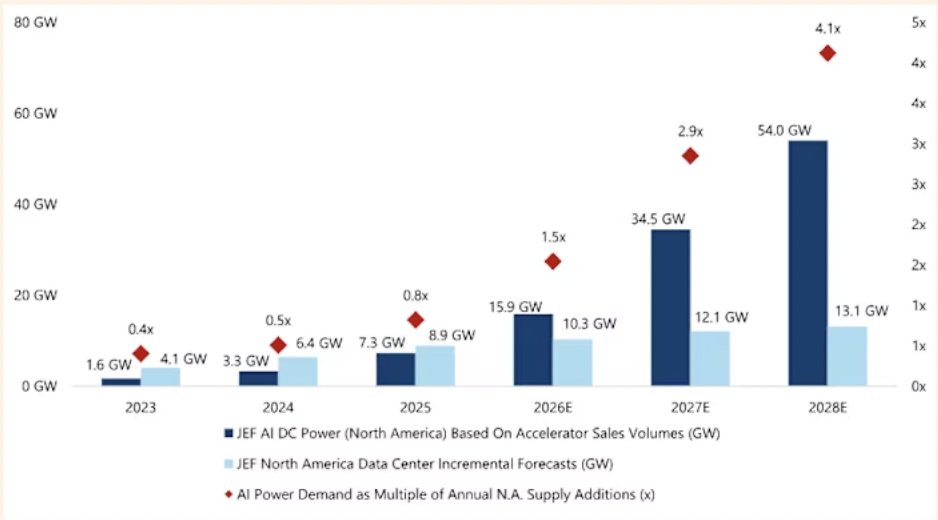
The reason is that the world is adding 20 to 40 gigawatts per year of data center on earth. Creating a new category of AI data center to move the global needle needs to have a lot.
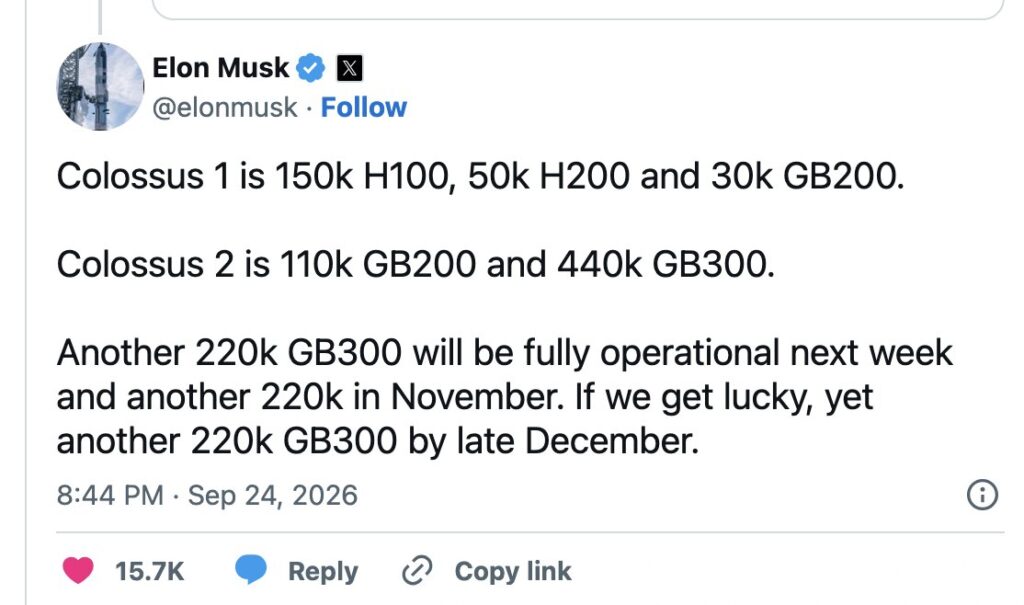
One Gigawatt per year would be meaningful to SpaceX revenue BUT even here they will have 3.2 gigawatts working by the end of 2026. SpaceX in Q4 will be showing a 500 Megawatt (0.5 Gigawatt) per month completion rate. If this carries through 2027 and even speeds up in 2028 and 2029 then SpaceX will have 8 Gigawatts added in 2027 without any Space AI. Rubin minihard 220k data centers would be 700 MW or 0.7 GW per month in 2027. SpaceX earth based AI data center additions is heading to 10-20 Gigawatts per year in 2028, 2029 and 2030.
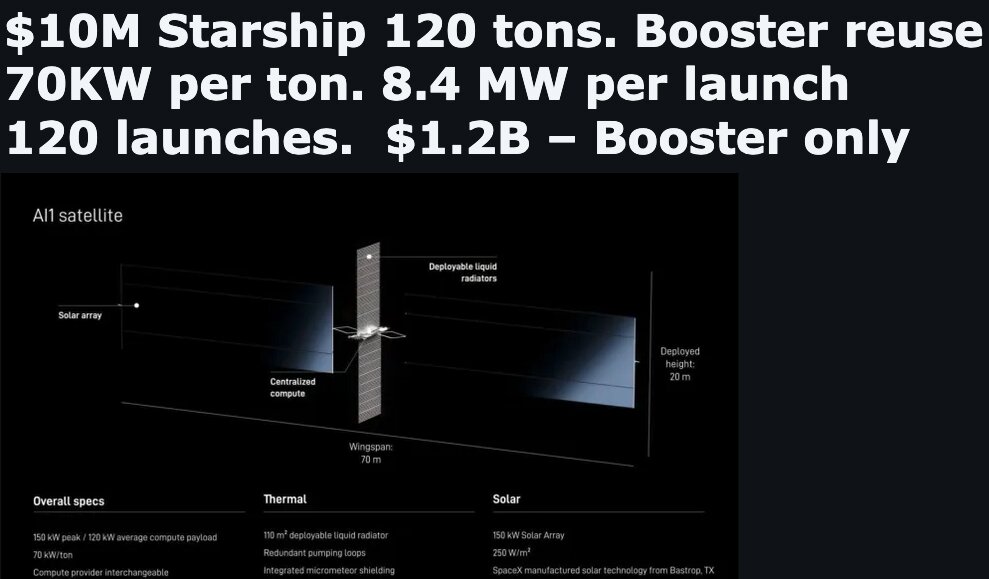
The practical level needed for this minimum level is about 120 Starship launches per Gigawatt. This is using the 70 kilowatt hours per ton for AI1 or AI2 satellites. The AI satellites need to be about 250 kilowatts each and weight about 2-4 tons. 30 to 40 of the satellites need to fit into each Starship.
The discussion of FAA allowing 1000 launches per year would need to happen and be raised to 2000 launches or more. This would allow 1200 spaceX AI launches. SpaceX would still use hundreds of launches a year for V3 and V4 communication satellites and for NASA and other missions.
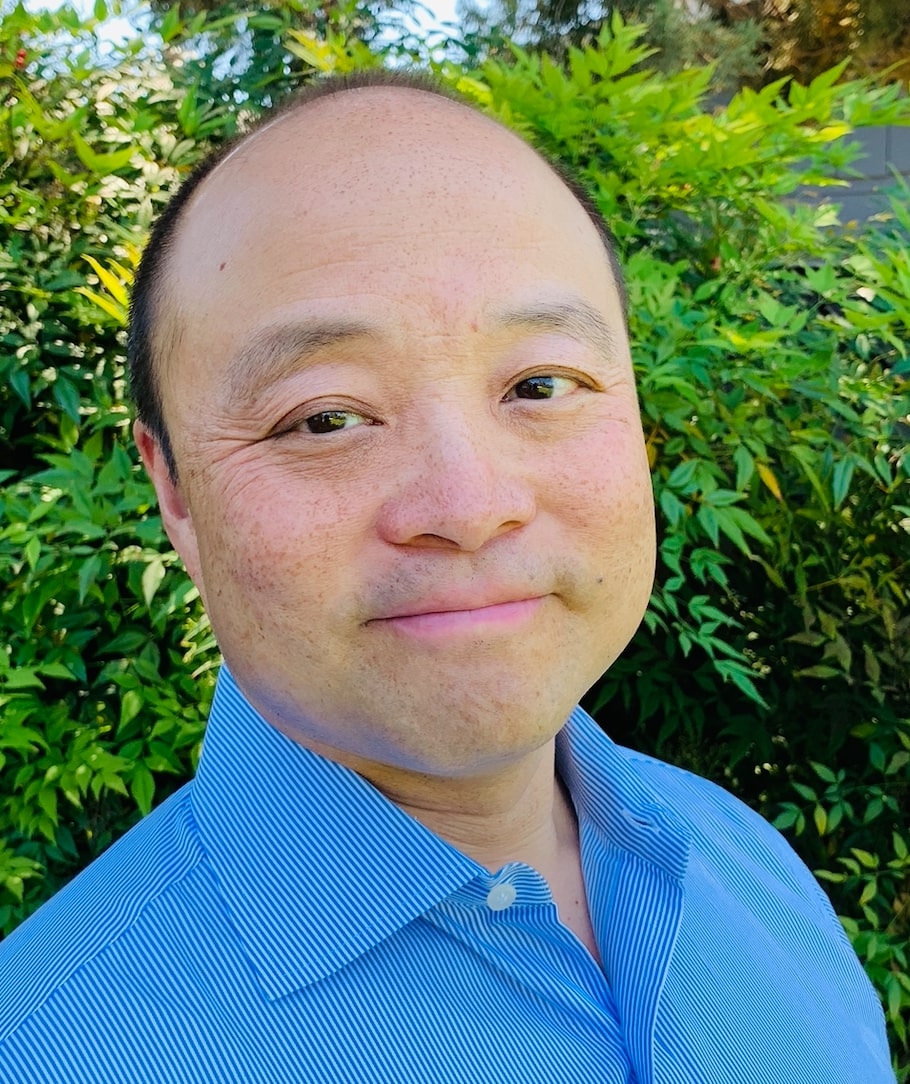
Brian Wang is a Futurist Thought Leader and a popular Science blogger with 1 million readers per month. His blog Nextbigfuture.com is ranked #1 Science News Blog. It covers many disruptive technology and trends including Space, Robotics, Artificial Intelligence, Medicine, Anti-aging Biotechnology, and Nanotechnology.
Known for identifying cutting edge technologies, he is currently a Co-Founder of a startup and fundraiser for high potential early-stage companies. He is the Head of Research for Allocations for deep technology investments and an Angel Investor at Space Angels.
A frequent speaker at corporations, he has been a TEDx speaker, a Singularity University speaker and guest at numerous interviews for radio and podcasts. He is open to public speaking and advising engagements.
