


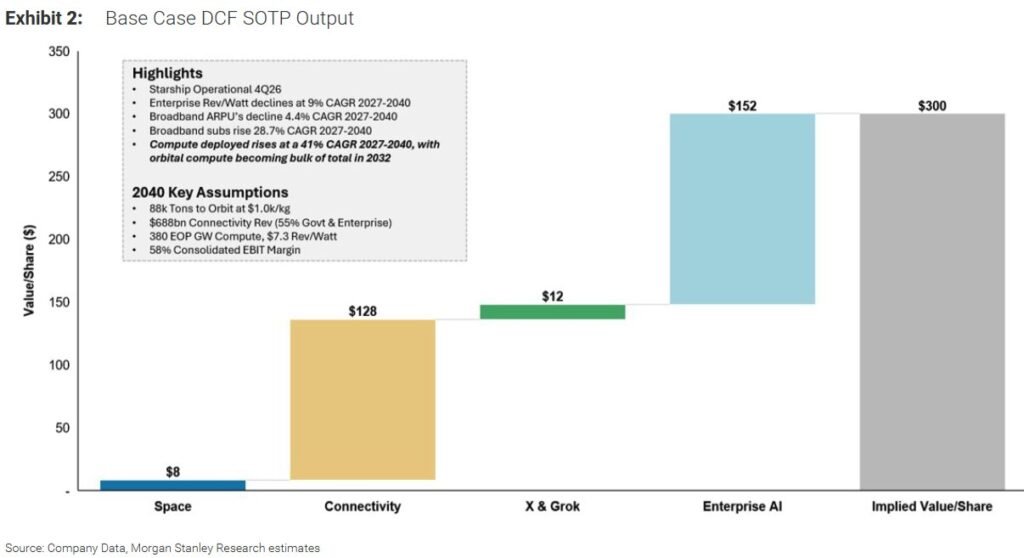
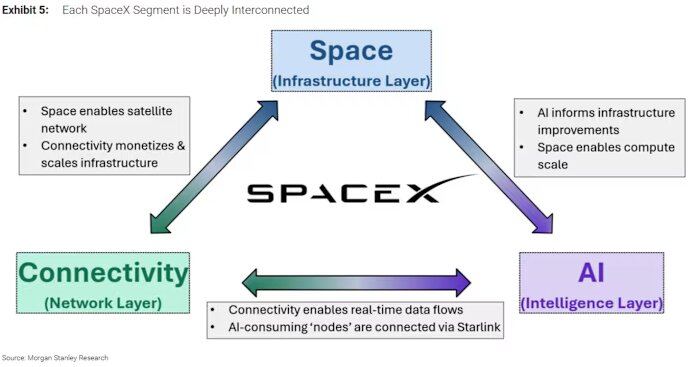
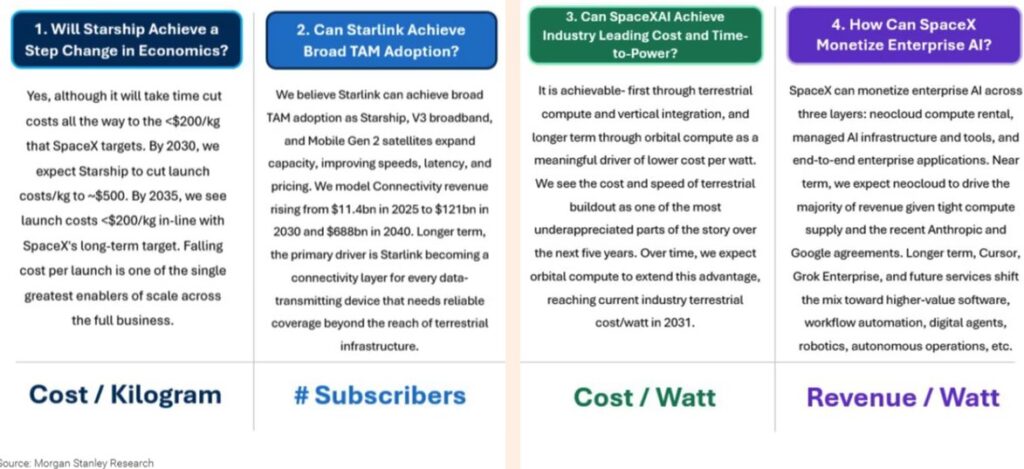
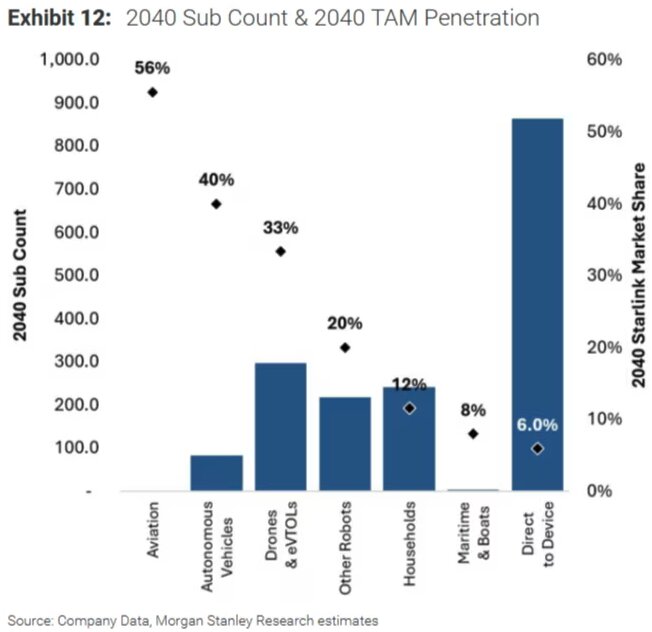
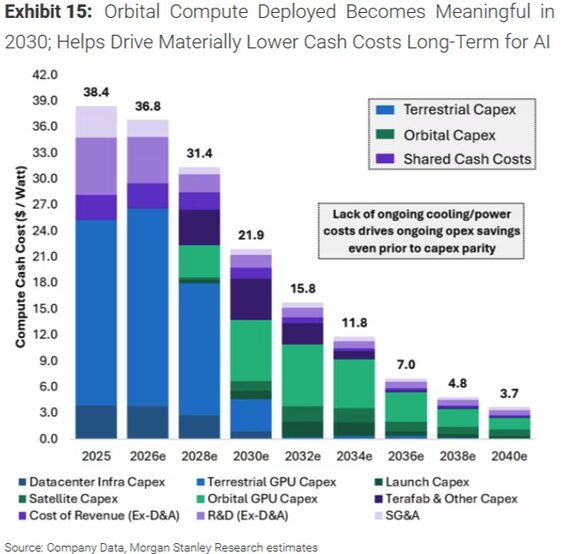
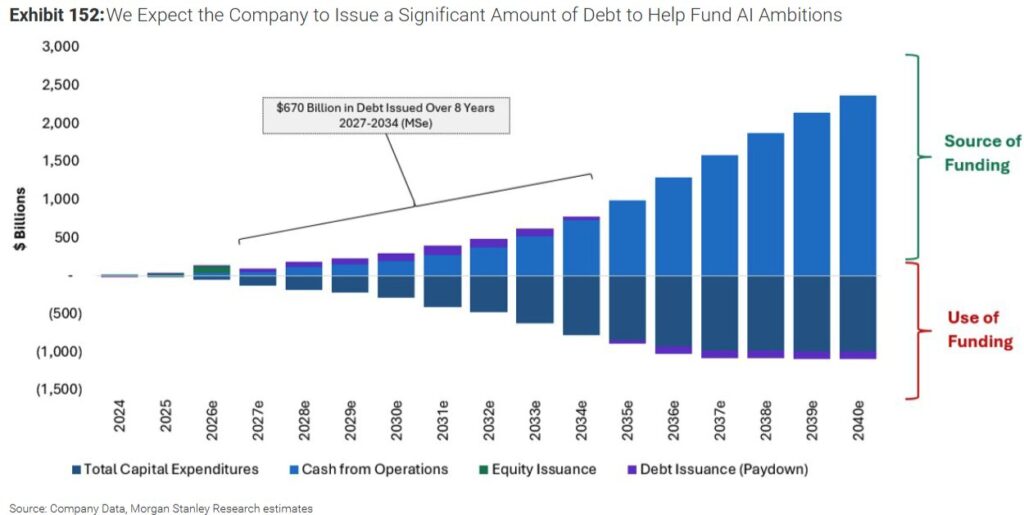
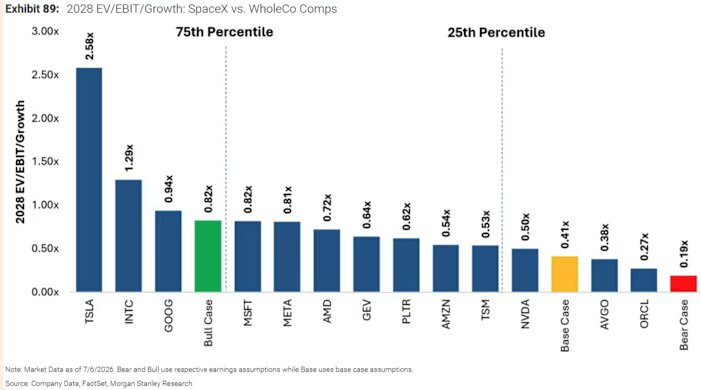
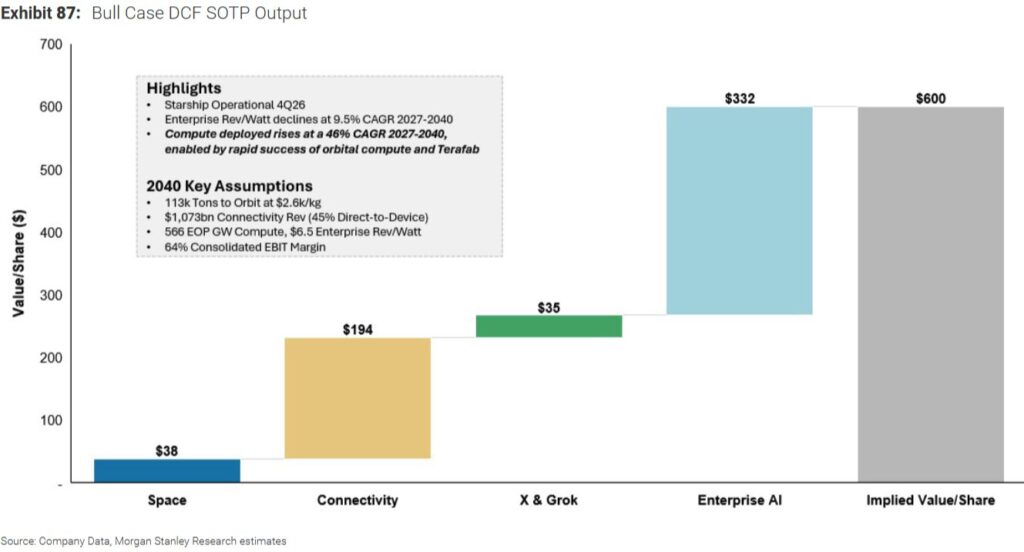
Morgan Stanley has an interesting 142 page report on SpaceX that has several material inconsistencies between its high-level assumptions about orbital compute scale, mass/payload, capex, and monetization and the known technical specifications for Starship launches, satellite power density, and real-world AI compute deals.
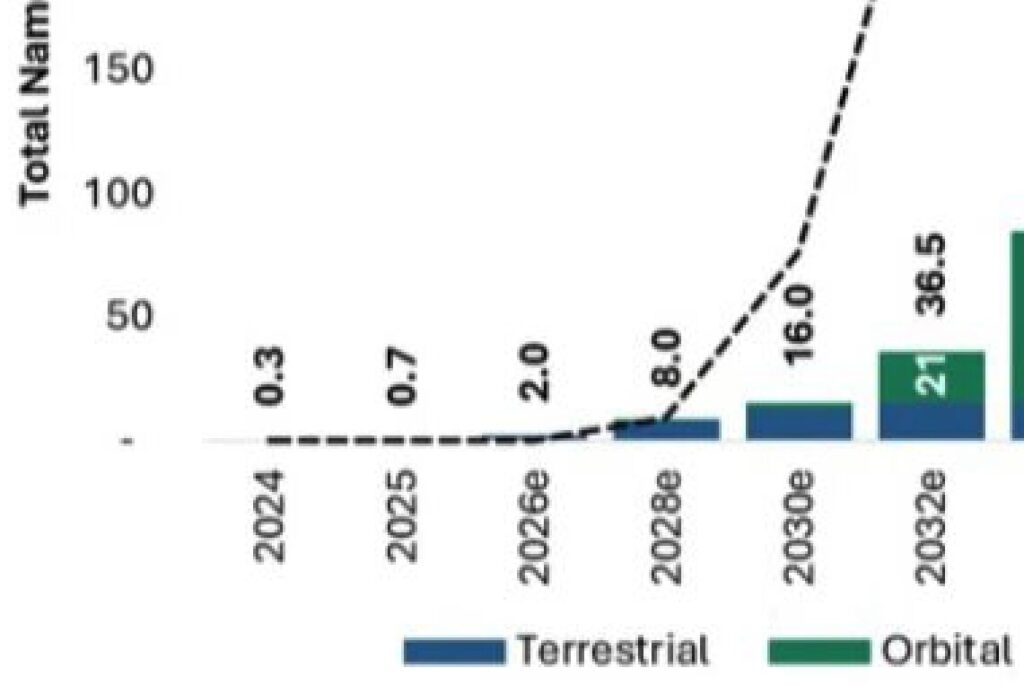
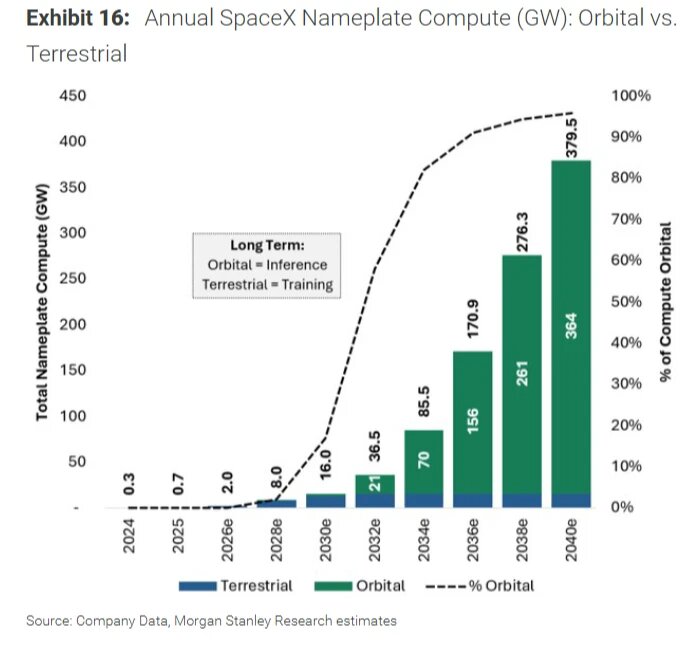
However, we can set aside agreeing about the AI data centers in space. He projects about 8 Gigawatts of SpaceX AI data center in 2028 and 16 Gigawatts by 2030. Very little of that AI data center comes from AI data centers in space.
I agree that 8 gigawatts of AI data center is very doable for SpaceX in 2028-2030. They already have the natural gas turbines on order from Doosan in South Korea, all of the APR Energy production and 60-70% of the Solaris mobile turbines. Twelve 380 MW doosan turbines are on order and those are 4.5 GW. 1 GW per year from APR Energy and the Caterpillar joint venture is 6.5 GW plus the 2 Gigawatts that are already installed.
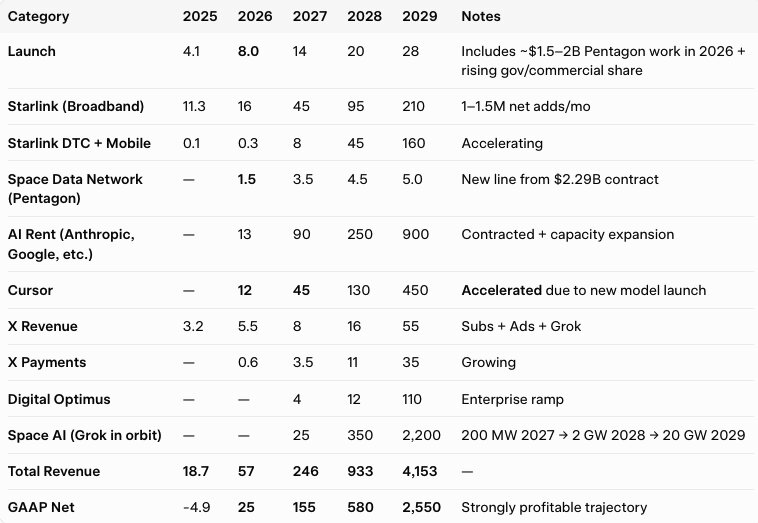
Adam of Morgan Stanley has SpaceX revenue of
$45 billion in 2026 (2 gigawatts end of year)
$319 billion in 2030 (16 gigawatts)
$3.3 trillion in 2040 (380 GW).
Adam project 2030 revenue top be $120 billion for the Starlink communication.
This means the projection is that AI data center revenue collapses to less than $12 billion per gigawatt per year.
Half of the 8 Gigawatts available at the end of 2028 would be 4 Gigawatts. Fully rented at current rates this would be $200 billion and there would be another $100 billion or more from communications and launch. There would be some monetization of the other half or SpaceX could just default to renting all 8 gigawatts to get $400 billion and have $100 billion from communication and launch. IF AI rental collapsed to $30 billion per year that would be $240 billion in 2028 for 8 gigawatts for just neocloud rental and $480 billion per year 16 gigawatts in 2030.
It becomes difficult to think of how SpaceX does not end up with far more revenue.
Brian Wang is a Futurist Thought Leader and a popular Science blogger with 1 million readers per month. His blog Nextbigfuture.com is ranked #1 Science News Blog. It covers many disruptive technology and trends including Space, Robotics, Artificial Intelligence, Medicine, Anti-aging Biotechnology, and Nanotechnology.
Known for identifying cutting edge technologies, he is currently a Co-Founder of a startup and fundraiser for high potential early-stage companies. He is the Head of Research for Allocations for deep technology investments and an Angel Investor at Space Angels.
A frequent speaker at corporations, he has been a TEDx speaker, a Singularity University speaker and guest at numerous interviews for radio and podcasts. He is open to public speaking and advising engagements.
