

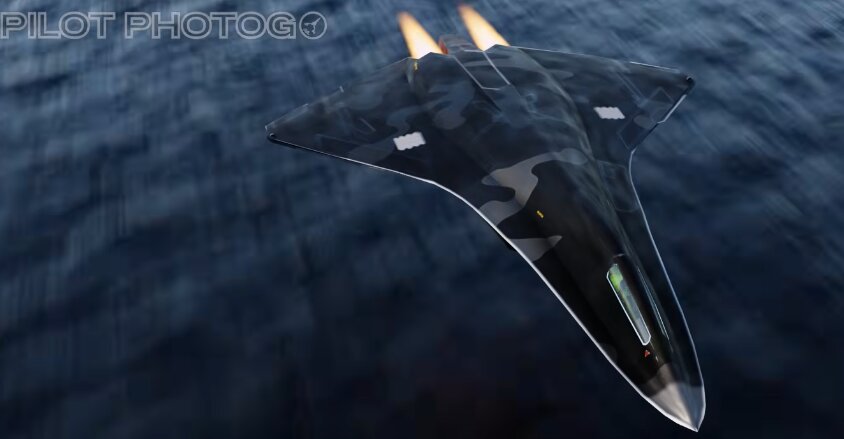

There is accelerated funding for the F-47 (aka Next Generation Air Dominance or the NGAD). The F-47 is the first sixth-generation air superiority fighter, developed by Boeing under the NGAD program to replace the aging F-22 Raptor fleet. It has superior stealth to the F22 and F35.
It have speeds exceeding Mach 2 and a longer unrefueled combat radius over 1,000 nautical miles for Pacific operations. It will have advanced AI-driven sensor fusion, electronic warfare capabilities, and the ability to command 4-8 fighter-sized drone wingmen (CCAs) for missions like jamming, decoying, or extending sensor range.
The aircraft features a tailless, cranked-kite design for all-aspect low observability. It is larger than the F-35 with internal weapons bays, and is optimized for mass production using automated assembly lines. It is an attempt to learn from all of the failures of the F35 and F22 to avoid cost overruns.
The FY26 DOD budget totals $859 billion. The budget provides $3.5 billion in base procurement for the F-47, plus an additional $900 million from congressional reconciliation, totaling $4.4 billion to accelerate development. This is up from $1 billion and means that prototypes should be built.
USAF plans to acquire at least 185 F-47 airframes at an estimated $300 million each, focusing on limited production for high-end missions rather than mass buys.
There is $10 billion for the Pacific Deterrence Initiative to enhance posture against China and funding for 1,000+ CCAs (superdrone wingmen) to pair with the F-47 starting in 2026-2030.
Total F-35 buys drop from 74 in FY25 to 47 in FY26 ($13.1 billion total), with the USAF’s F-35A share halved from 48 (or 44 enacted) to 24 aircraft ($3.6 billion). The Marines and Navy get the rest (13 F-35Bs and 14 F-35Cs).
They will buy 21 F-15EXs ($3.1 billion, up from 18 in FY25) for fourth-gen capacity to make up for fewer F35s.
F47 prototype flights should start 2028 and a few will be made every year from 2029 onwards. By 2035, there will be enough to replace the less than 200 F22s.
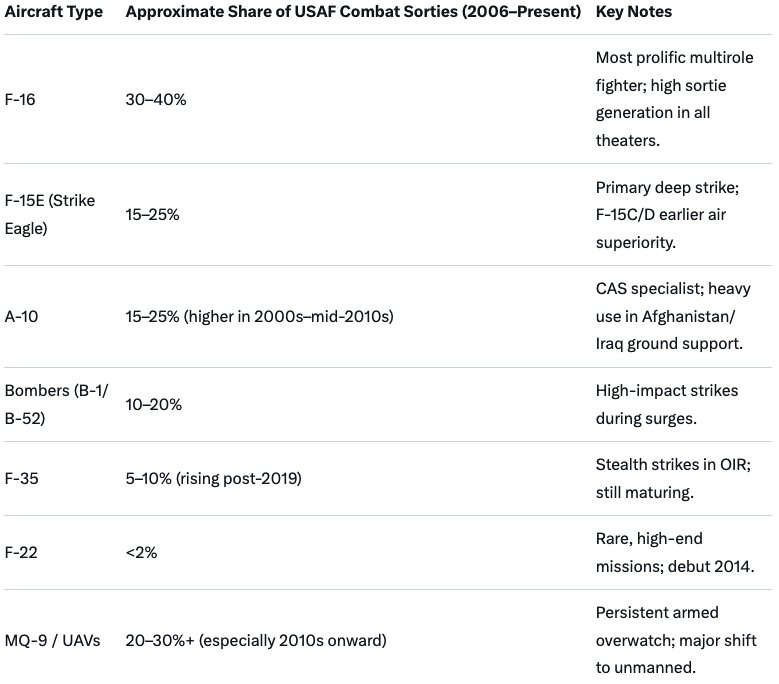
F22 Was Rarely Used
The F-22 has no confirmed air-to-air kills against manned enemy fighter aircraft — its primary intended role — largely because it has not faced peer adversaries in contested air-to-air combat during its service life. The F-22 Raptor was declared combat ready (achieving Initial Operational Capability, or IOC) on December 15, 2005, but was not used for nine years.
Between September 2014 and July 2015, F-22s flew 204 sorties over Syria and Iraq, dropping 270 bombs on around 60 locations, including training camps, vehicle-borne IED facilities, headquarters, and oil distribution sites. They also conducted close air support missions, such as protecting friendly forces in Syria.

Brian Wang is a Futurist Thought Leader and a popular Science blogger with 1 million readers per month. His blog Nextbigfuture.com is ranked #1 Science News Blog. It covers many disruptive technology and trends including Space, Robotics, Artificial Intelligence, Medicine, Anti-aging Biotechnology, and Nanotechnology.
Known for identifying cutting edge technologies, he is currently a Co-Founder of a startup and fundraiser for high potential early-stage companies. He is the Head of Research for Allocations for deep technology investments and an Angel Investor at Space Angels.
A frequent speaker at corporations, he has been a TEDx speaker, a Singularity University speaker and guest at numerous interviews for radio and podcasts. He is open to public speaking and advising engagements.
