

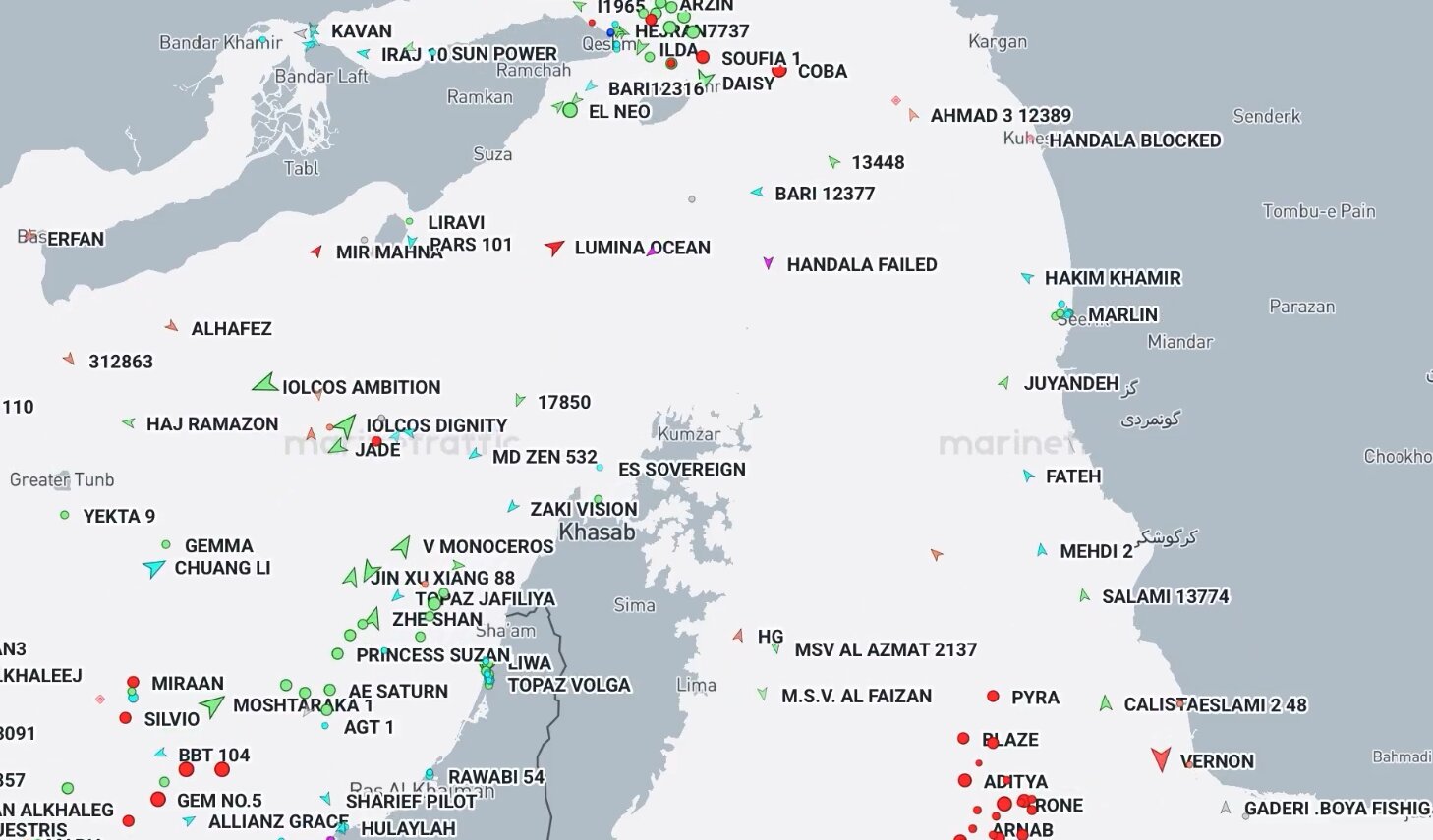

Based upon oil flows Hormuz were 15-20% open at 3 to 4 mbpd last month (May) but yesterday 17 mbpd. This means Hormuz was 85% open. 17 mbpd is 85% of 20 mbpd. It was 20% open with complete opposition from Iran. And now it is 85% open. The ships know they are getting through. Until ships are hit and stopped why would they stop?
What actions are the US navy doing to keep it open and what is Iran doing in the last 24 hours to threaten to close. If Iran can’t carry out their threat to reclose the Strait then the US will have opened the Strait without having to give Iran anything. Nothing signed yet. It would be Iran proving they have no power.
Energy secretary Wright says 67 ships went through yesterday. There is some reports that the number of ships going through in the last hour has stopped or declined. But those sources talked about 21 ships the other day. If the ships passing turn off transponders but still go through then the oil and the traffic is not stopped. There will be issues around the data of ships with and without transponders.
Oil Flow and Traffic Context
Normal pre-crisis flow through the Strait of Hormuz is roughly 20 million barrels per day (mbpd) of oil (about 20% of global seaborne oil trade). Last month (peak disruption period): ~4 mbpd (~20% of normal) amid full Iranian opposition, threats, and effective restrictions.
June 20 (Saturday): U.S. Central Command (CENTCOM) reported 55 merchant ships transited, carrying more than 17 million barrels of oil in 24 hours. This equates to roughly ~85% of normal oilflow capacity.
This is a sharp recovery from the lows but still below the prewar average of ~130 vessels/day.
Why Ships Keep Going
Ships (and insurers/operators) respond to actual risk and successful transits, not just announcements. With 55 vessels moving on Saturday—including significant oil cargoes—captains see empirical evidence that passage is possible. Until there are repeated, effective kinetic hits (drones, missiles, or small-boat attacks that damage/disable vessels and create visible losses), commercial traffic has strong incentives to continue.
Blanket closures or mines would have caused near-total stoppage. The current pattern shows Irans deterrence is incomplete.
US Navy Actions to Keep It Open
The US is maintaining de facto control and freedom of navigation through presence and posture rather than full convoy escorts for every ship.
Naval and air presence. Warships, surveillance assets, and air support in and near the strait. CENTCOM has publicly emphasized operations to support freedom of navigation and a designated safe route.
Defensive interdiction. Recent weeks saw US forces down Iranian one-way attack drones aimed at commercial ships. They have also conducted self-defense strikes on Iranian military sites (ground control, surveillance) tied to threats against shipping.
No confirmed reports (as of early Sunday) of new mine-laying, successful attacks on transiting ships, or other immediate physical actions in the last 24 hours. It remains largely declarative/threat-based for now.
What happens to the deal if the oil keeps flowing despite the Iranian threats?
If Iran fails to show they can back up their threats.
The movement patterns show there are no mines as of now.

Brian Wang is a Futurist Thought Leader and a popular Science blogger with 1 million readers per month. His blog Nextbigfuture.com is ranked #1 Science News Blog. It covers many disruptive technology and trends including Space, Robotics, Artificial Intelligence, Medicine, Anti-aging Biotechnology, and Nanotechnology.
Known for identifying cutting edge technologies, he is currently a Co-Founder of a startup and fundraiser for high potential early-stage companies. He is the Head of Research for Allocations for deep technology investments and an Angel Investor at Space Angels.
A frequent speaker at corporations, he has been a TEDx speaker, a Singularity University speaker and guest at numerous interviews for radio and podcasts. He is open to public speaking and advising engagements.
