


Editor’s Note: This article was originally published on April 25, 2022 and has been updated to reflect changes including the completion of Hangar One’s restoration.
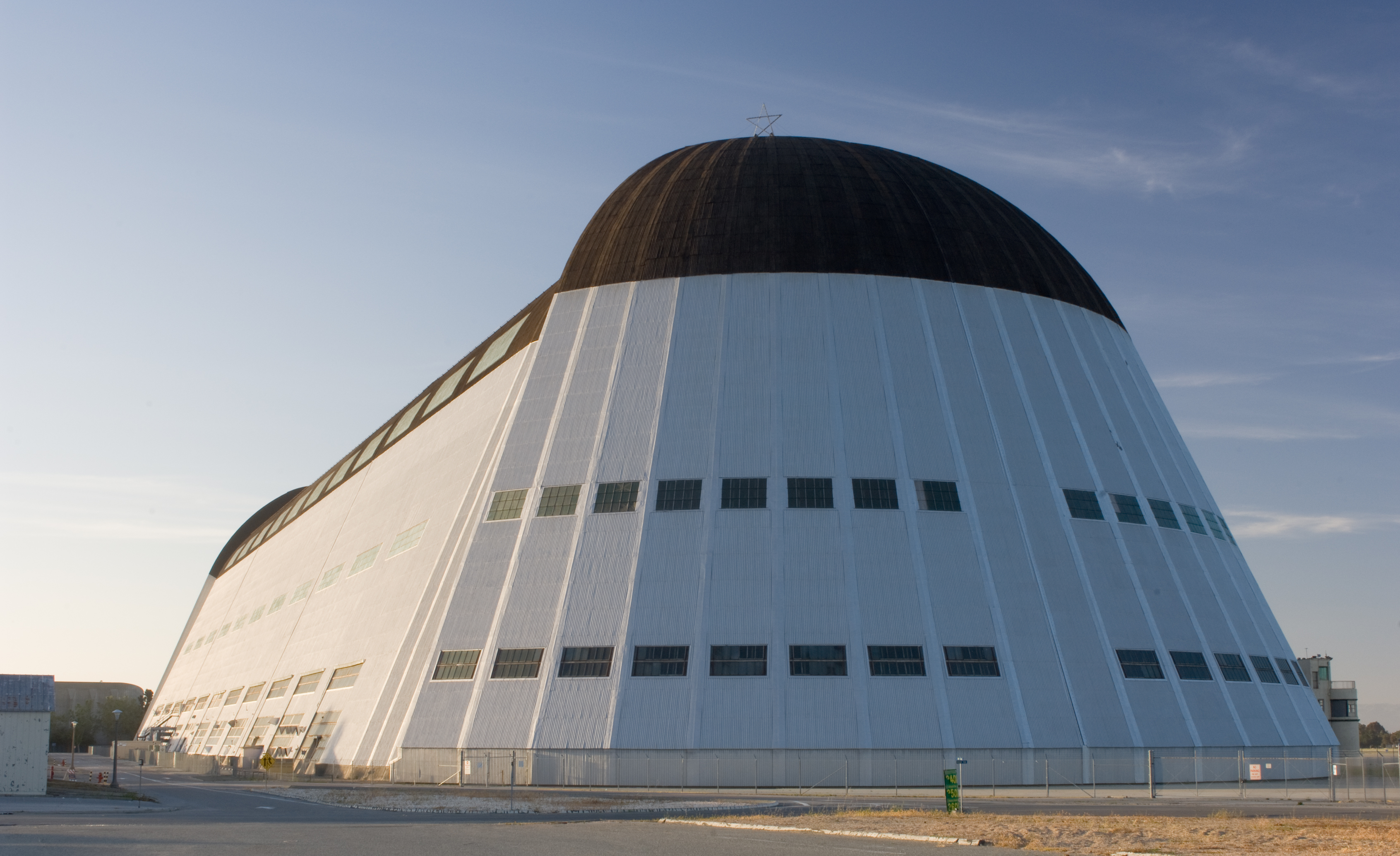
Restoration has been completed on Hangar One, a historic landmark in the San Francisco Bay Area and a key part of the region’s early aviation history.
In December 2025, Planetary Ventures completed restoration of the Hangar One landmark at Moffett Federal Airfield, located at NASA’s Ames Research Center in California’s Silicon Valley. Work focused on modernizing the structure while maintaining its original visual characteristics as closely as possible. The restoration work included the remediation, clean-up, and recladding of the siding and roof, as well as a variety of structural upgrades. Hangar One — now more than 90 years old — was restored according to U.S. Secretary of the Interior’s Standards for Rehabilitation of historical buildings.
This project started years ago when the U.S. Navy removed all the hangar’s roof, siding, windows, doors, and other materials, which were contaminated with toxic chemicals. The Navy then sealed the hangar’s structural frame with epoxy to ensure the chemicals would not pose a health risk, leaving it intact until further work could be completed.
In 2014, NASA signed a lease with Planetary Ventures to operate Moffett Federal Airfield and rehabilitate Hangar One.
In 2022, Planetary Ventures removed the remaining toxic chemicals from the hangar. First, working section by section, areas of Hangar One were surrounded with scaffolding and encased to keep contaminated materials inside. Only then were they carefully removed and stored in the vicinity of the hangar until being taken off-site for proper disposal. After the contaminated materials were removed, the steel frame was primed and repainted to protect it from the elements until siding, windows, and doors were added.
The team also made several structural upgrades — as well as other mechanical, plumbing, electrical, landscape, and hardscape improvements — to ensure the hangar’s long-term operational integrity for generations to come.
Timeline:
- 1933: The United States Navy built Hangar One at Naval Air Station Sunnyvale for the USS Macon airship and to serve as the West Coast base for the U.S. lighter-than-air aviation program.
- 1935: After the destruction of the dirigible U.S.S. Macon, Hangar One and all of Naval Air Station Sunnyvale was transferred to the U.S. Army, renamed Moffett Field Army Air Corps Base, and was used to house training aircraft.
- 1942: Moffett Field Army Air Corps Base was transferred back to the U.S. Navy and re-commissioned as Naval Air Station Moffett Field.
- 1994: The Navy transferred the hangar to NASA after Moffett Field was decommissioned.
- 1997: During routine stormwater testing, NASA discovered a toxin called polychlorinated biphenyls, or PCBs, specifically Aroclor 1260 and 1268, and other contaminants in the Center’s storm drain settling basin.
- 2002: Sampling programs determine that the composite corrugated material used to make the original external siding of Hangar One was the source of the PCBs as well as asbestos and the paint used to cover both the siding and steel frame of Hangar One contained lead and PCBs.
- 2003: An inspection reveals PCBs, and other contaminants are leaking from the hangar’s metallic exterior. As a result of the high levels of PCBs present in the Hangar One building components, the hangar was closed to human use, as required by the Toxic Substances Control Act.
- 2008: At a Navy public hearing, members of the local community expressed overwhelming support for full restoration of Hangar One.
- June 2010 – June 2013: The Navy addressed contamination at Hangar One by preserving and decontaminating historic artifacts; removing the hangar’s roof, siding, windows, doors, and other exterior components; demolishing the interior structures of the hangar; coating the structure with epoxy; among other activities.
- May 28, 2013: NASA and the U.S. General Services Administration issued a Request for Proposals to obtain lease proposals for the rehabilitation and adaptive reuse of Hangar One, and for the operation, management, and maintenance of Moffett Federal Airfield.
- February 2014: After a fair and open competition, the U.S. General Services Administration and NASA selected Planetary Ventures, LLC as the preferred lessee and began lease negotiations to manage Moffett Federal Airfield and rehabilitate historic Hangar One.
- Jan. 14, 2020: Engineering Evaluation/Cost Analysis (EE/CA) is approved by the U.S. Environmental Protection Agency (EPA) and the California Regional Water Quality Control Board (Regional Water Board).
- Nov. 17, 2020: Action Memorandum is approved by the EPA.
- Nov. 18, 2020: Action Memorandum is approved by the Regional Water Board.
- Feb. 3, 2022: Non-Time-Critical Removal Action (NTCRA) Work Plan is submitted to the EPA and the Regional Water Board.
- March 24, 2022: EPA and the Regional Water Board approved the Final Non-Time-Critical Removal Action Work Plan.
- March 2022: Scaffolding and encasement around Hangar One begins.
- Spring 2022: Removal and disposal of contaminated materials begins.
- Summer 2022: Repainting of steel frame in the first work area begins.
- Dec. 1, 2025: Planetary Ventures completed the full remediation and restoration of Hangar One.
Fast Facts:
- Hangar One is a very large structure measuring approximately 1,133 feet long, 308 feet wide, and 198 feet high.
- Hangar One is in the Shenandoah Plaza Historic District, which is listed in the National Register of Historic Places at the National level of significance under
- Criterion A for the association with coastal defense and naval technology that has made a significant contribution to the broad patterns of our history; and
- Criterion C reflecting the distinctive type, period, method of construction and high artistic values that are represented in the 1933 station plan and buildings.
- Hangar One is designated as a Naval Historical Monument as well as a California Historic Civil Engineering Landmark by the San Francisco section of the American Society of Civil Engineers.
Collaborators:
- Planetary Ventures, LLC of Delaware
Learn more:
For researchers:
For news media
- Members of the news media interested in covering this topic should reach out to the Ames newsroom.
