

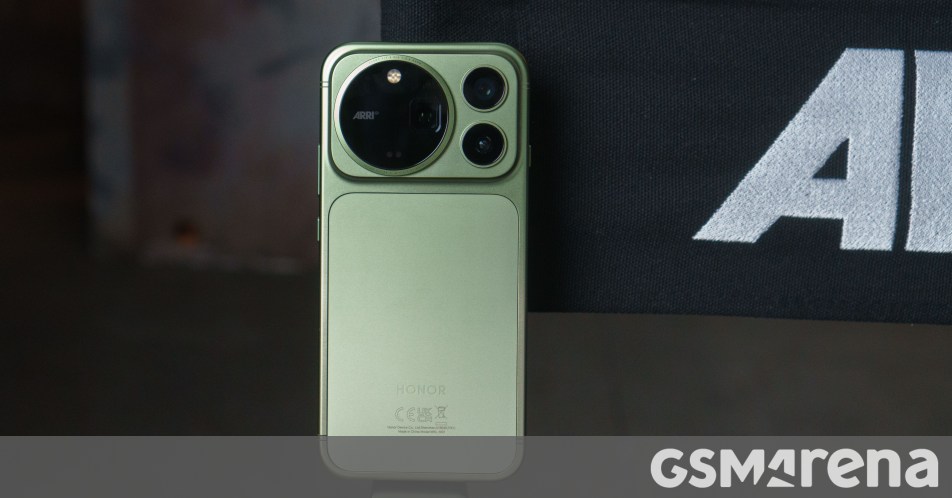

What does a $100,000 cinema camera have in common with a smartphone that’s a hundred times cheaper?
Honor recently invited us to California to answer that question by lifting the veil on the breadth and depth of its collaboration with renowned German camera manufacturer ARRI on the image science behind the Magic9 Pro Max.
We had the rare opportunity to take a guided tour of ARRI’s facility in Burbank, just outside Hollywood, exploring the company’s heritage, its role in modern filmmaking, and some fascinating stories from its history.
There was plenty to geek out over. The equipment used to shoot Hollywood movies is on a whole other level compared to even the professional cameras we use to produce our own videos at GSMArena. The sheer sophistication of the cameras, lenses, and supporting equipment gives you an entirely different appreciation of what goes into making a movie.
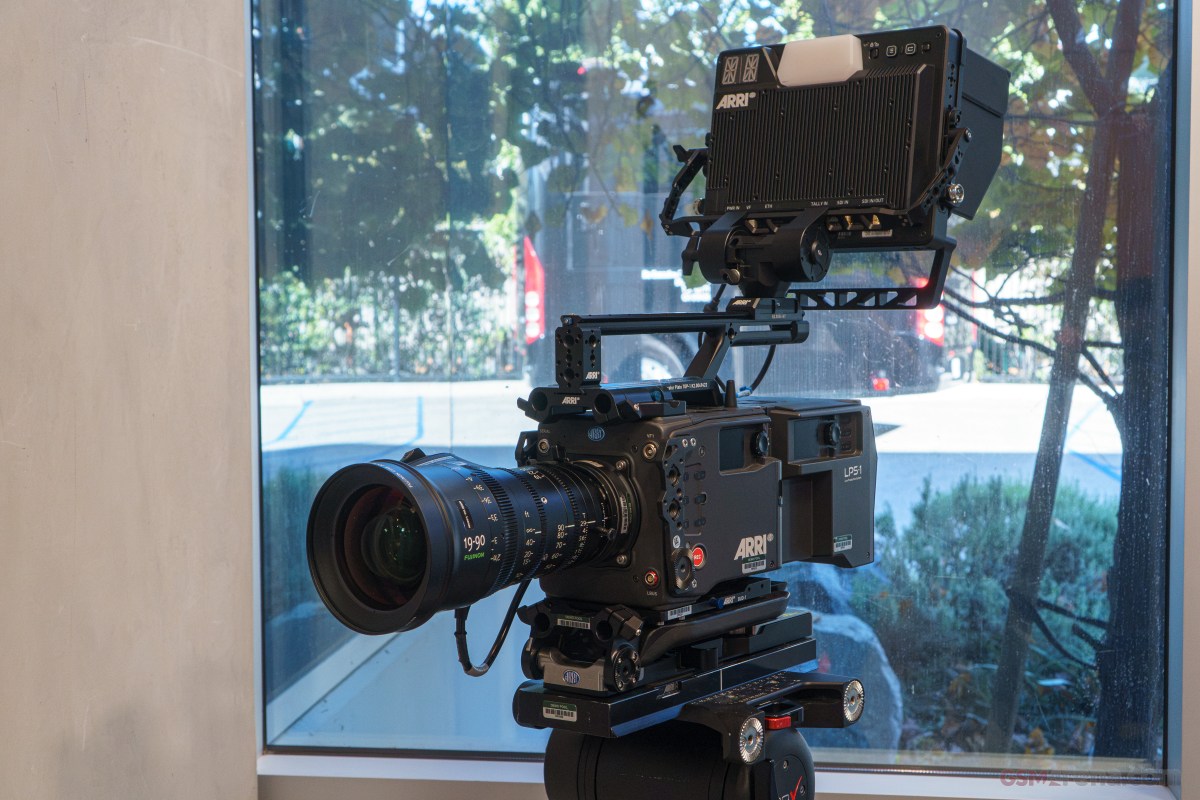
The fully kitted-out ALEXA Mini LF camera is ‘mini’ only by name
ARRI’s ALEXA LF and Mini LF are among the most highly regarded professional filmmaking cameras, prized for their natural colors, exceptional dynamic range, and particularly smooth highlight roll-off, which describes how gracefully bright areas transition toward white rather than clipping abruptly.
The ALEXA LF records at 4.5K resolution with a sensor slightly larger than photographic full frame. The large sensor allows cinematographers to use lenses with longer focal lengths while maintaining a relatively wide field of view, making it easier to achieve a more intimate look with shallower depth of field.
A fully equipped camera setup like that, complete with professional lenses and accessories, can cost as much as $100,000. ARRI cameras are a staple of Hollywood filmmaking, with various ALEXA models used in countless major productions.
Now, imagine being able to capture some of that distinctive ARRI image character with nothing more than a smartphone. That’s precisely what Honor and ARRI have set out to achieve with the Honor Magic9 Pro Max.
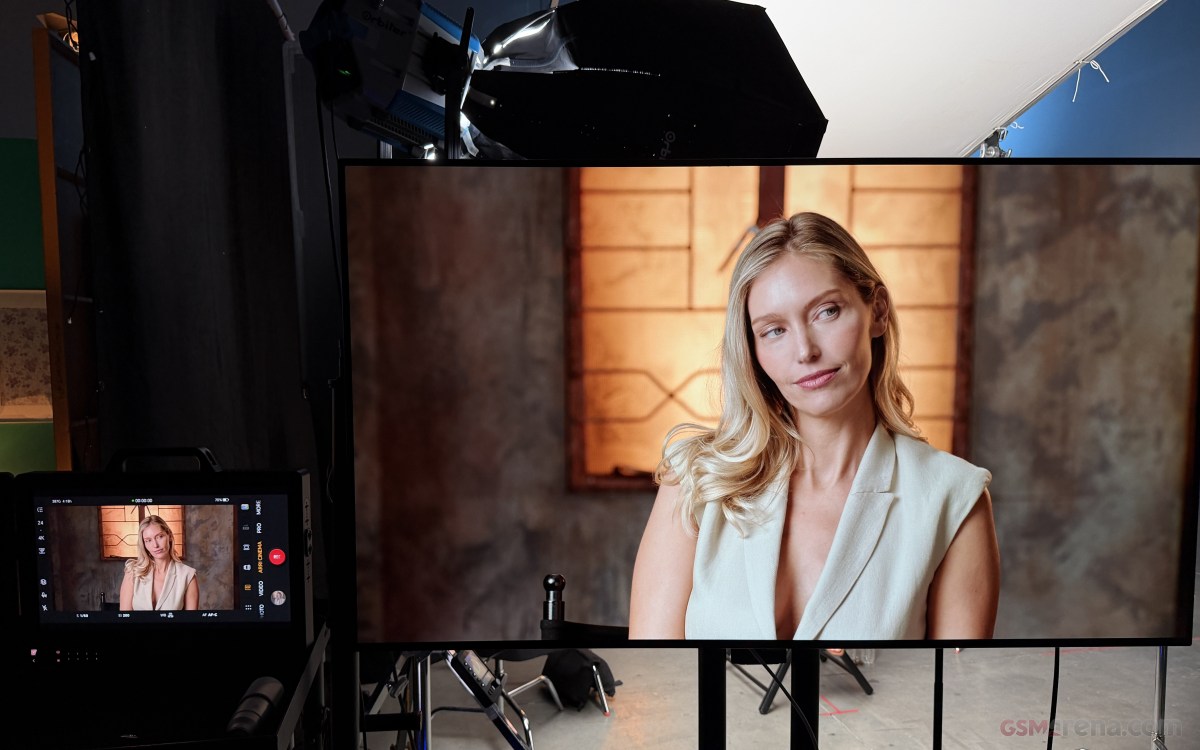
Visiting the ARRI facility was a content creator’s dream
But as we discovered, the collaboration isn’t about squeezing cinema-camera hardware into a smartphone. Instead, it’s about bringing some of the same image science that gives ARRI footage its distinctive character into the Magic9 Pro Max. And the work goes much deeper than simply applying cinematic color filters.
Honor says it has redesigned the phone’s video-processing pipeline, tuning it specifically to the camera hardware and introducing its own dedicated imaging chip, the Honor H1, which performs noise reduction directly on the RAW image data before further processing, with the goal of preserving more detail and dynamic range.
That’s where ARRI’s Image Science comes in. The companies have worked to calibrate the video output of the Magic9 Pro Max’s main and telephoto cameras to closely follow ARRI’s LogC3 curve, essentially adapting the tonal response used by ARRI’s professional cinema cameras to the smartphone’s imaging hardware.
For those unfamiliar with Log recording, it generally gives you much more freedom to adjust colors and contrast in post-production compared to conventional video recording. Instead of baking a particular look into the footage, it preserves a wider range of tonal information for subsequent color grading, provided the camera hardware can capture it in the first place.
ARRI has its own LogC3 recording curve, and shooting in LogC3 is now available on the Magic9 Pro Max as well. Combined with ARRI Wide Gamut 3, this makes it easier to achieve a consistent look when working with footage from both professional ARRI cameras and the smartphone.
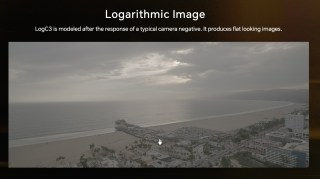
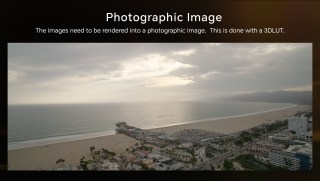
Log footage gives you the most freedom for editing in post-processing
The phone also supports recording in the ARRI Wide Gamut 3 color space, allowing footage to be handled using established professional color-grading workflows.
And for those who don’t want to spend time color grading, there’s ARRI Looks, a collection of 87 cinematic color treatments that can be applied to the footage.
The goal is to reproduce some of the characteristics that make ARRI footage so distinctive – natural colors, smooth highlight transitions, and greater flexibility in post-production – on a device that fits in your pocket.
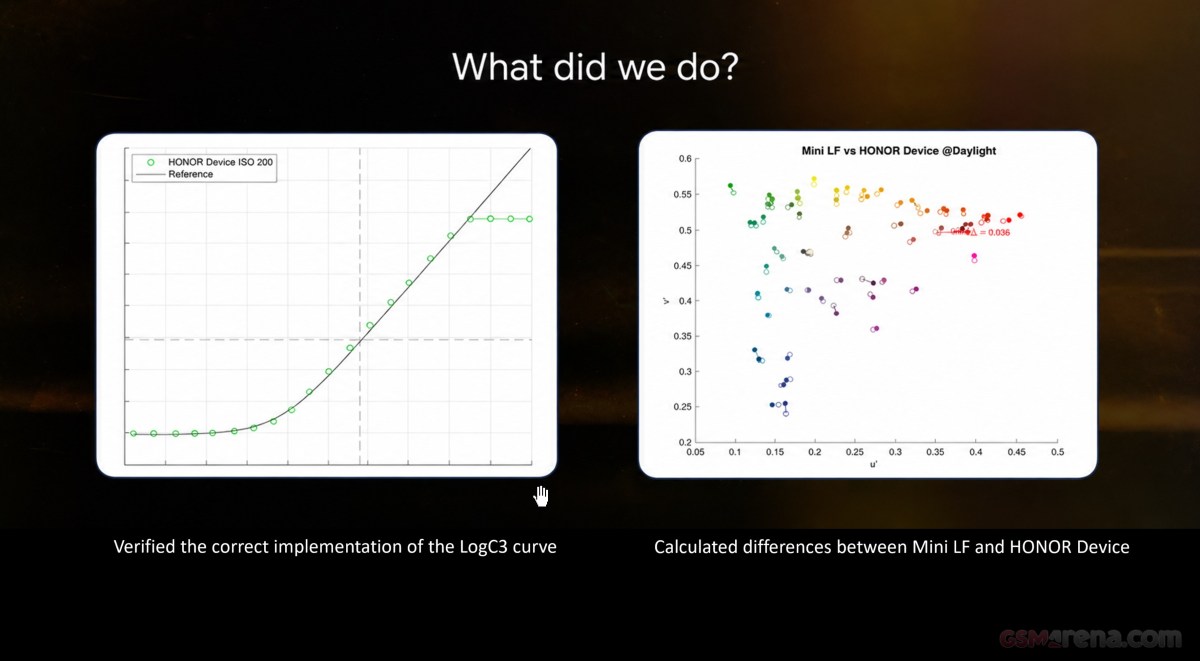
Matching the color between Honor Magic9 Pro Max and ALEXA Mini LF
And judging by the color-graded LogC3 studio footage we were shown, the results are quite impressive. The Magic9 Pro Max comes remarkably close to the ALEXA Mini LF in terms of color and tonal rendering, though the professional camera still has a clear advantage in sharpness and fine detail.
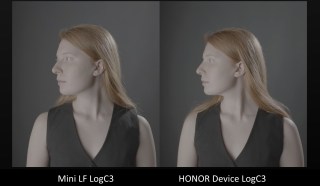
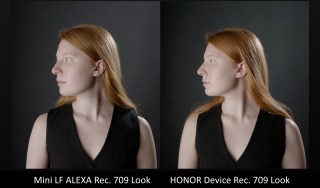
Matching the color between Honor Magic9 Pro Max and ALEXA Mini LF
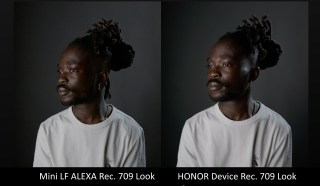

Matching the color between Honor Magic9 Pro Max and ALEXA Mini LF
Of course, none of this means that a smartphone can replace a professional cinema camera. Matching the color and tonal rendition is one thing, but matching the sharpness, detail, and overall image quality is another. The ALEXA Mini LF is still clearly in a different league in those respects.
And it’s not all down to clever software either. You still need capable camera hardware underneath. The ARRI-tuned video output is available on the Magic9 Pro Max’s main and telephoto cameras, but not the ultrawide. It’s a good reminder that recreating the look of a professional cinema camera involves much more than simply applying a color preset.
Still, the tonal similarities we saw are impressive, and the work that went into achieving them suggests this collaboration was about more than simply putting a prestigious camera manufacturer’s logo on a smartphone.
