



Anthropic added ~$11B ARR in one month which is more than the combined 10-year build of Palantir, Snowflake, and Databricks (which employed tens of thousands collectively). No precedent in capitalism history. SaaS/cloud created $5–10T value over decades, yet one model company matched the output of the top three recent SaaS giants instantly. Growth rates (500%+ cited earlier) imply insanity if extrapolated 3 years. This was the clearest signal ever of an S-curve exponential unlike anything seen, including DeepSeek.
March/April 2026 Market Drawdown Dynamics
Two types of drawdowns:
(1) you’re wrong (hypothesis invalidated, crystallize loss)
(2) you’re profoundly right but market disagrees on price — build pent-up alpha.
March was the buy the crash opportunity. NASDAQ sold off while AI fundamentals hit unprecedented acceleration (Anthropic’s surge, GPU/DRAM prices spiking in Asia, availability collapsing). Investors who bought COVID, 2022, or DeepSeek regretted missing it. April offered the same cheap valuation setup plus even clearer AI inflection. Market efficiency failed spectacularly.
Hormuz Strait Closure: Geopolitical Tailwind for US AI/Manufacturing
Strait closure (or threat) was net positive for America under current administration priorities. Key input to US electricity prices (natural gas) fell ~20% while Asia/Europe prices doubled/tripled overnight. US is now world’s largest oil/gas producer and exporter; economy far less energy-intensive than 1970s. Result: massive relative manufacturing competitiveness gain for AI/data centers (electricity is critical input). No 1970s-style shortages possible. This made it easier to ignore macro noise, stay focused on AI, and buy tech at valuations as cheap vs. rest of market as any point in last 10 years.
Anthropic vs. OpenAI Valuations & Capital Efficiency
OpenAI and Anthropic are structurally different: Anthropic has dramatically lower cost-per-token and burned ~80% less capital to reach similar revenue scale. At rumored ~$900B valuation on ~$50B ARR growing 1,000%+, it looks reasonable. Unconstrained (if they had all compute they wanted), they’d likely be at $100–200B ARR today → true multiple closer to 5x. OpenAI is more capital-intensive but aggressively securing compute; both at positive gross margins on inference, likely generating cash soon. Multiples not “crazy” vs. peak Databricks/Snowflake.
Raising Capital Strategy: Elon-Style Long-Term Covenant
Both companies wisely avoid maxing valuation (no $3T raise at 100% premium).
Uncertain world (Ukraine, Iran, Taiwan geopolitics) demands dry powder for compute. Elon’s 20-year track record proves the superpower. Never be greedy on valuation, systematically underprice, strike fair investor/employee balance. Creates 20–30 year goodwill vs. short-term juice. Focus on making investors money is sacred and compounds.
Watts Shortage: Capitalism + Orbital Compute Will Solve It
Zoning/approvals now bigger bottleneck than energy/chips (per big PE data-center investors). Turbines, supply-chain constraints real but solvable; capacity announcements already happening.
Shortage eases 2027–28.
Long-term orbital compute (racks in space) solves permanently.
Not giant pentagon data centers — Blackwell-sized racks (~3,000 lbs, 8×4×3 ft) with 500-ft solar wings in sun-synchronous orbit, radiators, laser interconnects (vacuum = free).
SpaceX already runs world’s largest satellite fleet (98–99% of orbit), cools Starlink V3 at 20 kW today, scaling to 100–120 kW. They operate largest terrestrial data center + best hardware engineers. Reusability (rocket landings) makes economics work. Inference ideal for orbit; training stays terrestrial. Terrestrial data centers remain valuable. Total compute demand insatiable (suck as hard as we can).
Wafers & Taiwan: Single Biggest Bubble-Preventer
TSMC (Taiwan) controls overwhelming fraction of leading-edge wafers — critical input.
Their flinty discipline (handshake deals with Jensen, no contracts, fair over time) prevents overbuild.
Jensen visits constantly to beg expansion; they move slowly. Historically, foundational tech always bubbles (railroads, canals, dot-com); markets correctly price importance but suffer diversity breakdown (everyone bullish) → supply races ahead, crash (worse if debt-fueled).
Current buildout funded by operating cash flows + 100% GPU utilization (vs. 99% dark fiber in 2000) = structurally different. TSMC’s supply constraint = single-handed bubble prevention.
Watch their capacity decisions for Goldilocks zone: enough to keep Intel/Samsung from gaining >30% share, not so much that latent demand is fully satisfied. Terafab (SpaceX/Tesla/Intel JV + US fab) will add domestic capacity with A-team talent, Intel process knowledge (9–15 months behind), and full semicap equipment priority.
Elon effect is Taiwan/Japan/Korea towns in Texas, best engineers recruited globally. Long lead times but transformative for US manufacturing.
Returns to Pareto Frontier, Bitter Lesson, Continual Learning
Surprising is that overwhelming economic returns at model layer still captured by frontier tokens (Gemini 1.5 Pro went from mind-blowing to intolerable fast). Companies prototype on frontier, then production often shifts, yet frontier still dominates value. Pareto frontier (intelligence vs. cost) now led by Anthropic/OpenAI/Grok 4.3. Google slipping.
Bitter Lesson is more compute wins over human ingenuity.
The biggest risk — closer to ASI. More skeptical it holds forever, but ASI may temporarily violate it via self-optimization.
Continual learning/memory. AI harnesses (runtime, tools, context, state) matter hugely but model matters more than harness.
Crude continual learning version exists via Reinforcement Learning but true real-time weight updates would enable fast ASI takeoff. Sample efficiency gap (humans vs. AI) remains huge mystery.
Pricing Shift Bullish for ARR
Models moving from all-you-can-eat to usage-based pricing (enterprise plans). Like cellular/long-distance before: usage-based drove sustained growth; flat-rate killed it. Enables frontier token pricing + massive volume. OpenAI/Anthropic likely >$200B combined ARR this year.
Downside: best AI now paywalled for non-rich users.
New Chip Companies Need to be Different and Hard to Do and Replicate
Healthy. GPU iron triangle (attack/defense/mobility analog) forces trade-offs under TSMC rules.
Disaggregation (prefill = memory-capacity bound. decode = memory-bandwidth bound) widens design space.
Startups do something different and hard (Cerebras wafer-scale example — 3 generations of grit).
1% share is a $100 billion outcome.
Nvidia will copy easy innovations fast and has better TSMC pricing + model co-optimization.
Cerebras optical wafer/hybrid bonding solutions show path.
GPU Lifespan Extension & Private Credit
Disaggregation + specialized front-end chips (Cerebras, Grok LPUs) lets older GPUs (Hopper/Ampere) handle prefill indefinitely → useful lives 10–15 years vs. 1–4.
Saves private credit (underwrote 3–4 year lives. Lower risk = cheaper 5–6% financing).
Mathematically lowers entire AI buildout cost.
Hyperscalers’ huge CPU fleets also gain in agentic world.
Application Layer & Token Path
AI destroyed trillions in app-layer value (even Cursor/Cognition scale doesn’t offset). Winners have highest utilized GPUs per human. Founders struggling: niches must be
(1) token-path adjacent (Databricks model),
(2) data-moat protected before frontier labs enter, or
(3) small enough frontier ignores. Coding focus was smart (shortest path to ASI via self-coding).
Jensen could reach near-frontier but chooses not to commoditize complement.
Open-Source & New Prisoner’s Dilemma
Chinese open-source impressive but largely diTerafab/stolen US traces. US labs hardening anti-distillation. Frontier labs face game theory: release via API or not? If all hold, China lags; one defects → revenue + compute flywheel → others follow. Nvidia keeps open-source lagged deliberately. Open-source still costs energy/GPUs; providers take revenue share.
Cybersecurity & Personal Safety
Deepfakes necessitate “safe words” + analog family protocols (leave devices, meet at ocean). Political violence rising; AI becoming politicized → higher risk for visible AI leaders (e.g., Molotovs at Altman’s house). Higher-variance world overall.
Cross-Sectional Valuation Absurdity & Diversity Breakdown
Valuations inconsistent: semicap at 40× forward vs. DRAM mid-single digits (vs. historical 5× vs. 12× peaks). Lowest-quality, highest-cost suppliers moon in shortages (commodity dynamic).
Low-quality AI-adjacent names bid to moon on X/Reddit while quality compounds quietly. Everyone bullish → diversity breakdown risk (classic bubble setup). Wish for more AI/memory bears.
Baskets decoupled in 2026 (scale-up vs. scale-out, DRAM vs. NAND); requires fine-grained analysis.
Miscategorized names (e.g., Astera as “copper loser” when it’s switch/accelerator) offer opportunity.
Understanding Hyperscalers – Google, Meta, AMazon, Microsoft
Google has thebiggest compute installed base + valuable YouTube/robotics data → structurally great. Lost TPU cost edge. Needs leapfrog at Google I/O or Nvidia effect looks even stronger.
Meta has built true AI-first internally, which is huge for a tech giant. Llama close to pareto frontier. Zuck paid up smartly and has best position among internet giants after Google.
Amazon is strong with Tranium. Robotics P&L impact in 18 months. Nova better than credited.
Microsoft CEO Satya is courageous — using compute internally vs. reselling to OpenAI/Anthropic (would have made stock $800 otherwise). Flinched briefly in early 2025. Now prioritizing own models/Copilot. Partnership dynamics fascinating post-OpenAI coup.
Engagement with startups is an advantage for Nvidia/Amazon over Google and others (AMD/MSFT/Meta near-zero startup engagement) → future talent/team advantage.
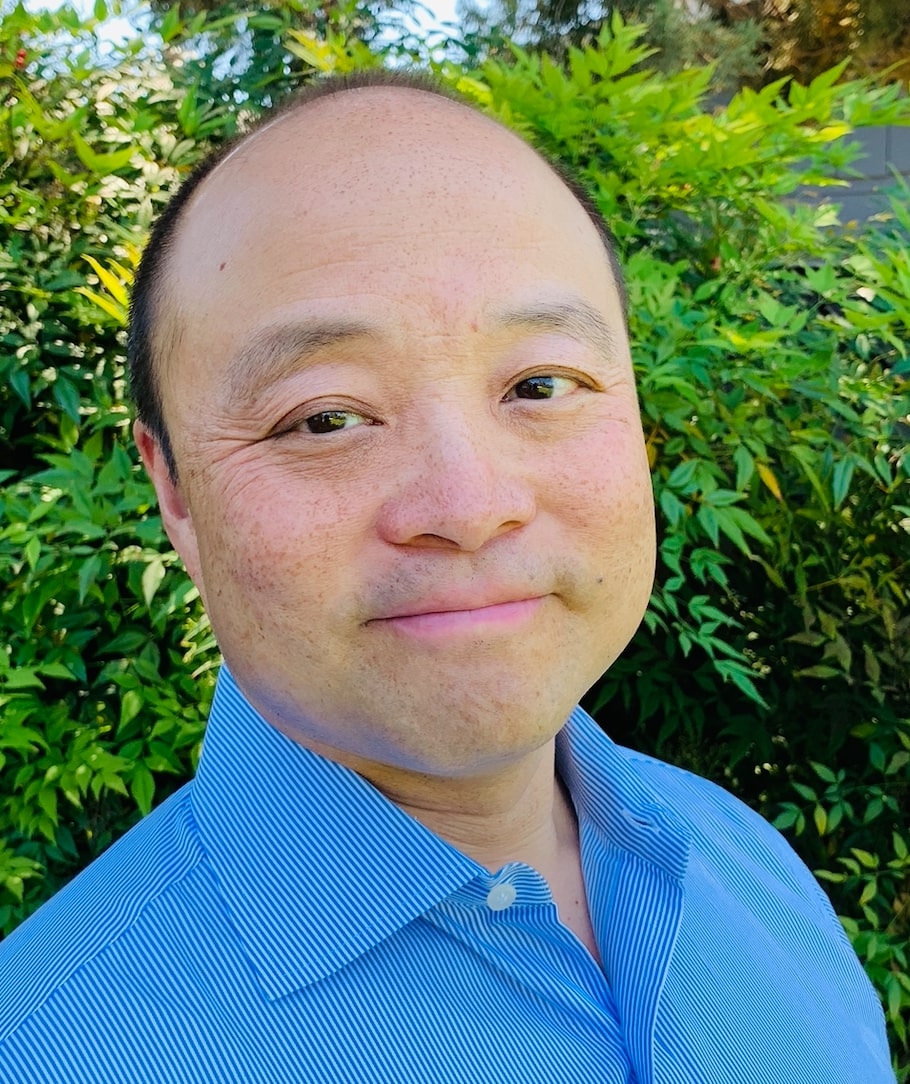
Brian Wang is a Futurist Thought Leader and a popular Science blogger with 1 million readers per month. His blog Nextbigfuture.com is ranked #1 Science News Blog. It covers many disruptive technology and trends including Space, Robotics, Artificial Intelligence, Medicine, Anti-aging Biotechnology, and Nanotechnology.
Known for identifying cutting edge technologies, he is currently a Co-Founder of a startup and fundraiser for high potential early-stage companies. He is the Head of Research for Allocations for deep technology investments and an Angel Investor at Space Angels.
A frequent speaker at corporations, he has been a TEDx speaker, a Singularity University speaker and guest at numerous interviews for radio and podcasts. He is open to public speaking and advising engagements.
